Last updated 10 months ago
Cardano IoT SDK - C++ Toolkit for IoT Integration on Cardano
Problem
IoT has vast potential but is limited by centralized systems-prone to attacks. Cardano lacks an SDK for IoT-blockchain integration, hindering developers from building dApps on Cardano.
Solution
We’ll develop an open-source C++ Cardano IoT SDK, enabling secure, scalable integration of IoT devices with Cardano blockchain, unlocking decentralized apps for real-world use.
Total to date
This is the total amount allocated to Cardano IoT SDK - C++ Toolkit for IoT Integration on Cardano.
About this idea
[Proposal setup] Proposal title
Please provide your proposal title
Cardano IoT SDK - C++ Toolkit for IoT Integration on Cardano
[Proposal Summary] Budget Information
Enter the amount of funding you are requesting in ADA
98993
[Proposal Summary] Time
Please specify how many months you expect your project to last
10
[Proposal Summary] Translation Information
Please indicate if your proposal has been auto-translated
No
Original Language
en
[Proposal Summary] Problem Statement
What is the problem you want to solve?
IoT has vast potential but is limited by centralized systems-prone to attacks. Cardano lacks an SDK for IoT-blockchain integration, hindering developers from building dApps on Cardano.
[Proposal Summary] Supporting Documentation
Supporting links
[Proposal Summary] Project Dependencies
Does your project have any dependencies on other organizations, technical or otherwise?
No
Describe any dependencies or write 'No dependencies'
No dependencies
[Proposal Summary] Project Open Source
Will your project's outputs be fully open source?
Yes
License and Additional Information
We will release the SDK under the MIT License, allowing free use, modification, and integration in both open-source and commercial projects. The source code will be public on GitHub from project start, ensuring the Cardano IoT SDK becomes a shared ecosystem asset that lowers adoption barriers and fosters global collaboration.
[Theme Selection] Theme
Please choose the most relevant theme and tag related to the outcomes of your proposal
Infrastructure
[Campaign Category] Category Questions
Mention your open source license and describe your open source license rationale.
We will use the MIT License.
This license was chosen to maximize adoption and minimize barriers for developers. It allows anyone to freely inspect, use, modify, and integrate our SDK into both open-source and commercial projects. This ensures that the Cardano IoT SDK provides the greatest possible value to the global IoT and Cardano communities, fostering innovation and real-world adoption.
How do you make sure your source code is accessible to the public from project start, and people are informed?
All source code will be hosted in a public GitHub repository from the beginning of the project (Milestone 1).
The repository link will be shared in our official documentation, community channels, and monthly progress reports.
Contributions from the community will be welcomed through GitHub issues and pull requests, ensuring transparency and collaboration from day one.
How will you provide high quality documentation?
We are committed to delivering comprehensive, developer-friendly documentation alongside the SDK. This includes:
- API References: Clear explanations for all functions, modules, and supported libraries.
- Best Practices & Security Guidelines: Recommendations for secure IoT-Cardano deployment, including authentication, data integrity, and energy optimization.
[Your Project and Solution] Solution
Please describe your proposed solution and how it addresses the problem
Current problems
Data from billions of IoT devices-ranging from agricultural sensors to medical equipment-is often centralized and owned by large corporations.
As current solutions are typically proprietary and not optimized for Cardano, it becomes difficult to deploy decentralized IoT applications.
Cardano, with its secure, decentralized architecture and support for microtransactions, is an ideal platform to address these challenges. However, a significant gap remains: there is no dedicated, high-performance C++ SDK to connect IoT with Cardano. Developers are forced to build ad hoc solutions that are time-consuming and inefficient. This leads to:
- Difficult IoT integration: IoT developers must build their own Cardano connectivity solutions, wasting time and resources.
- Lack of standardized security: Authentication, data encryption, and integrity mechanisms are inconsistently implemented, creating security risks.
- Scalability limitations: No existing framework supports thousands of devices connecting to Cardano simultaneously.
- IoT–Smart contract gap: Data flow from IoT devices to Plutus smart contracts remains fragmented, lacking end-to-end toolchain support.
- Complex integration: No dedicated C++ toolkit exists for IoT–Cardano connectivity, forcing developers to write code from scratch, which is time-consuming and error-prone.
- Weak security & authentication: IoT devices often rely on simple authentication, making them vulnerable to identity spoofing or hijacking.
- Lack of data lifecycle tracking: No default solution exists to record the entire IoT data lifecycle on Cardano, leading to risks of fraud and data manipulation.
- Limited automation: IoT has yet to leverage Cardano smart contracts for process automation and micropayments.
- Transaction costs: Data transmission often requires large transactions, which are not optimized for microtransactions.
- Energy constraints: Battery - powered devices suffer when handling complex encryption or frequent data transmission.
- Centralized connectivity: IoT currently depends heavily on centralized servers, failing to harness decentralized networks.
Proposed solution
This solution will provide developers and enterprises with a robust, open-source C++ toolkit to seamlessly integrate Cardano blockchain capabilities into IoT ecosystems, enabling secure, scalable, and future-ready applications.
Our approach
Cardano IoT SDK is an open-source toolkit, written in C++, that integrates with Cardano to enable developers to connect IoT devices to the blockchain securely, efficiently, and in an energy-conscious manner. As we know, C++ - a language widely used in embedded systems and high-performance applications - ensures broad compatibility, ranging from Linux servers to lightweight IoT devices. The SDK supports device authentication, data management, smart contracts, and microtransactions, unlocking the potential for decentralized IoT applications.
Our approach focuses on:
- Fast integration: APIs and libraries are available to manage devices, send/receive data from Cardano.
- Secure device authentication: Manage cryptographic identities for each device; multi-signature support; advanced version integrates Zero-Knowledge Proofs (ZKP) to verify information without revealing sensitive data.
- Data provenance tracking: Cardano IoT SDK enables the recording of the entire history of data from IoT devices on the Cardano blockchain as an immutable record, ensuring it cannot be edited. This makes data traceability transparent, easy, and reliable, especially in applications such as healthcare, logistics, or environmental monitoring where data integrity is vital.
- Smart contract integration: Automate IoT processes with Plutus/Aiken Smart Contract (e.g. agricultural sensors that automatically pay water suppliers when soil moisture is low).
- Microtransactions: Optimized transaction costs and sizes, suitable for devices sending thousands of small transactions/day.
- Power management: Optimized for battery-powered devices, supports deep sleep mode and batch data transmission.
- P2P network: Enables decentralized communication between devices, reduces dependence on central servers and prevents DDoS.
- Open source & cross-platform: Open on GitHub (MIT License), compatible with Linux, Windows, macOS and embedded systems.
Development roadmap
To build a comprehensive SDK that meets the needs of the entire Cardano ecosystem, development will be divided into multiple phases.
In the initial phase, the goal is to establish the core foundations to ensure stability, security, and scalability for future growth. The key modules for the first phase include:
- Device manager: Manages the lifecycle of devices within the ecosystem. Handles registration, deregistration, and updates of device information on the blockchain.
- Security layer: The heart of trust. Manages generation, secure storage, and usage of cryptographic keys (private/public) for each device. Provides functions for data signing and transaction signing.
- Data provenance: Tools for packaging sensor data with critical metadata (device ID, timestamp, digital signature) in a standard format (e.g., CBOR). Ensures non-repudiation and traceability.
- Smart sontracts integrator: A simple API for building Redeemers and Datums for interacting with Aiken smart contracts. Abstracts the complexity of data serialization.
- Transaction manager: Constructs raw Cardano transactions. Collects UTXOs, calculates fees, processes inputs/outputs, attaches metadata, and applies signatures.
- Energy manager: Provides operating modes to optimize battery-powered devices. Examples include “deep sleep” mode and batching data transmission to reduce network connections.
- P2P network: Enables direct device-to-device communication without central servers (not a primary goal for v1.0, but the architecture will remain open for this capability).
- Cardano client: Interfaces directly with a Cardano node or third-party service APIs (e.g., Blockfrost, Kupo) to submit transactions and query chain states. Designed as “pluggable,” allowing users to choose their service provider.
- Utilities: Includes supporting tools such as format converters (bech32, hex), CBOR handling, logging, and error management.
Why this solution?
Easy Cardano integration: Leveraging Cardano’s smart contracts and architecture for secure, low-cost, and scalable transactions.
Cost efficiency: Eliminates high costs associated with proprietary solutions, making it suitable for startups and independent developers.
Community-driven: Open source encourages contributions from the Cardano community, ensuring continuous improvement.
Practical applications: Supports use cases such as smart agriculture, smart cities, and industrial IoT.
Conclusion
The lack of a standardized, secure, and high-performance toolkit has made IoT - Cardano integration fragmented, costly, and inefficient. Our proposed Cardano IoT SDK directly addresses these challenges by providing developers with an open-source, C++-based framework that ensures seamless connectivity, strong security, data traceability, and scalability. With support for smart contracts, microtransactions, and energy-efficient operations, the SDK lays the foundation for practical, future-ready IoT applications on Cardano - ranging from agriculture and logistics to healthcare and smart cities.
[Your Project and Solution] Impact
Please define the positive impact your project will have on the wider Cardano community
This project will generate positive impacts for the Cardano ecosystem
Our solution addresses the challenge of the lack of a standardized and open-source SDK toolkit for developing blockchain-integrated IoT applications on Cardano. Currently, many developers want to connect IoT devices to the blockchain but are struggling due to the lack of documentation, connectivity standards, and available implementation templates.
We will build a Cardano blockchain-integrated IoT SDK in several phases, with the first phase focusing on the core foundations: device management, authentication, data submission, and basic smart contract integration. This will provide the IoT development community with a standardized toolkit to easily design, deploy, and scale decentralized applications (dApps) running directly on Cardano.
The main content of the SDK includes:
- Detailed instructions from design to implementation: Each SDK version will come with technical documentation tutorials, and open source code, ensuring that programmers can quickly grasp and apply.
- Practical applications in IoT & Blockchain: The SDK will support cases such as collecting sensor data, managing remote devices, validating data on the blockchain, and triggering automated actions via smart contracts.
- Integration with Cardano using compatible libraries: The SDK will be designed to work smoothly with libraries such as PyCardano, Web3, and Cardano APIs, helping programmers save development time and increase security.
After implementation, we hope that any IoT developer can easily apply this SDK to build decentralized applications, thereby expanding the Cardano ecosystem to the IoT sector.
Positive impact for the Cardano ecosystem:
- For developers: Provide a powerful, well-documented tool that significantly reduces the time, cost, and complexity of building IoT dApps. This will attract a new wave of C++ and embedded system developers to Cardano.
- For the Cardano ecosystem:
- Increase network utility: Millions, even billions of IoT devices could become end users of Cardano, generating a large volume of real-world transactions and increasing demand for ADA.
- Bring Real-World data on-chain: Open up a wealth of new applications for DeFi, Oracles, and other dApps by providing a trusted source of data from the physical world.
- Enhance competitive position: Position Cardano as a leading competitor in the Web3 IoT space, a market that is forecast to be worth trillions of dollars.
- For enterprises and startups: Enable the creation of new business models based on trust and transparency, such as unforgeable supply chains, real-time data-based insurance.
Share results with the Cardano community
We are committed to making the project results public through:
- Regular progress reports: Announcing project completion milestones through PoA (Proof of Achievement).
- Open resources on GitHub: The entire source code of project templates will be open on GitHub for the community to access, contribute, and use.
- Share information on social platforms: We will post documentation, tutorial videos on YouTube, X (Twitter), Telegram, Facebook, and Cardano forums.
- Participate in Cardano events to present the project: Our team will present the results at conferences, Cardano community events to attract interest and feedback from the community.
- Host webinars and webinars: We will host webinars to educate and answer questions about AI project templates on Cardano.
[Your Project and Solution] Capabilities & Feasibility
What is your capability to deliver your project with high levels of trust and accountability? How do you intend to validate if your approach is feasible?
Our team is composed of seasoned developers and blockchain educators with a strong background in AI, Cardano, and decentralized technology. We have consistently secured funding from multiple Catalyst rounds, demonstrating our ability to execute innovative projects within the Cardano ecosystem. Some of our notable projects include:
The Moderntensor project won 1st prize in the Cardano Blockchain Hackathon 2025.
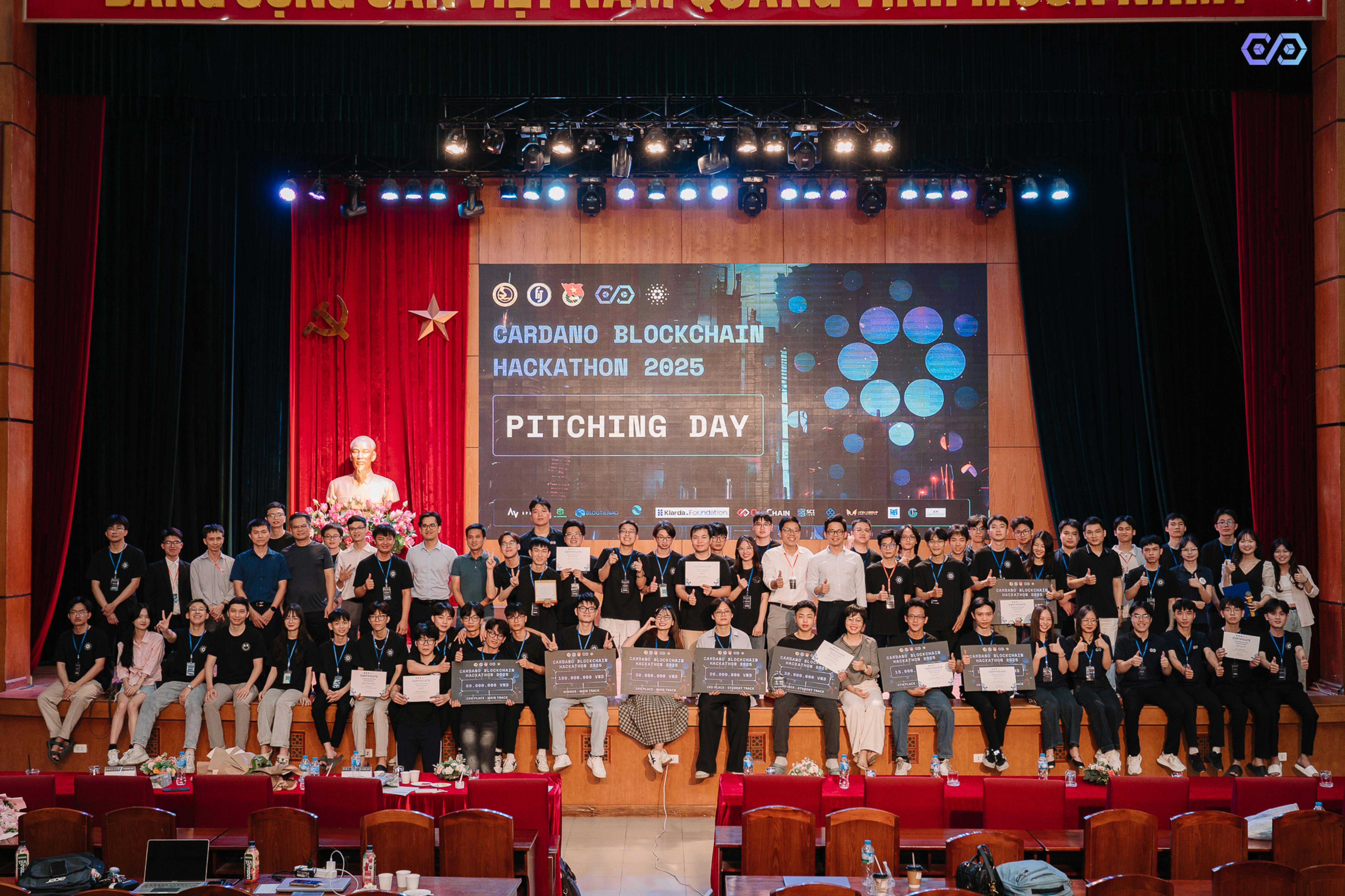
Our project funded:
- Fund 10 Funded Project: "🇻🇳 Vietnam Cardano Catalyst - NFT Exchange testing and development environment helps young people approach with the Web3.0 platform"
- Fund 11 Funded Projects:
- "Dualtarget for ADA-Holders (Staking and increasing assets) with a decentralized automated trading bot"
- "🇻🇳 The Complete Aiken Course Cardano: From Zero to Expert!"
- Fund 12 Funded Project: "Open source dynamic assets (Token/NFT) generator (CIP68)"
- Fund 13 Funded Project: “[BUTC] Fueling Growth: Cardano Hackathons to Inspire Startup Success”
These achievements not only provide a solid foundation for the current proposal but also affirm our capacity to effectively manage funded initiatives and deliver tangible value to the Cardano ecosystem.
Comprehensive blockchain expertise
Our team possesses deep knowledge and practical experience in blockchain development, AI, and decentralized solutions. Beyond project execution, we have contributed to Cardano through practical implementations and recognized research, such as:
- Article 1: "Students Scientific Research with Cardano Blockchain"
- Article 2: "Students Scientific Research with Cardano Blockchain"
- Article 3: "Scientific research results of students of the University of Transport and Communications 2024"
- Article 4: "Cardano Blockchain Hackathon Vietnam 2024”
This blend of technical skill and active engagement in the Cardano community equips us with the competence and vision to successfully execute this project.
Validation and collaboration
The project's feasibility will be demonstrated through a Minimum Viable Product (MVP), incorporating both quantitative and qualitative measurement methods:
Quantitative metrics:
- Tracking the number of module upgrades and contributions via GitHub.
- Monitoring task completion rates on Trello.
- Measuring adoption through the number of active users on the platform.
Qualitative assessment:
- Conducting user satisfaction surveys to refine the product.
- Assessing stakeholder interest during project presentations.
- Close collaboration with the Cardano community and relevant stakeholders ensures our solution is practical, meets user needs, and aligns with the latest technological advancements.
Financial management and accountability
We are committed to transparent and effective financial management through the following strategies:
- Detailed budget planning: Clear allocation of resources for development, operations, and marketing.
- Transparent cost tracking: Maintaining auditable records of all expenditures.
- Periodic reporting: Providing regular updates to assess financial performance and guide strategic adjustments.
Supported by our team's academic background and project management experience, we adhere to strict budgetary discipline and the highest standards of transparency.
Amplifying impact and open-source commitment
We are not only focused on project completion but also on amplifying its impact through open-source contributions and community engagement. Our tools and solutions will be made publicly available, fostering decentralized innovation and promoting widespread blockchain adoption. Transparency and communication are our guiding principles through open dialogue with stakeholders, regular progress updates, and a collaborative environment, we ensure all parties are engaged in the project's success.
We invite Catalyst to join us in shaping the future of decentralized innovation.
[Milestones] Project Milestones
Milestone Title
Analysis and design
Milestone Outputs
- Complete system architecture design for the Cardano IoT SDK, covering module interactions, data flow, and integration with the Cardano blockchain.
- Develop technical requirements document detailing both functional and non-functional requirements.
- Design API specifications and define C++ library structure for SDK modules.
- Initialize a public GitHub repository with project README, and MIT License.
Acceptance Criteria
- System architecture diagram is finalized, showing all planned modules and their relationships.
- Technical requirements document includes:
- Functional requirements for each planned module.
- Non-functional requirements such as performance, security, and scalability.
- API specification covers endpoints, data structures, and expected behaviors for each module.
- GitHub repository is publicly accessible, contains MIT License, and initial project setup files README
Evidence of Completion
- Link to public PDF of the system architecture diagram.
- Link to PDF file of the technical requirements document.
- Link to public API specification document (PDF).
- Link to the public GitHub repository showing initial commits and MIT License
Delivery Month
1
Cost
9600
Progress
10 %
Milestone Title
SDK Development phase 1
Milestone Outputs
- Develop device manager module to manage IoT device registration, configuration, and status monitoring.
- Develop security layer module to ensure robust authentication, data encryption, and secure communication channels.
- Develop data provenance module to enable tracking of data origin, integrity, and historical changes.
- Conduct comprehensive functional testing for each module.
- Produce complete API documentation covering all developed modules.
Acceptance Criteria
- All modules are fully implemented and deliver the functionalities defined in this milestone:
- Device manager: Manages IoT device registration, configuration, and status monitoring.
- Security layer: Ensures secure authentication, encryption, and communication.
- Data provenance: Tracks data origin, ensures integrity, and maintains historical records
- All unit test cases execute successfully with a 100% pass rate.
- API documentation is clearly structured, containing complete references, data formats, and usage examples to enable developers to easily integrate the modules.
Evidence of Completion
- Links to GitHub commits containing the complete source code of the three modules.
- Video demonstration showcasing the key features of each module.
- Test reports (PDF) showing successful execution of functional tests for each module.
- Public link to API documentation on website covering all modules.
Delivery Month
4
Cost
27000
Progress
40 %
Milestone Title
SDK Development phase 2
Milestone Outputs
- Develop smart contracts integrator module to enable seamless interaction between IoT devices and Cardano smart contracts, including deployment, execution, and event listening.
- Develop transaction manager module to handle transaction creation, signing, submission, and status tracking within the Cardano blockchain.
- Develop energy manager module to monitor, optimize, and report energy consumption of IoT devices in real time.
- Develop cardano client module providing low-level blockchain interaction capabilities (querying blockchain state, retrieving metadata, interacting with nodes).
- Develop utilities module offering shared helper functions, configuration management, and reusable components for other modules.
- Conduct end-to-end functional testing for all developed modules.
- Produce detailed API documentation for all modules in this milestone.
Acceptance Criteria
- All modules are fully implemented and deliver the functionalities defined in this milestone:
- Smart contracts integrator: Supports smart contract deployment, execution, and event handling for IoT workflows.
- Transaction manager: Creates, signs, submits, and tracks transactions reliably on the Cardano blockchain.
- Energy manager: Monitors energy usage of IoT devices, provides optimization suggestions, and generates usage reports.
- Cardano client: Offers blockchain querying, metadata retrieval, and node communication features.
- Utilities: Delivers shared helper methods and configuration services used by other modules.
- All functional and integration test cases execute successfully with a 100% pass rate.
- API documentation is clearly structured, containing complete references, data formats, and usage examples to enable developers to easily integrate the modules.
Evidence of Completion
- Links to GitHub commits containing the complete source code of the all modules of outputs.
- Video demonstration showcasing the key features of each module.
- Test reports (PDF) showing successful execution of functional tests for each module.
- Public link to API documentation on website covering all modules of outputs.
Delivery Month
7
Cost
29195
Progress
70 %
Milestone Title
Complete SDK and improment
Milestone Outputs
- Complete SDK with all modules (Device manager, security layer, data provenance, smart contracts integrator, transaction manager, energy manager, Cardano client, utilities) implemented and integrated.
- Conduct closed beta testing with selected Cardano developer community members.
- Gather and analyze developer feedback to refine SDK features, performance, and usability.
- Perform bug fixes and improvements based on beta feedback.
Acceptance Criteria
- All modules are integrated into a single SDK package and verified to work together without critical defects.
- Beta testing feedback is collected from at least 5 independent developers/teams and documented.
- All reported high and medium severity issues are resolved before milestone completion.
- Automated test coverage reaches at least 100%, verified by test coverage reports.
- Updated SDK reflects adjustments made from beta tester feedback.
Evidence of Completion
- Link to GitHub branch containing the beta-tested SDK source code.
- Beta testing report (PDF) summarizing participants, feedback, issues, and resolutions.
- Test coverage report (PDF).
- Changelog highlighting all refinements and bug fixes implemented in this milestone.
Delivery Month
9
Cost
16000
Progress
90 %
Milestone Title
Finalization and release
Milestone Outputs
- Release SDK v1.0 as open-source on GitHub under MIT License.
- Publish official SDK documentation website
- Host an online workshop or webinar to introduce SDK features and usage to the Cardano developer community.
- Produce a Close-out report and Close-out video summarizing the project journey, outcomes, and lessons learned.
Acceptance Criteria
- SDK v1.0 code publicly available on GitHub under MIT License, tagged and packaged for release.
- Documentation site is publicly accessible and covers all required sections in a clear, developer-friendly format.
- Workshop/Webinar conducted with at least 20 attendees and recording made available online.
- Close-out report and video are completed, published, and shared with the Cardano community.
Evidence of Completion
- GitHub release link for SDK v1.0 with release notes.
- Public documentation site URL.
- Webinar/Workshop recording link.
- Link to PDF of the Close-out report.
- Link to the Close-out video.
Delivery Month
10
Cost
17198
Progress
100 %
[Final Pitch] Budget & Costs
Please provide a cost breakdown of the proposed work and resources
SUMMARY
Milestone 1: Analysis and design
Estimated cost for this phase: 9600 ADA ⇔ 9.7%
Milestone 2: SDK Development phase 1
Estimated cost for this phase: 27000 ADA ⇔ 27.27%
Milestone 3: SDK Development phase 2
Estimated cost for this phase: 29195 ADA ⇔ 29.49%
Milestone 4: Complete SDK and Improment
Estimated cost for this phase: 16000 ADA ⇔ 16.16%
Milestone 5: Finalization and release
Estimated cost for this phase: 17198 ADA ⇔ 17.37%
Total Costs: 98993 ADA
Detail about budget of this project:
[Final Pitch] Value for Money
How does the cost of the project represent value for the Cardano ecosystem?
This project represents an effective investment because it focuses on creating foundational, reusable value, rather than just building a single, isolated application.
Investing ~98,000 ADA in this project is not just the cost of creating a product, but a strategic investment in Cardano's core infrastructure. The value delivered far exceeds the capital required:
- Permanent asset for the community: We are not building a proprietary product. We are creating an open source asset that can be used, improved, and benefited by anyone in the ecosystem, forever.
- Unlocking a billion dollar market: By removing the technical barrier, this SDK opens the door for Cardano to penetrate the booming IoT market.
- Cost-effective: Instead of dozens of teams having to develop individual, costly solutions, the community can invest once in a high-quality, foundational solution for everyone to use.
- Drive real utility: This project directly advances Cardano’s goal of becoming a platform that solves real-world problems, enables meaningful transactions, and adds intrinsic value to the network.
We believe that the Cardano IoT SDK is a highly viable, high-impact project that offers great investment value to the Cardano treasury. We look forward to receiving support from the community.
In addition to the information demonstrating the potential value that this project brings, we are committed to ensuring that the budget amounts we offer are based on the reality of the IT labor market in our region.
[Required Acknowledgements] Consent & Confirmation
Terms and Conditions:
Yes
Team
Members of our Moderntensor team:
Thanh Khuat Dinh
Experiences:
- President at Blockchain Pioneer Student Club.
- Experienced in leading and managing the operations of projects, organizations, and clubs.
- Project funded at Fund 10, 11, 12, 13 in Project Catalyst.
- Project Manager at DEMARKET.
- Experienced 2 years of building and operating on the Cardano Blockchain.
- Blockchain & Sustainability Researcher.
Contact:
- Email: khuatthanh456@gmail.com
- LinkedIn: https://www.linkedin.com/in/robertkhuat/
Son Nguyen Hong
Experiences:
- 3 years product development in Cardano ecosystem.
- Vice President of Blockchain Pioneer Student Club.
- More than a year of building and operating on the Cardano Blockchain platform.
- 6 months working with Haskell and Plutus languages, 2 years+ working with Aiken programming language.
- Project funded at fund 10, 11, and 13 in Project Catalyst.
- Experience in dApp development and skills in writing smart contracts with Aiken language.
- 4 years of experience developing AI/machine learning/deep learning, data science,...
- Teaching Smartcontract and Aiken programming in the club and has a course of Aiken programming on YouTube.
Contact:
Email: sonlearn155@gmail.com
LinkedIn: https://www.linkedin.com/in/michael-flynn-a34325283/
Github: https://github.com/sonson0910
Tung Nguyen Tien
Experiences:
- I'm a Fullstack and Blockchain Developer with a strong focus on building decentralized applications (dApps) within the Cardano ecosystem.
- 3 years of experience developing dApps on Cardano, with a specialization in writing smart contracts using Aiken.
- 3 years of experience in fullstack web development and hands-on experience building and maintaining solutions on the Cardano blockchain.
- Successfully funded through Project Catalyst in Fund 10 (NFT Exchange), Fund 11 (Aiken Tutorial Course), and Fund 12 (CIP-68 Dynamic Asset).
- Contributed to the ecosystem as a Level 2 Community Reviewer (Funds 11, 12, 13) and a Milestone Reviewer (Funds 11, 12, 13)
Contact:
- Email: tientung03.nttvn@gmail.com
- LinkedIn: https://www.linkedin.com/in/nguyen-tien-tung-880585250/
- Github: https://github.com/TienTung2501
Hong Nhung Tran
Experiences:
- Vice President, Logistics Club - University of Transport and Communications
- First Prize Winner, Scientific Research Competition - Faculty of Transport Economics, University of Transport and Communications (2024-2025)
- Master of Ceremonies - Academic events, seminars, and competitions
- Team Leader - Academic projects, event planning, and communications strategy
- Fresher DA - YRC FTU
- Research Focus - Finance and economics in blockchain technology
Contact:
Email: tranhnhung2912@gmail.com
LinkedIn: https://www.linkedin.com/in/hong-nhung-tran-084504304/
Hung Nguyen Thanh
Experiences:
- More than a year of building and operating on the Cardano Blockchain platform.
- Over 2 years of experience as a Full-stack Developer, proficient in both front-end (React/NextJS) and back-end (Python/.NET C#), handling everything from design to deployment.
- Skilled in building Python SDKs, focusing on clean architecture, performance optimization, and comprehensive documentation to streamline integration for developers.
Contact:
- Email: thanh.hung.st302@gmail.com
- LinkedIn: https://www.linkedin.com/in/nguyen-tien-tung-880585250/
- Github: https://github.com/hugnt