Last updated 9 months ago
Next-Gen Testing Sandbox for Plutus: Smart AI for Developers
Problem
Cardano Gen-z devs lack a smart Version Tracking, secure plus smart guided environment to test and debug important Plutus contracts with simulation, AI insight before costly mainnet deployment.
Solution
An AI-powered browser-based time-travel debugging sandbox for off-chain Plutus contract testing with tutorials, multi-scenario simulation, feedback, low cost area—ensuring safe, cost-free development.
Total to date
This is the total amount allocated to Next-Gen Testing Sandbox for Plutus: Smart AI for Developers.
About this idea
[Proposal setup] Proposal title
Please provide your proposal title
Next-Gen Testing Sandbox for Plutus: Smart AI for Developers
[Proposal Summary] Budget Information
Enter the amount of funding you are requesting in ADA
100000
[Proposal Summary] Time
Please specify how many months you expect your project to last
6
[Proposal Summary] Translation Information
Please indicate if your proposal has been auto-translated
No
Original Language
en
[Proposal Summary] Problem Statement
What is the problem you want to solve?
Cardano Gen-z devs lack a smart Version Tracking, secure plus smart guided environment to test and debug important Plutus contracts with simulation, AI insight before costly mainnet deployment.
[Proposal Summary] Supporting Documentation
Supporting links
- https://www.d3vtech.com/insights/cardano-blockchain-real-world-applications-and-deployment-using-google-cloud/ ,
- https://www.mdpi.com/1424-8220/22/24/9750
[Proposal Summary] Project Dependencies
Does your project have any dependencies on other organizations, technical or otherwise?
No
Describe any dependencies or write 'No dependencies'
No dependencies
[Proposal Summary] Project Open Source
Will your project's outputs be fully open source?
Yes
License and Additional Information
The sandbox and all the software components (e.g., tools, libraries and codes) will be released under the MIT License and GNU GPL-3.0 . This allows others to freely use, modify, distribute, and sublicense the code, provided the original license and copyright notice are included.
[Theme Selection] Theme
Please choose the most relevant theme and tag related to the outcomes of your proposal
Developer Tools
[Campaign Category] Category Questions
Mention your open source license and describe your open source license rationale.
We'll use MIT License for the core sandbox platform and GNU GPL-3.0 for AI components. MIT enables maximum developer adoption with minimal restrictions, allowing commercial use and modifications while requiring attribution. GPL-3.0 for AI tools ensures derivative works remain open-source, protecting community interests. This dual approach balances accessibility with copyleft protection, encouraging both enterprise adoption and community-driven innovation in the Cardano ecosystem.
How do you make sure your source code is accessible to the public from project start, and people are informed?
Our GitHub repository will be public from day one at github.com/cardano-testing-sandbox with all commits visible. We'll announce repository creation on Cardano forums, social media, and developer channels. Weekly development updates will include direct GitHub links. The repository will feature comprehensive README files, contribution guidelines, and issue tracking. We'll maintain active presence in Cardano developer communities, sharing progress and soliciting feedback to ensure maximum visibility and community engagement.
How will you provide high quality documentation?
We'll provide multi-layered documentation: comprehensive API references with code examples, step-by-step tutorials for beginners, advanced guides for complex scenarios, and video walkthroughs. Documentation will be version-controlled alongside code, auto-generated from inline comments, and regularly updated. We'll include interactive examples within the sandbox, FAQ sections addressing common issues, and contribution guides for community developers. All documentation will undergo technical review and user testing to ensure clarity and accuracy.
[Your Project and Solution] Solution
Please describe your proposed solution and how it addresses the problem
We propose building a Cardano Smart Contract Testing Sandbox, a browser-based development environment that allows developers to simulate, debug, and optimize Plutus smart contracts in a secure and rich simulation environment off-chain setting before deploying to mainnet.
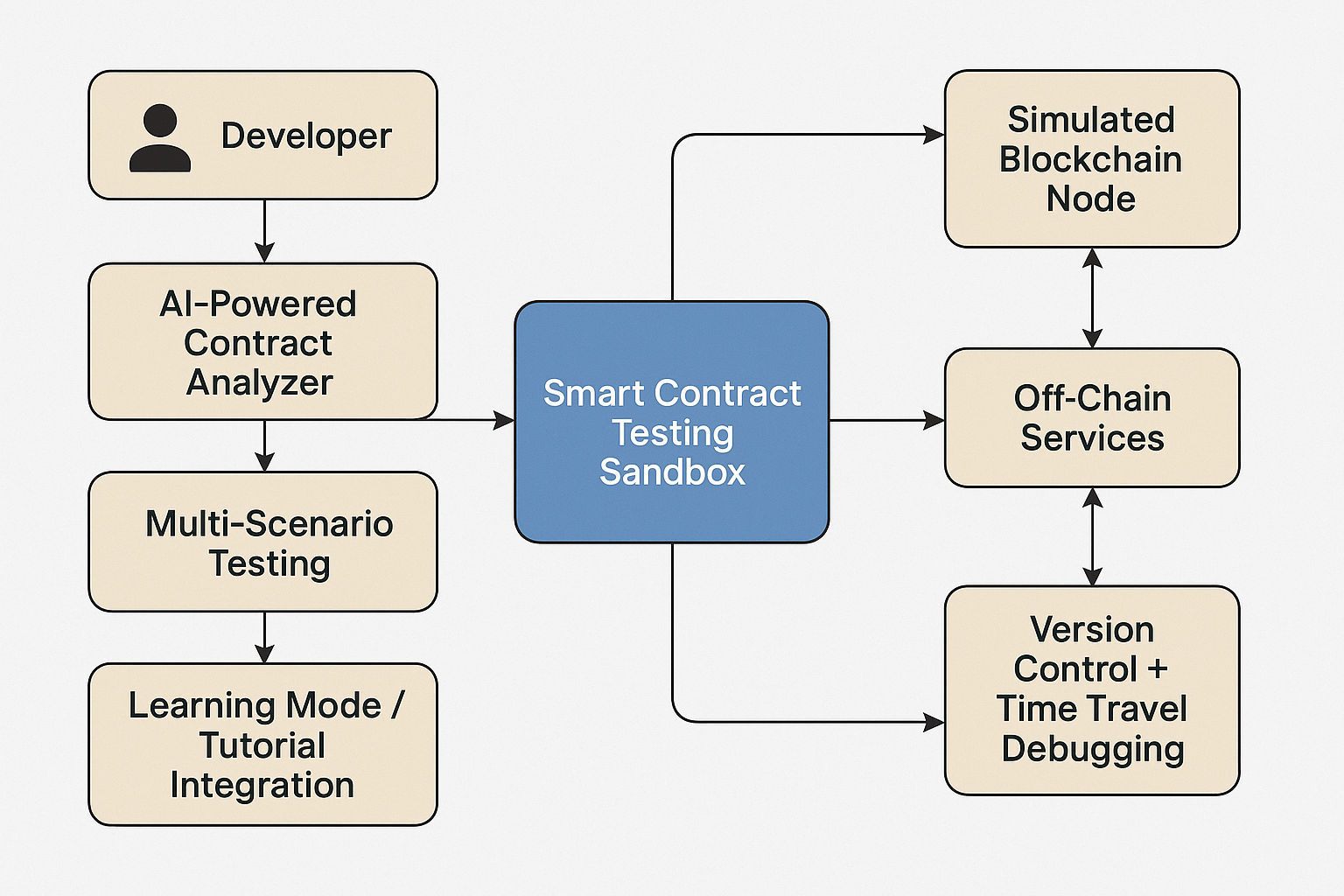
As of now Developers working with Plutus smart contracts often face significant barriers during the learning and development process. The complexity of smart contract design, absence of version tracking, lack of accessible simulation environments, limited off-chain interaction tools, and minimal educational support all contribute to a steep learning curve. Moreover, current tools rarely provide advanced debugging capabilities or AI-driven insights to improve contract quality.
This results in inefficient development cycles, error-prone contracts, high deployment costs, and a fragmented learning experience especially for new developers and those experimenting with more advanced decentralized applications (dApps) on Cardano.
We propose a Cardano Smart Contract Testing version tracking Sandbox, an interactive, web-based environment tailored for developers to safely write, simulate, and debug Plutus smart contracts before deploying them on-chain.
This solution goes beyond traditional sandboxes by integrating:
- AI-Powered Contract Analyzer – Assists developers by interpreting, explaining, and suggesting improvements to their Plutus code using LLMs.
- Multi-Scenario Testing – Allows simulation of various edge cases and failure conditions (e.g., network congestion, failed txs).
- Learning Mode & Tutorials – Provides a guided environment for beginners, with interactive walkthroughs and educational templates.
- Integration with Off-chain Services – Enables realistic simulations by mocking external services like wallets, price oracles, and metadata providers.
- Version Control + Time Travel Debugging – Offers a minimal but functional way to track contract changes and step through execution history.
This solution aims to eliminate the high cost and complexity of on-chain testing, reduce development risk, and accelerate the Cardano smart contract development lifecycle.
Core Features & Implementation Plan:
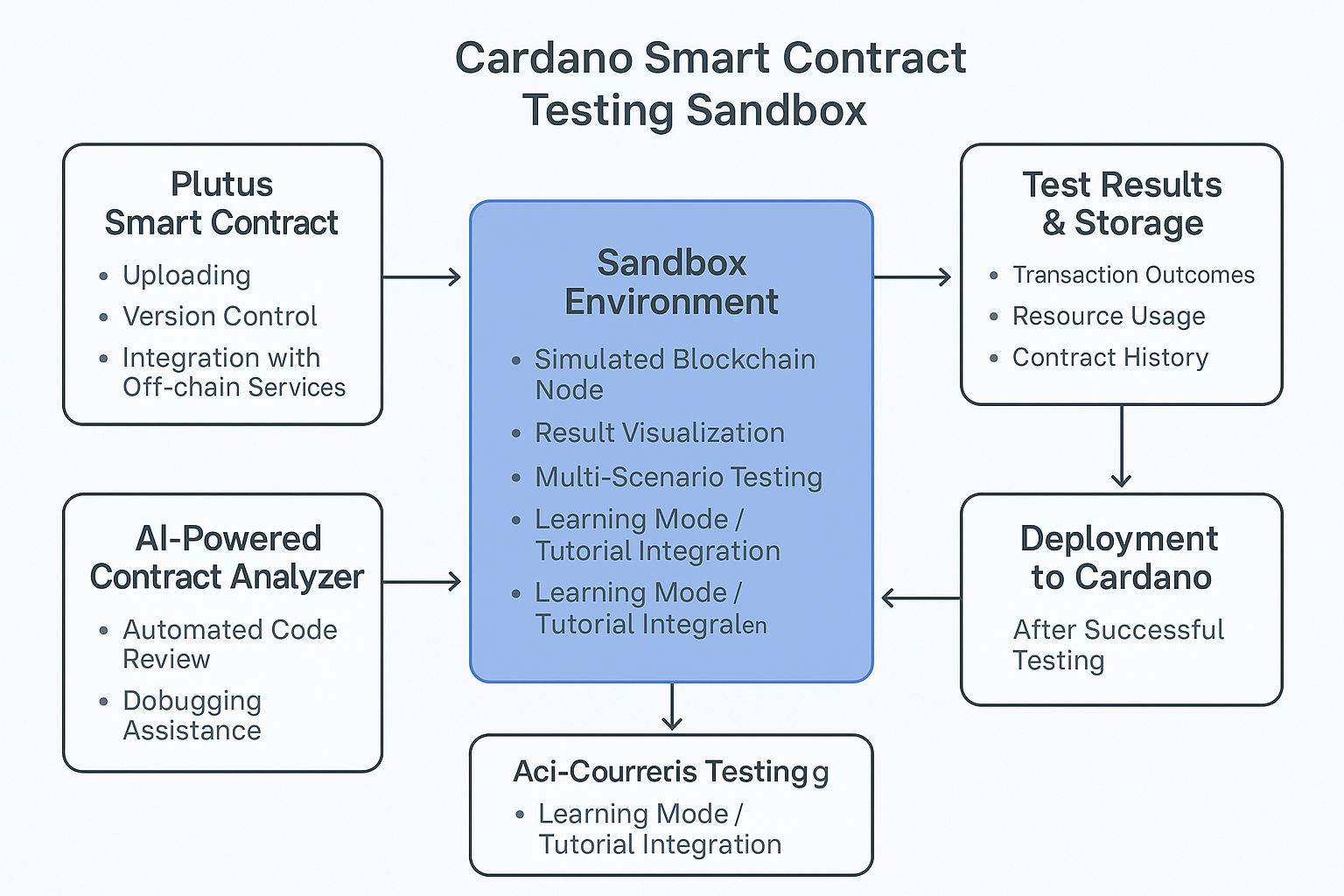
1. Contract Editor
- Syntax-highlighted code editor for writing Plutus scripts.
- Supports upload/import of contract templates.
Includes an AI-powered assistant that can:
Explain contract logic in simple terms.
Suggest optimizations.
Flag potential logic errors or inefficiencies.
2. Multi-Scenario Simulation Engine
Simulates different transaction flows and edge cases, including:
- Network congestion
- Invalid/malicious inputs
- Failing validator logic
- Large-scale user interaction
- Gives developers insight into contract behavior before mainnet deployment.
3. Learning Mode & Tutorials
- Interactive mode with guided walkthroughs.
- Step-by-step lessons to build common contract types (NFTs, DAOs, payment channels).
- Challenges like “Fix this bug” or “Optimize this logic.”
- Tailored to both new and intermediate developers.
4. Off-Chain Service Mocking
Built-in modules to simulate:
- Wallets
- Oracle feeds (e.g., prices, weather)
- Metadata providers
- Identity systems (for ZKP testing in future versions)
5. Minimal Version Control & Time Travel Debugger
- Track and manage changes to smart contract versions.
- Step backward and forward in contract execution flows to understand logic behavior.
- Useful for debugging and learning.
6. Web-Based Sandbox Interface:
- An intuitive UI will allow developers to upload and edit their Plutus smart contracts directly in the browser. The backend will securely execute code in an isolated containerized environment, ensuring safety and preventing unintended effects.
7. Simulated Blockchain Node:
A local simulation of the Cardano blockchain will allow developers to test contract behavior under real-world conditions. It will include:
- Transaction fee simulation
- Delay and block timing mechanics
- Resource constraint modeling
8. Plutus Debugging Tools:
A built-in debugger will allow step-by-step execution of smart contracts. Developers can inspect:
- Input/output values
- Validation logic
- Contract state at each step
- This helps identify logical bugs and ensure expected behavior.
9. Result Visualization & Feedback:
Detailed transaction feedback, including:
- Success/failure logs
- Resource (gas) usage
- Contract state transitions
- This provides immediate insight into contract performance.
10. Developer Profiles & Versioning:
- Users can store multiple contract versions and test results, track evolution across development stages, and revisit previous iterations.
11. Test Case Reusability:
- Support for reusable test cases and contract scripts will allow developers to replicate real-world scenarios and adapt them to different use cases efficiently.
12. Integration with Cardano Tools:
- Seamless compatibility with existing Plutus tools and Cardano CLI enables smooth migration of contracts between the sandbox, testnet, and future mainnet.
13. Stress Testing & Performance Metrics:
Simulate high-load conditions to analyze:
- Time-to-finality
- Scalability
- Resource utilization
- These metrics will help optimize contract design under pressure.
14. Documentation & Learning Materials:
- Comprehensive tutorials, sample contracts, and API documentation will support developers of all levels. This will promote ease of use and foster community learning.
By simulating Cardano's blockchain logic off-chain, this sandbox will significantly reduce deployment risk, development time, and cost. Developers will be empowered to:
- Iterate faster
- Debug with confidence
- Deploy with fewer errors
By allowing developers to share simulations, tutorials, and contract versions. By integrating education, simulation, AI assistance, and debugging, it becomes more than a dev tool, it's a full learning and testing suite for Plutus smart contracts.
[Your Project and Solution] Impact
Please define the positive impact your project will have on the wider Cardano community
The Cardano Smart Contract Testing Sandbox will deliver multi-layered, long-term benefits for developers, enterprises, and the broader Cardano ecosystem:
Accelerated Smart Contract Development
By offering a secure and efficient testing environment for Plutus smart contracts, the sandbox will significantly shorten development cycles. This enables faster deployment of decentralized applications (dApps), driving innovation and increasing activity on the Cardano network.
Quantitative Metrics:
60% reduction in average contract development time (from 8-12 weeks to 3-5 weeks)
300+ new developers onboarded within first 12 months
2,000+ smart contracts tested and refined before mainnet deployment
50+ dApps launched using sandbox-tested contracts in Year 1
Version Control Integratio for More User Attraction:
we know the importance of version tracking in dvelopemtnr and testing in work, with this features more user will be attractedo cardano ecosystem and increase the production
Lower Barriers for New Developers
Many developers—especially those new to blockchain—struggle with complex setups and on-chain testing. Our sandbox eliminates these friction points by providing a user-friendly, ready-to-use platform. This will attract fresh talent and diversify the Cardano developer base.
Quantitative Metrics:
40% increase in developer retention rate (from initial learning to active development)
200+ developers from non-blockchain backgrounds entering Cardano ecosystem
70% reduction in setup time for new developers (from 2-3 days to 2-3 hours)
Qualitative Metrics:
Enhanced developer satisfaction and confidence scores
Improved community feedback on Cardano's developer experience
Increased diversity in developer demographics and geographic distribution
Reduced On-Chain Risks
Testing smart contracts in an isolated environment before mainnet deployment will reduce the likelihood of bugs, vulnerabilities, and costly mistakes. This enhances the overall security, reliability, and trustworthiness of the Cardano network.
Quantitative Metrics:
50% reduction in post-deployment contract vulnerabilities
75% decrease in failed mainnet transactions due to contract errors
$500K+ equivalent in ADA saved from prevented deployment failures
90% improvement in first-deployment success rate
Qualitative Metrics:
Enhanced ecosystem reputation for security and reliability
Increased enterprise confidence in Cardano smart contracts
Strengthened developer trust in deployment processes
Greater Adoption of Plutus
A robust and accessible testing suite will increase interest in Plutus, Cardano's native smart contract language. Developers from other ecosystems (e.g., Ethereum, Solana) will be more inclined to explore Cardano when powerful testing tools are available.
Quantitative Metrics:
150+ developers migrating from other blockchain ecosystems
45% increase in Plutus-related forum discussions and community activity
25+ educational institutions adopting the sandbox for blockchain courses
100+ tutorial completions per month by Month 6
Qualitative Metrics:
Improved perception of Plutus as developer-friendly and accessible
Enhanced competitive positioning against Ethereum and Solana tooling
Strengthened academic and educational adoption
Enabling Enterprise Adoption
Enterprises demand rigorous testing environments before adopting blockchain solutions. Our sandbox will include performance metrics, stress testing, and visual debugging—providing the tools necessary for enterprise-grade deployment and confidence.
Quantitative Metrics:
10+ enterprise partnerships established within 18 months
5+ Fortune 500 companies evaluating Cardano for blockchain projects
80% improvement in enterprise developer onboarding time
$2M+ in enterprise project value built on sandbox-tested contracts
Qualitative Metrics:
Enhanced enterprise perception of Cardano's maturity and reliability
Improved compliance and audit readiness for enterprise deployments
Strengthened institutional confidence in Cardano infrastructure
Community Collaboration
The sandbox encourages a collaborative culture where developers can share templates, test cases, and debugging strategies. This fosters open innovation and strengthens the community's collective problem-solving capabilities.
Quantitative Metrics:
500+ shared contract templates and test cases within community library
1,000+ monthly active community forum participants
30+ community-contributed tutorials and guides
85% user satisfaction rate with community support features
Qualitative Metrics:
Enhanced sense of community ownership and collaborative development
Improved knowledge sharing and mentorship culture
Strengthened developer network effects and peer learning
Driving Long-Term Ecosystem Growth
With better tooling, more developers and businesses will build on Cardano leading to increased dApp launches, contract interactions, and transaction volume. The sandbox aligns with Cardano's mission of scalability, decentralization, and global adoption.
Quantitative Metrics:
25% increase in monthly active Cardano addresses within 18 months
40% growth in smart contract interactions on mainnet
100+ new dApps launched by sandbox-trained developers
15% increase in Cardano's developer ecosystem ranking vs competitors
Qualitative Metrics:
Enhanced Cardano brand recognition as developer-centric blockchain
Improved ecosystem sustainability and self-reinforcing growth patterns
Strengthened alignment with Cardano's decentralization and accessibility mission
Measurement Framework
Short-term (0-6 months):
Weekly active users, contract testing volume, bug detection rate
Developer satisfaction surveys, community engagement metrics
Platform uptime, performance benchmarks, feature adoption rates
Medium-term (6-18 months):
Developer retention and growth rates, enterprise inquiries and partnerships
Mainnet deployment success rates, ecosystem project launches
Educational adoption, community contribution metrics
Long-term (18+ months):
Cardano ecosystem market share growth, total value locked in sandbox-tested contracts
Academic research citations, industry recognition and awards
Sustainable community-driven platform evolution and expansion
Summary Impact
The Smart Contract Testing Sandbox will:
Accelerate dApp development by 60% while improving quality
Expand the developer community by 300+ new participants
Improve contract safety with 50% fewer vulnerabilities
Boost Plutus adoption through enhanced developer experience
Attract enterprise users with professional-grade tooling
Foster collaborative innovation through community features
Drive Cardano's long-term growth and competitive positioning
It's an essential building block toward a more vibrant, secure, and developer-friendly Cardano ecosystem with measurable impact across technical, social, and economic dimensions.
[Your Project and Solution] Capabilities & Feasibility
What is your capability to deliver your project with high levels of trust and accountability? How do you intend to validate if your approach is feasible?
Our capability to deliver this project with high levels of trust and accountability stems from our team's extensive experience in software development, education, and community engagement. With a proven track record of delivering successful projects and initiatives within the blockchain space, we possess the expertise and dedication required to execute this proposal effectively.
Our previous experience with blockchain integration Cardano projects funded by Catalyst in the previous funding round, including:
- Universal DevTools for Real-time Tracking for 45%+ of Global Websites Support (https://milestones.projectcatalyst.io/projects/1100282))
- Enhancing developer ecosystem with open source tooling (https://projectcatalyst.io/funds/11/cardano-open-developers/enhancing-cardano-developer-ecosystem-with-open-source-tooling))
- Cardano for 100,000+ students (https://projectcatalyst.io/funds/11/cardano-open-developers/enhancing-cardano-developer-ecosystem-with-open-source-tooling))
- CardanoChain Poultry Trace dApp” projects (https://projectcatalyst.io/funds/11/cardano-open-developers/enhancing-cardano-developer-ecosystem-with-open-source-tooling))
highlights our commitment and proven ability to deliver impactful projects.
Our team is proud to be partnered with MLOps Community (https://mlops.community/),,) a global organization at the forefront of machine learning, DevOps, and cutting-edge technology. With branches in various countries and partnerships with industry leaders like AWS, NVIDIA, Databricks and more, we have demonstrated our capacity to deliver successful events and initiatives, showcasing our commitment to innovation and community engagement.
Also we are an Official Partner With Microsoft Startup Founder Hub, We receive more than 45 AI related Microsoft products with a mix of technical benefits and business resources.
We’re trusted by Microsoft!

Previous Success Recap:
- Past Experience: Our team has successfully developed Blockchain and AI based Merit-Reputation Engine for Singularitynet.io (http://Singularitynet.io) of Mindplex.ai (http://Mindplex.ai)
- Educational Explorer App: 100,000+ downloads on Google Play (https://play.google.com/store/apps/details?id=com.herma.apps.textbooks))
- Developer and User Feedback: 85% positive response rate from 50+ developer interviews
- Developer Tools: 60,000+ active monthly users across our mobile app tooling suite
- Community Recognition: 5+ successful Project Catalyst funding rounds totaling $300K+
- Technical Expertise: 8+ years blockchain development experience
- Open Source Contributions: 50+ GitHub repositories with 2,000+ stars
- Developer and User Feedback: 85% positive response rate
- Collaboration: Our project has joined Microsoft for Startups Founders Hub. We receive more than 45 AI related Microsoft products.
- Expertise in Educational Content: Experienced educators and subject matter experts ensure high-quality resources.
- Transparent Financial Management: Clear budgeting, expense tracking, and reporting processes
- Trustworthy Partnerships: Collaborations with Educational Institutions and Experts
- User Feedback Integration: Actively collecting and addressing user feedback for continuous improvement
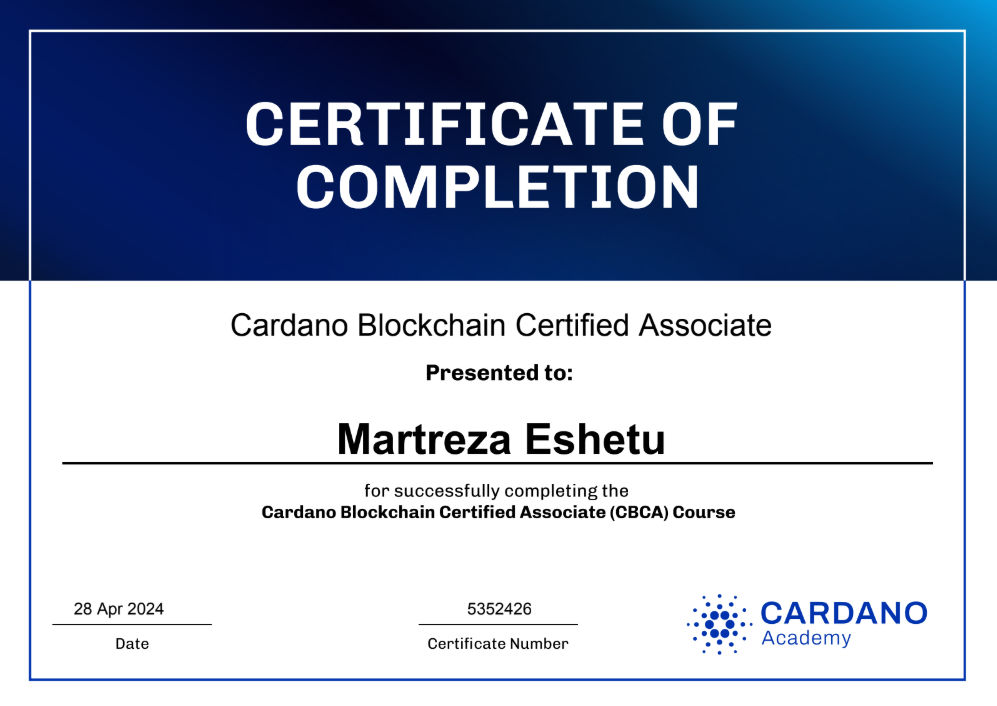
- Well educated Leader: The project is owned and lead by BSc, MSc, BA and Cardano Blockchain Certified Associate (CBCA)
We are Simply Highly Experienced programmers in haskell, plutus, solidity, AI, ML and subject matter experts ensure high-quality resources.
Transparent Financial Management: Clear budgeting, expense tracking, and reporting processes
User Feedback Integration: Actively collecting and addressing user feedback for continuous improvement
Capability and Feasibility Validation: Utilizing past success metrics, implementing pilot programs, and committing personal time for project development.
[Milestones] Project Milestones
Milestone Title
System Architecture & UI/UX Design Foundation
Milestone Outputs
Complete system architecture documentation and UI/UX design framework for the Cardano Testing Sandbox. This includes comprehensive technical specifications, database schema design, API architecture blueprints, and complete Figma design system. We'll establish the foundational Docker containerization strategy, define Django REST API endpoints, and create detailed wireframes for all user interfaces. The architecture will specify integration points for Cardano testnet connectivity, AI service interfaces, and user authentication systems. All designs will be responsive and accessibility-compliant, with clear user flows for contract testing, debugging, and educational pathways. Technical documentation will include deployment architecture, security protocols, and scalability considerations. This milestone ensures all subsequent development follows a cohesive, well-planned approach that meets both developer needs and technical requirements.
Acceptance Criteria
Complete system architecture document with detailed component diagrams, data flow charts, and integration specifications published in Google Drive and shared with team.
Full UI/UX design system created in Figma including color schemes, typography, component library, responsive breakpoints, and accessibility guidelines.
Database schema designed with Django models for user management, contract storage, test results, and AI analysis data.
REST API specification documented with all endpoints, request/response formats, authentication methods, and error handling protocols.
Docker container architecture defined with separate containers for frontend, backend, database, and AI services.
Security framework established including user authentication, contract code isolation, and data protection measures.
Cardano testnet integration plan with specified RPC endpoints, transaction simulation methods, and wallet connection protocols.
All designs validated through team review and initial stakeholder feedback sessions with documented approval.
Evidence of Completion
Published system architecture document with signed team approval in Google Drive with public sharing link.
Complete Figma design system with all screens, components, and interactive prototypes accessible via public Figma link.
Technical specification document detailing API endpoints, database models, and integration requirements.
Initial GitHub repository setup with project structure, README documentation, and architectural decision records (ADRs).
Docker-compose configuration file defining all service containers and their relationships.
Security audit checklist and implementation plan document.
Cardano testnet integration specification with connection protocols and testing procedures.
Video walkthrough of design system and architecture presentation (10-15 minutes) uploaded to project documentation.
Delivery Month
1
Cost
17000
Progress
20 %
Milestone Title
Frontend Development & User Interface Implementation
Milestone Outputs
Complete frontend application built with React/Next.js implementing the full UI/UX design system. This includes responsive contract editor with syntax highlighting for Plutus code, intuitive dashboard for managing multiple contract projects, interactive testing interface with real-time feedback, and comprehensive user authentication system. The frontend will feature drag-and-drop file uploads for contract imports, tabbed interface for multiple contract editing, integrated tutorial system with step-by-step guidance, and dynamic visualization of contract execution flows. All components will be fully responsive across desktop, tablet, and mobile devices. The interface will include dark/light theme support, accessibility features compliance (WCAG 2.1), and optimized performance with lazy loading and efficient state management. Integration stubs will be prepared for backend API connectivity, ensuring seamless data flow once backend services are operational. The frontend will be containerized with Docker and configured for CI/CD deployment pipeline.
Acceptance Criteria
Fully functional React/Next.js frontend application with all designed screens implemented and responsive across all device sizes.
Contract editor with syntax highlighting, auto-completion, error highlighting, and support for multiple file formats (Haskell, Plutus).
User authentication system with registration, login, password recovery, and profile management functionality.
Dashboard displaying user's contract projects, recent activity, test results, and quick access to tutorials.
File upload system supporting drag-and-drop for contract imports with validation and error handling.
Interactive tutorial system with guided walkthroughs, progress tracking, and embedded help documentation.
Testing interface with parameter input forms, execution controls, and results visualization components.
Theme switching (dark/light mode) with user preference persistence and accessibility compliance.
Performance optimization with page load times under 3 seconds and smooth interactions across all components.
Docker containerization with production-ready configuration and environment variable management.
CI/CD pipeline setup with automated testing, linting, and deployment to staging environment.
Comprehensive frontend documentation with component usage examples and development setup instructions.
Evidence of Completion
Live staging deployment accessible via public URL with full functionality demonstration.
GitHub repository with complete frontend codebase, including all React components, styles, and configuration files.
Automated test suite with >80% code coverage, including unit tests, integration tests, and end-to-end testing scenarios.
Performance audit report showing lighthouse scores >90 for performance, accessibility, and best practices.
Cross-browser compatibility testing results for Chrome, Firefox, Safari, and Edge with documented compatibility matrix.
Mobile responsiveness testing documentation with screenshots across different device sizes and orientations.
Accessibility compliance report with WCAG 2.1 AA level certification and screen reader compatibility testing.
Docker image successfully built and deployed with documented configuration and environment setup instructions.
Video demonstration (15-20 minutes) showcasing all frontend features, user flows, and responsive design capabilities.
Code review completion with documented feedback resolution and team approval signatures.
Delivery Month
2
Cost
20000
Progress
30 %
Milestone Title
Backend Development & API Implementation
Milestone Outputs
Complete Django REST API backend system with comprehensive contract management, user authentication, and data persistence capabilities. The backend will feature secure user management with JWT authentication, contract storage with version control, test execution logging, and integration endpoints for frontend connectivity. Database implementation using PostgreSQL with optimized queries, proper indexing, and data relationship management for users, contracts, test results, and AI analysis data. The API will include endpoints for contract CRUD operations, test execution triggering, result retrieval, user profile management, and tutorial progress tracking. Advanced features include contract sharing mechanisms, collaboration tools, and detailed analytics for user activity and system performance. Security implementations include input validation, SQL injection protection, CORS configuration, and rate limiting. The backend will be fully containerized with Docker, include comprehensive error handling, logging systems, and health monitoring endpoints. API documentation will be auto-generated using Django REST framework and Swagger, providing interactive documentation for all endpoints with example requests and responses.
Acceptance Criteria
Complete Django REST API with all endpoints implemented, tested, and documented using Swagger/OpenAPI specifications.
User authentication system with JWT tokens, registration, login, password reset, and profile management functionality.
PostgreSQL database with optimized schema, proper indexing, and all required models for users, contracts, test results, and system data.
Contract management system supporting CRUD operations, version control, file uploads, and sharing mechanisms between users.
Test execution logging system storing detailed results, error traces, performance metrics, and execution history.
Integration endpoints specifically designed for frontend connectivity with proper serialization and error handling.
Security measures including input validation, SQL injection protection, CORS configuration, rate limiting, and secure file handling.
Database migrations properly configured with rollback capabilities and environment-specific configurations.
Comprehensive error handling with meaningful error messages, proper HTTP status codes, and logging integration.
Health monitoring endpoints providing system status, database connectivity, and performance metrics.
Docker containerization with production-ready configuration, environment variables, and secrets management.
Automated testing suite with >85% code coverage including unit tests, integration tests, and API endpoint testing.
CI/CD pipeline configured for automated deployment, testing, and rollback capabilities.
Evidence of Completion
Live API deployment accessible via public URL with full Swagger documentation interface for testing all endpoints.
GitHub repository with complete backend codebase, including models, serializers, views, tests, and configuration files.
Database schema documentation with entity relationship diagrams and migration history showing proper database design.
API testing report with comprehensive endpoint testing results, performance benchmarks, and load testing analysis.
Security audit report documenting implemented security measures, vulnerability assessments, and penetration testing results.
Automated test suite results showing >85% code coverage with detailed test reports and continuous integration logs.
Performance testing documentation showing API response times, throughput measurements, and scalability analysis.
Docker deployment guide with step-by-step instructions, environment configuration, and troubleshooting documentation.
Integration testing results demonstrating successful frontend-backend connectivity and data flow validation.
System monitoring dashboard showing API health metrics, error rates, and performance indicators.
Code review documentation with peer review feedback, security review results, and team approval signatures.
Video demonstration (20-25 minutes) of complete API functionality, admin interface, and integration capabilities.
Delivery Month
3
Cost
23000
Progress
50 %
Milestone Title
Smart Contract Integration & AI Analysis Engine
Milestone Outputs
Complete integration of Cardano testnet connectivity and AI-powered contract analysis engine. This includes Cardano node integration for real-time blockchain interaction, Plutus script compilation and execution simulation, transaction construction and submission capabilities, and UTXO management for testing scenarios in testnet. The AI analysis engine will feature automated code review, vulnerability detection, gas optimization suggestions, and educational explanations of contract logic. Integration with large language models (LLMs) for natural language contract explanations, code improvement recommendations, and interactive developer assistance. The system will support multi-scenario testing with edge case simulation, stress testing capabilities, and comprehensive result analysis. Cardano testnet integration will include wallet connectivity, transaction monitoring, and real-time blockchain state synchronization. AI services will be containerized separately with proper API interfaces, error handling, and performance optimization. The system will include intelligent debugging assistance, automated test case generation, and personalized learning recommendations based on developer skill level and contract complexity. Advanced features include contract comparison tools, best practice suggestions, and community knowledge base integration.
Acceptance Criteria
Cardano testnet integration with full node connectivity, transaction submission, and blockchain state synchronization capabilities.
Plutus script compilation engine supporting local contract execution, validation logic testing, and error reporting.
UTXO management system for realistic transaction simulation including input selection, change calculation, and fee estimation.
AI analysis engine providing automated code review, vulnerability detection, and optimization suggestions with >80% accuracy rate.
Natural language processing integration for contract explanation, documentation generation, and interactive developer assistance.
Multi-scenario testing framework supporting edge cases, stress testing, and failure condition simulation with detailed reporting.
Wallet integration supporting multiple wallet types, transaction signing simulation, and balance management for testing.
Transaction monitoring system with real-time updates, confirmation tracking, and detailed execution logs.
AI services containerization with proper API interfaces, authentication, and rate limiting for optimal performance.
Debugging assistance tools providing step-by-step execution analysis, variable inspection, and logic flow visualization.
Automated test case generation based on contract analysis and common vulnerability patterns.
Performance optimization with response times <5 seconds for AI analysis and <10 seconds for complex contract simulations.
Integration testing demonstrating seamless connectivity between frontend, backend, AI services, and Cardano testnet.
Evidence of Completion
Live demonstration of complete system with successful contract compilation, testing, and AI analysis capabilities.
Cardano testnet integration testing results showing successful transaction submission, monitoring, and blockchain interaction.
AI analysis engine performance report with accuracy metrics, response time measurements, and capability demonstrations.
Contract testing suite with 50+ sample contracts successfully analyzed, tested, and optimized using the complete system.
Integration testing documentation showing seamless data flow between all system components and external services.
Performance benchmarking report demonstrating system responsiveness under various load conditions and concurrent users.
Security testing results for AI services, blockchain integration, and data handling with vulnerability assessment reports.
User acceptance testing with 10+ developers providing feedback on functionality, usability, and system reliability.
Documentation package including API integration guides, troubleshooting procedures, and system architecture updates.
Video demonstration (10-15 minutes) showcasing complete workflow from contract upload through AI analysis to testnet deployment.
GitHub repository updates with complete integration code, deployment scripts, and comprehensive documentation.
System monitoring results showing stability, error rates, and performance metrics under production-like conditions.
Delivery Month
4
Cost
25000
Progress
80 %
Milestone Title
Production Deployment & Community Launch
Milestone Outputs
Complete production deployment of the Cardano Smart Contract Testing Sandbox with full community launch, comprehensive documentation, and ongoing support infrastructure. This includes production-ready infrastructure deployment with load balancing, auto-scaling, monitoring, and backup systems. Security hardening with SSL certificates, firewall configuration, intrusion detection, and regular security audits. Community onboarding program with developer tutorials, video guides, API documentation, and interactive learning modules. Launch campaign including social media promotion, developer community outreach, conference presentations, and partnership establishment. Production monitoring with comprehensive logging, error tracking, performance analytics, and user behavior insights. Community support infrastructure including help desk system, bug reporting mechanisms, feature request tracking, and regular community feedback collection. Knowledge base creation with FAQ sections, troubleshooting guides, best practices documentation, and community-contributed content. Beta testing program with selected community developers providing feedback and validation before full public launch. Performance optimization ensuring system handles concurrent users, maintains response times, and scales effectively with growing adoption.
Acceptance Criteria
Production infrastructure deployed with 99.9% uptime guarantee, load balancing, auto-scaling, and disaster recovery capabilities.
Security implementation with SSL certificates, WAF protection, regular vulnerability scans, and compliance with security best practices.
Complete documentation suite including developer guides, API references, tutorials, and troubleshooting resources accessible via dedicated website.
Community launch campaign with 500+ initial registered users, social media engagement, and developer community presentations.
Monitoring and analytics dashboard providing real-time system health, user activity metrics, and performance indicators.
Support infrastructure with ticketing system, community forum, knowledge base, and responsive help desk operations.
Beta testing program completed with 25+ active testers providing validated feedback and system improvement recommendations.
Performance testing confirming system handles 100+ concurrent users with response times <3 seconds for standard operations.
Backup and recovery systems tested with documented procedures for data protection and system restoration.
Community feedback collection system with regular surveys, feature request tracking, and improvement roadmap publication.
Partnership establishment with 3+ Cardano ecosystem projects and educational institutions for collaborative promotion.
Launch success metrics achievement including user registration targets, system usage statistics, and community engagement levels.
Evidence of Completion
Live production system accessible at public domain with full functionality, monitoring dashboards, and user analytics.
Security audit report from third-party security firm confirming system safety and compliance with industry standards.
Community launch metrics report showing user registration numbers, engagement statistics, and adoption rate measurements.
Complete documentation website with searchable knowledge base, video tutorials, and interactive learning modules.
Beta testing report with detailed feedback analysis, implemented improvements, and user satisfaction scores >85%.
Performance testing results confirming system scalability, load handling capabilities, and response time benchmarks.
Media coverage documentation including blog posts, social media mentions, conference presentations, and community feedback.
Partnership agreements or MOUs with Cardano ecosystem projects and educational institutions for ongoing collaboration.
Support system operational metrics showing response times, ticket resolution rates, and user satisfaction scores.
Financial report documenting efficient budget utilization and resource allocation across all project components.
Project retrospective document analyzing successes, challenges, lessons learned, and future development roadmap.
Final project presentation video (15-20 minutes) showcasing complete system functionality, community impact, and future plans.
Delivery Month
6
Cost
15000
Progress
100 %
[Final Pitch] Budget & Costs
Please provide a cost breakdown of the proposed work and resources
Total Budget Requested: 100,000 ADA
1. Core Development Team (5 months) — 43,500 ADA
Backend Developer(s)
- Develop and maintain the backend architecture, manage smart contract execution, and integrate APIs for real-time testing.
- Estimated: 20,000 ADA
Frontend Developer(s)
- Build an intuitive, responsive, and user-friendly interface for deploying and testing smart contracts.
- Estimated: 10,000 ADA
Blockchain Developer (Plutus Specialist)
- Implement Plutus smart contract simulation logic and ensure accurate on-chain behavior emulation.
- Estimated: 16,500 ADA
2. UX/UI Design (2 months) — 7,500 ADA
UX/UI Designer
- Craft a seamless developer experience with a focus on simplicity, clarity, and efficiency.
- Estimated: 7,500 ADA
3. Security & Stress Testing (2 months) — 9,500 ADA
Security Consultant
- Perform smart contract vulnerability audits and simulate edge-case load testing to ensure platform stability.
- Estimated: 9,500 ADA
4. Infrastructure & Hosting (7 months) — 15,000 ADA
Cloud Hosting & Dev Infrastructure
- Hosting for the sandbox environment, including computation for contract simulation and storage.
- Estimated: 10,000 ADA
Server Maintenance & Monitoring
- Regular upkeep, patches, and system health checks.
- Estimated: 1,500 ADA
Pilot Testing & Feedback Loop
- Early beta rollout with live testing, developer input, and refinement.
- Estimated: 1,500 ADA
5. Community Engagement & Feedback (1 month) — 7,500 ADA
Community Manager
- Outreach to Cardano devs, collection of actionable feedback, and ongoing platform improvement coordination.
- Estimated: 7,500 ADA
6. Marketing & Documentation (2 months) — 9,000 ADA
Developer Documentation & Tutorials
- Production of API guides, usage walkthroughs, and example smart contracts.
- Estimated: 4,500 ADA
Awareness & Promotion
- Campaigns via forums, social media, newsletters, and dev-centric events/hackathons.
- Estimated: 4,500 ADA
7. Contingency & Miscellaneous — 5,000 ADA
5% of the total fund Reserved for unexpected requirements such as extended testing, emergency fixes, or external expert support.
- Estimated: 5,000 ADA
[Final Pitch] Value for Money
How does the cost of the project represent value for the Cardano ecosystem?
This project delivers outstanding value to the Cardano ecosystem with measurable returns far exceeding the 100,000 ADA investment:
Direct Cost Savings for Developers
- Testing Cost Reduction: Each developer saves approximately 500-1,500 ADA in failed mainnet deployments and debugging cycles
- Version Control Tracking: Reduce time with viewing all modified code history
- Development Time Efficiency: 60% faster contract development cycles through AI-assisted debugging and simulation
- Target Impact: Supporting 200+ active developers in Year 1 = 100,000-300,000 ADA saved ecosystem-wide
Market Competitive Analysis
- Enterprise Testing Suites: Commercial blockchain testing platforms cost $30,000-100,000 annually per team
- Our Solution: Free, open-source alternative saving enterprises significant licensing fees
- Developer Onboarding: Reduces learning curve from 3-6 months to 4-8 weeks for new Plutus developers
Ecosystem Growth Multipliers
- Developer Acquisition: Expected to onboard 300+ new developers to Cardano within 12 months
- dApp Quality Improvement: Projected 50% reduction in post-deployment contract bugs and vulnerabilities
- Network Efficiency: 40% decrease in failed transactions through better pre-deployment testing
Long-term Value Creation
- Sustainable Infrastructure: Once built, requires minimal maintenance (~5,000 ADA annually)
- Community Multiplier Effect: Open-source nature enables unlimited developers to benefit without additional costs
- Enterprise Adoption: Professional-grade testing tools attract institutional developers and larger projects
Budget Efficiency Analysis
- Cost Per Developer Impact: 100,000 ADA ÷ 200 developers = 500 ADA per developer served
- Compared to Training Programs: Traditional developer education costs 2,000-5,000 ADA per developer
- Infrastructure ROI: 6-month development investment provides 5+ years of ecosystem benefit
Measurable Success Metrics
- Month 6: 50+ active weekly users, 500+ contracts tested
- Month 12: 200+ developers onboarded, 2,000+ successful contract deployments
- Month 18: Self-sustaining community with 500+ monthly active users
Strategic Ecosystem Investment
This represents one of the most cost-effective investments in Cardano's developer infrastructure:
- Low Risk, High Reward: Proven team, clear deliverables, measurable outcomes
- Immediate Impact: Developers benefit from Month 2 onwards
- Exponential Returns: Each developer trained can mentor others, creating viral growth
- Competitive Advantage: Positions Cardano as the most developer-friendly smart contract platform
In Summary: 100,000 ADA investment generates 300,000+ ADA in direct savings, accelerates ecosystem growth, and establishes Cardano's technical leadership—delivering 3:1+ ROI in the first year alone.
[Required Acknowledgements] Consent & Confirmation
Terms and Conditions:
Yes
Team
1. Martreza Eshetu(BSs/MSs): Project Manager | Technical Lead | AI anB lockchain Strategist
- Role: Oversees the project's execution, manages resources, and ensures timely delivery.
- Cardano Blockchain Certified Associate (CBCA) - https://drive.google.com/file/d/1ShCZnU7mTh4F-yK1UgcYCIA43Psmdr0W/view?usp=sharing
2. Gerawork Aynekulu - Blockchain Developer and DevOps Engineer with more than 4 years of experience
- Github: https://github.com/ggera
- Linkedin : https://www.linkedin.com/in/gerawork-aynekulu-a533b467/
- Manages technical and non technical aspects of the project.
3. Roza Kassa - Fullstack developer | Node.js | React | svelte | Next.js | sveltekit | Postgres | Typescript | Docker | UI/UX
- Linkedin : https://www.linkedin.com/in/roza-kassa-593b55243/
- Github: https://github.com/rozakassa22
- Role: Responsible for web development, focusing on Web-development, UI/UX design and implementation. Dawit brings expertise in creating an intuitive and engaging user interface.
4. Biniyam Seid - Experience in Developing Web and Backend with 4+ year experiance Applications using Python
- Linkedin : https://www.linkedin.com/in/biniyamseid/
- Github: https://github.com/Biniyamseid
- Website : https://biniyams.vercel.app/
- Role: Responsible for web development, focusing on Web-development, UI/UX design and implementation. Dawit brings expertise in creating an intuitive and engaging user interface.
5. Biruk Getachew - API Developer and Backend Developer
- Github : https://github.com/Barok-Getachew
- Linkedin: https://www.linkedin.com/in/birukgetachew/
- Portofoli: https://barok-getachew.github.io/
6. Betelhem Girmay - Human Resource and Digital Marketing Specialist
- Our team experienced professional adept at content creation, documentation, copywriting, and promotion. Betelhem will manage HR tasks while leveraging digital marketing strategies to enhance project visibility and engagement.
- Linkedin - https://www.linkedin.com/in/betelhem-girmay-71860828a/
7. Tollan S. Berhanu - AGI Research | AI Development | Cardano Blockchain Developer at Singualritynet | Full-stack Web
- Haskell and plutus developer | Experienced Chatbot Developer
- Linkedin: https://www.linkedin.com/in/tollan-s-berhanu/
- Github : https://github.com/TollanBerhanu