Last updated 8 months ago
Project Insight: Assessing Trust in Cardano Projects
Problem
Putting trust into new projects is one of the fundamental challenges in seed-funding, since information on new projects is often scarce and scattered around different social media platforms.
Solution
Project Insight enables users to swiftly evaluate the credibility of new projects by web scraping relevant information and analyzing public documents.
Total to date
This is the total amount allocated to Project Insight: Assessing Trust in Cardano Projects.
About this idea
[Proposal setup] Proposal title
Please provide your proposal title
Project Insight: Assessing Trust in Cardano Projects
[Proposal Summary] Budget Information
Enter the amount of funding you are requesting in ADA
80000
[Proposal Summary] Time
Please specify how many months you expect your project to last
7
[Proposal Summary] Translation Information
Please indicate if your proposal has been auto-translated
No
Original Language
en
[Proposal Summary] Problem Statement
What is the problem you want to solve?
Putting trust into new projects is one of the fundamental challenges in seed-funding, since information on new projects is often scarce and scattered around different social media platforms.
[Proposal Summary] Project Dependencies
Does your project have any dependencies on other organizations, technical or otherwise?
No
Describe any dependencies or write 'No dependencies'
No dependencies
[Proposal Summary] Project Open Source
Will your project's outputs be fully open source?
Yes
License and Additional Information
MIT
Our project will be fully open source throughout its lifecycle, with the code released under the MIT License. This ensures that all components of the project are accessible to the public. We will maintain an open-source repository on GitHub, allowing the community to contribute, audit, and build on the platform. This approach promotes transparency, collaboration, and trust within the Cardano ecosystem
[Theme Selection] Theme
Please choose the most relevant theme and tag related to the outcomes of your proposal
Security
[Campaign Category] Category Questions
Mention your open source license and describe your open source license rationale.
Our project will be fully open source and licensed under the MIT License. We chose the MIT License because it is simple, permissive, and widely adopted, enabling maximum freedom for reuse, modification, and distribution. This license supports our goal of fostering collaboration and innovation, as it allows developers to build upon our codebase with minimal restrictions. The MIT License also ensures that our work can be integrated into other projects within the Cardano ecosystem and beyond, encouraging widespread adoption and transparency.
How do you make sure your source code is accessible to the public from project start, and people are informed?
From the beginning of the project, our source code will be hosted on a publicly accessible GitHub repository [https://github.com/unboundedmarket]. The repository will be clearly labeled as open source and linked on all relevant communication channels, including our website, social media, and project documentation. Regular updates will be committed, and a clear README file will guide users on how to interact with the codebase.
How will you provide high quality documentation?
We will provide high-quality documentation by following best practices in technical writing and using standard tools such as Markdown, Docusaurus, or MkDocs. Our documentation will include setup instructions, API references, architecture overviews, and contribution guidelines. We will keep the documentation up to date with the codebase through automated checks and community feedback. Additionally, we plan to include tutorials and example use cases to make the project more approachable for developers at all levels.
[Your Project and Solution] Solution
Please describe your proposed solution and how it addresses the problem
How we perceive the problem
- New and fast‑moving projects make it hard for users to assess credibility quickly.
- Information is scattered across social media, repos, blogs, and PDFs; manual vetting is time‑consuming and error‑prone.
Proposed solution and why it addresses the problem
- A web application that automatically gathers public data about Cardano projects and applies text analytics to surface credibility signals and risks.
- Users get concise evidence: trends, topics, sentiment, code activity, and summarized claims from white papers.
Why this approach
- Consolidates multi‑source signals into a single, comparable view.
- Automates heavy reading with summarization and topic extraction.
- Cross‑checks narrative claims (docs) with community signals (social) and developer signals (repos).
Who the project will engage
- Individual token holders and voters performing due diligence.
- DAO treasuries, community reviewers, ecosystem researchers.
- Project teams seeking feedback on public perception and clarity of claims.
How we will demonstrate impact
- Publish measurable dashboards (usage, analyses produced, risk flags found).
- Before/after studies on reviewer time saved and decision confidence.
- Case studies on identified risks and validated claims.
Sketch of our Solution
- Analysing Web Content
- Sentiment analysis of posts and discussions.
- Topic modelling to surface recurring themes.
- Keyword extraction to highlight important entities and claims.
- Trend analysis to detect shifts over time.
- White Paper & Document Analysis
- Summary generation for long PDFs.
- Technical‑complexity assessment and feasibility checks in Cardano context.
- Data Integration
- Sources: X/Twitter, Reddit, Telegram/Discord (public), GitHub, Medium/blogs, project sites.
- Manual uploads: CSV/JSON for posts/comments; PDFs for white papers.
- Cleaning/standardisation: timestamps, metadata, text structure.
- Linkage: connect social narratives to document claims.
- Filtering & Search
- Filter by keywords, topics, sentiment, date ranges; multi‑filter support.
- Search within documents and across sources; show results with context windows.
- Interactive Visualisation & Reporting
- Charts, timelines, heatmaps, and word clouds.
- Report builder with export (PDF/HTML) and saved parameter presets.
[Your Project and Solution] Impact
Please define the positive impact your project will have on the wider Cardano community
How the project brings value to the Cardano community
- Lowers the barrier to quality due diligence for newcomers and voters.
- Encourages evidence‑based discussion and reduces susceptibility to scams. But also important, reduces the risk of false-claiming projects as scam!!
- Improves transparency by aggregating public signals in one place.
How we will measure impact (KPIs)
- Number of projects analysed; analyses per week; returning users.
- Average time saved per review (survey + telemetry proxy).
- Share of analyses that flag inconsistencies or potential risks.
- Accuracy/quality metrics for summaries and sentiment vs human baselines.
How we will share outputs and opportunities
- Public documentation and how‑to guides; community demos and AMAs.
- Downloadable reports
- OPTIONAL: Open dashboards with aggregate metrics.
[Your Project and Solution] Capabilities & Feasibility
What is your capability to deliver your project with high levels of trust and accountability? How do you intend to validate if your approach is feasible?
Team Capabilities:
Our team consists of four AI experts and blockchain enthusiasts with proven track records in academia and crypto development and up to 8 years of experience in relevant fields. Our work philosophy is best described by three principles:
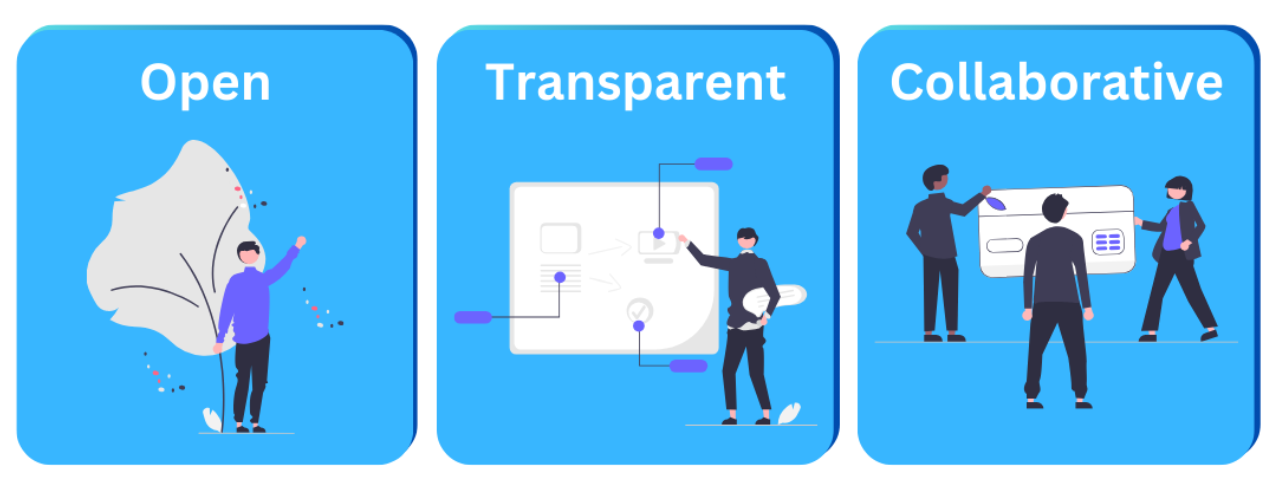
Open: Achievements and work artifacts are open-sourced and published on a regular basis.
Transparent: Using clear documentation and academic rigor, we build trust and accountability. Whenever appropriate, we are happy to discuss our work with the academic community at top-tier blockchain and AI conferences around the globe.
Collaborative: Through collaboration with established industry peers from our earlier blockchain ventures, we gain regular feedback to continuously improve and adjust where required.
Validation:
Our team is composed of highly skilled developers with extensive experience in Data Science & AI, ensuring we have the expertise to deliver the project. Further, the project will be fully open-source, allowing the community to review, contribute, and validate the code.
[Milestones] Project Milestones
Milestone Title
Discovery Phase
Milestone Outputs
- Data source inventory and evaluation: X/Twitter, Reddit, Telegram/Discord (public), GitHub, Medium/blogs, project sites; include rate‑limit notes and ToS constraints.
- Architecture overview: ingestion options (APIs vs allowed scraping), storage choices, data schema, retention policy, observability plan.
- Project delivery plan: milestones, work breakdown, risks/mitigations, success metrics and evaluation plan.
Acceptance Criteria
- Catalogue ≥4 concrete sources with access method, limits, and risk notes.
- Approved architecture decision record (ADR) covering data flow, schema, and storage.
- Baseline project plan with dates, owners, and measurable success metrics.
Evidence of Completion
- Written report (PDF/Markdown) including source inventory,, research summary, and compliance checklist.
- Backlog/roadmap link and issue list.
- Written statement or short video walking through decisions.
Delivery Month
2
Cost
10000
Progress
10 %
Milestone Title
Data Pipelines and Tooling
Milestone Outputs
- Connector SDK and CLI: a small framework to build connectors with common concerns (pagination, rate‑limits, retries, deduplication) and a project‑insight ingest command to run pulls locally or in CI.
- Orchestration: scheduled jobs (cron/worker) with retry/back‑off, idempotency, and simple telemetry (success/fail counts, items pulled, durations).
- Normalisation & storage: text cleaning, language detection, lightweight spam filters; unified schema with metadata; blob storage for PDFs; basic indexing.
- Baseline analytics scripts: keyword extraction, tone/sentiment scoring, simple topic grouping, volume/time trends; parameterised and replaceable.
- CI & packaging: linting/type‑checks, unit tests, CONTRIBUTING and RUNBOOK docs.
Acceptance Criteria
- Build ≥2 connectors using the SDK (e.g., one social, GitHub) and ingest reliably.
- End‑to‑end processing of ≥100 items; CSV/JSON and ≥3 PDFs processed through the same pipeline.
- Reproducible run: one command executes ingest→normalise→analytics and produces a small report for ≥3 projects.
- CI pipeline green (lint, tests) and source code published.
Evidence of Completion
- Repo links, CLI --help output, telemetry screenshot, run logs.
- Sample anonymised dataset, schema documentation, and a short demo video.
Delivery Month
3
Cost
35000
Progress
40 %
Milestone Title
Web Application
Milestone Outputs
- Backend API service: endpoints for projects, datasets, and analyses; rate-limits;
- Frontend app: responsive dashboard, project picker, run analysis flow, results pages with charts (timeline, word‑cloud);
- Upload UI: CSV/JSON and PDFs with progress, validation errors, and status page for running jobs.
- Report builder v1: compose findings into an exportable PDF/HTML with metadata and charts.
- Docs: user guide, API reference, and onboarding walkthrough.
Acceptance Criteria
- From the UI, a user can ingest data for a project, run baseline analytics, view charts, and export a report within target time.
- Authenticated access not enforced; rate‑limits active; basic audit log present;
Evidence of Completion
- Staging URL, test reports, screenshots of flows and exported reports.
- API schema/reference and short demo video.
Delivery Month
5
Cost
25000
Progress
80 %
Milestone Title
Final Integration and Hardening
Milestone Outputs
- Integrate all tooling into the web app: background workers/queues, job status notifications, caching, and pagination.
- Document analysis + claim extraction wired into reports.
- Observability: metrics, logs, alerts, run dashboards.
- Security & compliance: rate‑limit/abuse safeguards, privacy policy, terms.
- Performance tuning and load tests.
- Launch readiness: community demo, feedback intake, and post‑launch roadmap.
Acceptance Criteria
- Stable operation for ≥7 consecutive days; end‑to‑end analyses for ≥2 projects executed from the UI.
- Reports include at least one cross‑checked claim per project with linked evidence; export works for all.
- Observability dashboards live; security checks passed; backups validated.
Evidence of Completion
- Live/staging URLs and dashboards screenshots.
- Close-out report covering deliverables, spend mapping to milestones, and next‑phase plan.
Delivery Month
7
Cost
10000
Progress
100 %
[Final Pitch] Budget & Costs
Please provide a cost breakdown of the proposed work and resources
- M1 (10,000 ADA)
- Engineering: 5,000
- Design & UX: 2,000
- Infra & API credits: 2,000
- Community & Docs: 1,000
- M2 (35,000 ADA)
- Engineering: 30,000
- Infra & API credits: 3,000
- Community & Docs: 2,000
- M3 (25,000 ADA)
- Engineering: 19,000
- Design & UX: 2,000
- Infra & API credits: 2,000
- Community & Docs: 2,000
- M4 (10,000 ADA)
- Engineering: 6,000
- Community & Docs: 4,000
- Totals across milestones
- Engineering: 60,000
- Design & UX: 4,000
- Infra & API credits: 7,000
- Community & Docs: 9,000

[Final Pitch] Value for Money
How does the cost of the project represent value for the Cardano ecosystem?
Empowering Users with Advanced Tools:
- Accessibility: The platform democratizes access to sophisticated analysis tools, enabling users without technical backgrounds to engage deeply with Cardano projects.
- Enhanced Decision-Making: Users can make informed decisions based on comprehensive data analysis, reducing risks and fostering confidence in the ecosystem
Promoting Transparency and Trust:
- Data-Driven Insights: By providing clear and actionable information, the platform enhances transparency around project developments and community sentiment.
- Accountability: Increased visibility encourages projects to maintain high standards, benefiting the entire ecosystem.
Stimulating Ecosystem Growth:
- Attracting Participants: Simplifying complex data analysis lowers barriers to entry, inviting more investors, developers, and enthusiasts to join the Cardano community.
- Supporting Innovation: Developers gain insights into market needs and trends, guiding the creation of innovative solutions that address real user demands.
Economic Impact and Return on Investment:
- Risk Reduction: Improved analysis tools help users avoid potential pitfalls, potentially saving significant resources and contributing to the ecosystem's overall stability.
- Enhanced Project Success Rates: Better-informed participants can lead to higher success rates for projects within the ecosystem, promoting economic growth.
[Required Acknowledgements] Consent & Confirmation
Terms and Conditions:
Yes
Team
We are a team that combines strong backgrounds in AI and blockchain development. Members have co-founded startups, contributed to DeFi protocols, and published AI conferences. Our experience spans several areas of machine learning and DeFi, with a focus on applying AI to real-world challenges. Together, we bring several years of blockchain development and AI research, aiming to drive innovation at the intersection of AI and blockchain.