Last updated 9 months ago
[C2VN] University Cardano Integration: Education to Research
Problem
Students have limited access to quality, tailored educational programs and hands-on activities. Running these programs in universities would help thousands of students understand blockchain better.
Solution
Our solution creates systematic Cardano blockchain courses for universities: basic courses for Economics/Law students, advanced courses for IT students with hands-on coding, plus research programs.
Total to date
This is the total amount allocated to [C2VN] University Cardano Integration: Education to Research.
About this idea
[Proposal setup] Proposal title
Please provide your proposal title
[C2VN] University Cardano Integration: Education to Research
[Proposal Summary] Budget Information
Enter the amount of funding you are requesting in ADA
49400
[Proposal Summary] Time
Please specify how many months you expect your project to last
6
[Proposal Summary] Translation Information
Please indicate if your proposal has been auto-translated
No
Original Language
en
[Proposal Summary] Problem Statement
What is the problem you want to solve?
Students have limited access to quality, tailored educational programs and hands-on activities. Running these programs in universities would help thousands of students understand blockchain better.
[Proposal Summary] Supporting Documentation
Supporting links
[Proposal Summary] Project Dependencies
Does your project have any dependencies on other organizations, technical or otherwise?
No
Describe any dependencies or write 'No dependencies'
No dependencies
[Proposal Summary] Project Open Source
Will your project's outputs be fully open source?
Yes
License and Additional Information
All project outputs will be released under the MIT License. This includes:
- Curriculum materials (lecture slides, exercises, lab guides...)
- Sample dApp code and documentation (if any)
- Workshop presentations and video recordings These resources will be publicly accessible on our GitHub repository. We believe in open-source principles and want to empower the community to utilize and contribute to these resources
[Theme Selection] Theme
Please choose the most relevant theme and tag related to the outcomes of your proposal
Education
[Campaign Category] Category Questions
Who you’re targeting, how you’ll reach them, and why this matters for Cardano.
We target IT students (future Cardano developers) and Economics/Law students (future business leaders) across Vietnamese universities. Our reach leverages established faculty partnerships, embedding blockchain education within existing curriculum rather than optional workshops.
We recognize IT students as emerging architects of Cardano's ecosystem—the next generation who will innovate and deploy dApps within 1-2 years, making this investment fundamental to Cardano's expansion
Provide a list of key activities of your project?
Our Key Project Activities:
- Partner with IT and Economics faculties at 2 universities to integrate blockchain curriculum
- Develop customized courses: Blockchain Fundamentals for non-IT students, CBCA-based advanced program for IT students
- Deliver theory sessions and hands-on workshops including CLI operations, API integration, and smart contract development
- Integrate blockchain topics into annual Student Scientific Research Activities
- Form student research groups with dedicated mentorship programs
- Create comprehensive learning materials and digital resource repositories
What are your success metrics?
Our success metrics:
- Deliver minimum 2 courses across 2 universities
- Achieve 150+ student participation across both programs
- Complete 30 students in Blockchain Fundamentals and CBCA coursework
- Support 10+ students registering for official certification exams
- Form 4+ student research groups with 20+ members each
- Integrate blockchain into official Student Scientific Research Activities at both universities
[Your Project and Solution] Solution
Please describe your proposed solution and how it addresses the problem
Our solution addresses the fundamental challenge of limited blockchain education access through comprehensive integration within Vietnam's higher education system. We have designed a multi-tiered educational framework that transforms fragmented learning opportunities into structured, academically rigorous programs.
Educational Framework Design:
- We implement differentiated curriculum approaches based on student academic backgrounds and career trajectories. For students in Economics and Law faculties, we have developed foundational programs derived from internationally recognized Blockchain Fundamentals coursework. These programs emphasize conceptual understanding through practical demonstrations of core technologies—hash functions, block construction, and digital wallet functionality—without requiring advanced technical prerequisites.
- For Information Technology students, we offer advanced coursework based on the Cardano Blockchain Certified Associate (CBCA) curriculum, substantially enhanced with practical implementation experiences. Students engage directly with blockchain systems through command-line interfaces, application programming interfaces, and smart contract development environments.
Institutional Integration Strategy:
- Our approach extends beyond traditional classroom instruction to create blockchain education ecosystem within universities. We establish partnerships with faculty leadership across multiple disciplines, ensuring seamless curriculum integration within existing academic frameworks. This institutional embedding approach guarantees program sustainability and provides students with recognized academic credentials.
- The integration strategy includes development of standardized learning materials, faculty training programs, and assessment methodologies that align with university academic standards. By working directly with department heads and academic committees, we ensure that blockchain education becomes a permanent component of the institutional curriculum rather than a temporary supplementary program.
Research and Innovation Development:
- We establish structured research programs that transform students from passive learners into active blockchain innovators. Student research groups receive faculty mentorship while exploring practical blockchain applications relevant to their academic disciplines. This approach encourages original project development and meaningful contribution to the broader Cardano ecosystem.
How Our solution addresses the problem:
- Our solution directly addresses each identified challenge through systematic interventions. The access limitation is resolved by embedding quality education within existing institutional frameworks, eliminating external barriers. Quality concerns are addressed through adaptation of internationally validated curricula, ensuring academic rigor while maintaining practical relevance for Vietnamese contexts.
- The hands-on activity deficit is resolved through extensive practical components integrated into each educational level—from fundamental wallet operations for non-technical students to advanced smart contract development for computer science majors. This ensures genuine skill development rather than purely theoretical understanding.
- Our university-based delivery model creates sustainable impact by reaching hundreds of students annually through established educational channels. Unlike temporary workshop models, our approach creates permanent curriculum integration.
[Your Project and Solution] Impact
Please define the positive impact your project will have on the wider Cardano community
Our project creates substantial, measurable benefits for the Cardano ecosystem through systematic educational intervention at the university level, generating both immediate outcomes and long-term strategic advantages.
Immediate Quantifiable Impact:
We commit to delivering concrete results:
- implementing courses across 2 universities,
- engaging 150+ students,
- achieving 30 course Blockchain Fundamentals and Cardano Blockchain Certified Associate (CBCA) completions,
- and 10+ certification registrations.
These metrics represent direct community growth, introducing new participants who understand both technical and governance aspects of Cardano.
Educational Movement and Replication:
Our university integration model creates a high-quality learning movement that other institutions will observe and replicate. By demonstrating effective blockchain education within formal academic settings, we establish a template for expansion. This organic replication multiplies our impact far beyond initial implementation, potentially reaching thousands of additional students across Vietnam's higher education system.
Developer Pipeline Development:
The project addresses Cardano's critical need for skilled developers by creating a structured talent pipeline. IT students completing our advanced programs will emerge as competent Cardano developers within 1-2 years, capable of building dApps and contributing to ecosystem growth. This systematic approach produces higher-quality developers compared to ad-hoc training methods, as university graduates possess foundational computer science knowledge and collaborative skills essential for complex blockchain development.
Cardano Academy Ecosystem Growth:
Our integration with international certification standards increases enrollment in Cardano Academy programs. Students exposed to our courses will pursue advanced certifications, expanding the global community of certified Cardano professionals.
Research and Innovation:
By establishing blockchain research programs across multiple academic disciplines, we create sustained innovation opportunities. Student research groups will explore novel Cardano applications in economics, law, and technology, potentially generating intellectual property, academic publications, and practical solutions that benefit the entire ecosystem.
[Your Project and Solution] Capabilities & Feasibility
What is your capability to deliver your project with high levels of trust and accountability? How do you intend to validate if your approach is feasible?
Team Expertise
Our team comprises blockchain professionals, including stake pool operators and experienced developers who have successfully built and deployed dApps on Cardano. We maintain active collaboration with faculty members and department heads from Information Technology faculties at major Vietnamese universities, ensuring both technical competence and academic credibility.
Academic Partnerships
We have cultivated strategic partnerships with faculty leadership and IT professors across multiple universities over several years. This established network is evidenced through our successful delivery of previous projects and active participation in university events and workshops, demonstrating sustained institutional relationships rather than temporary collaborations.
Proven Track Record
We have successfully completed 5 university-focused projects with full delivery and community approval:
- [700062] Catalyst Events 4 Vietnam Students
- [1100006] [C2VN] Accelerate Atala PRISM learning and adoption in Universities
- [1100007] [C2VN]: Cardano developer club in Universities
- [1200002] [C2VN]: Cardano blockchain courseware in Universities
- [1200003] [C2VN]: Developing the Blockchain Lecturer Team at Universities in Vietnam
- Additionally, we have developed functional dApps currently operating on Cardano:
- [1100118] Dualtarget for ADA-Holders (Staking and increasing assets)
- [1100247] Point-of-Care Real-time LAMP prototype with IoT and Blockchain integration
- [1200167] Open source dynamic assets (Token/NFT) generator (CIP68)
Previous University Collaborations
Working directly with university faculties, we have successfully organized:
- Student research coaching programs and scientific mentorship initiatives
- Blockchain hackathons and student club development
- Cardano Summit events in 2022 and 2023 held on university campuses
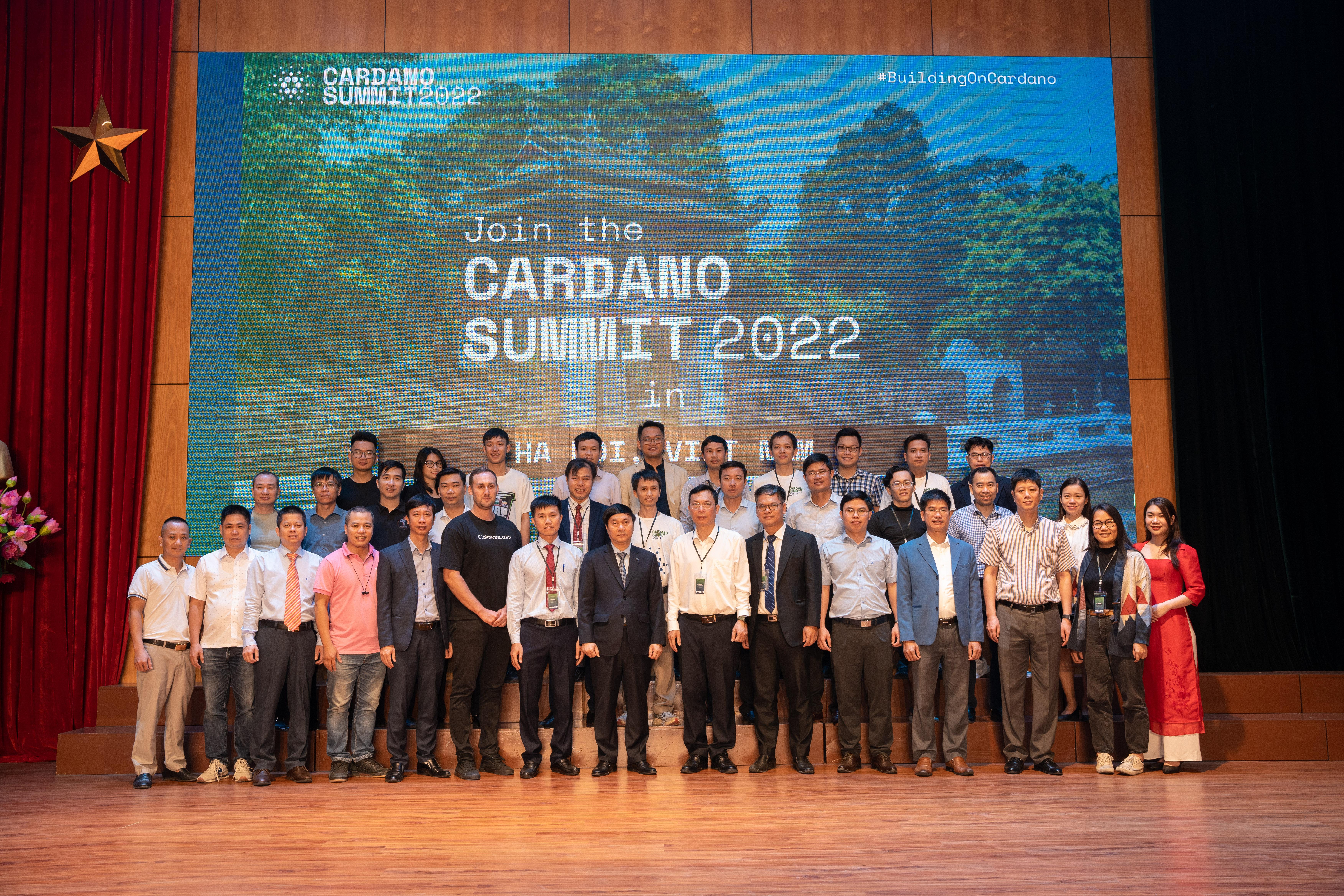
(Cardano Summit community led event 2022 held in university)
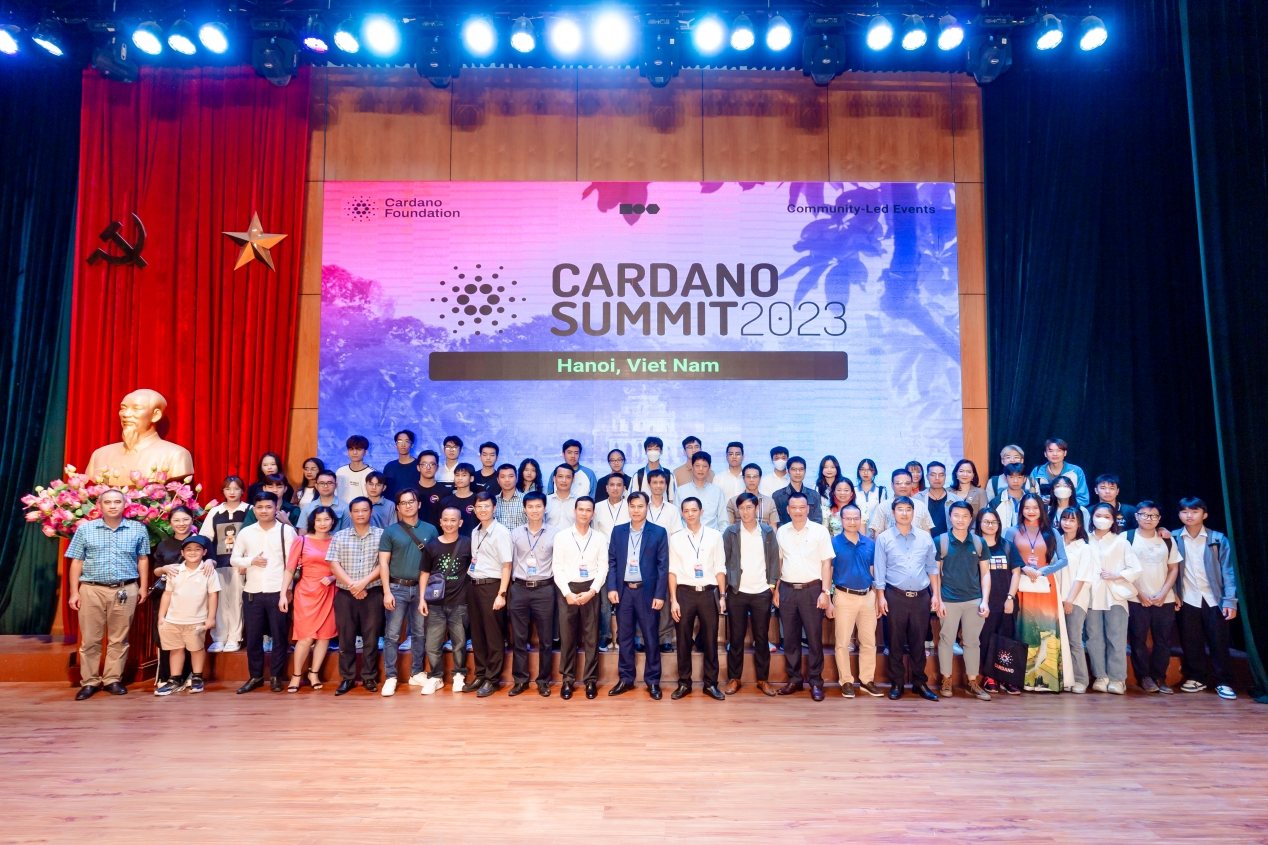
(Cardano Summit community led event 2023 held in university)
- Formal blockchain curriculum delivery within university academic programs
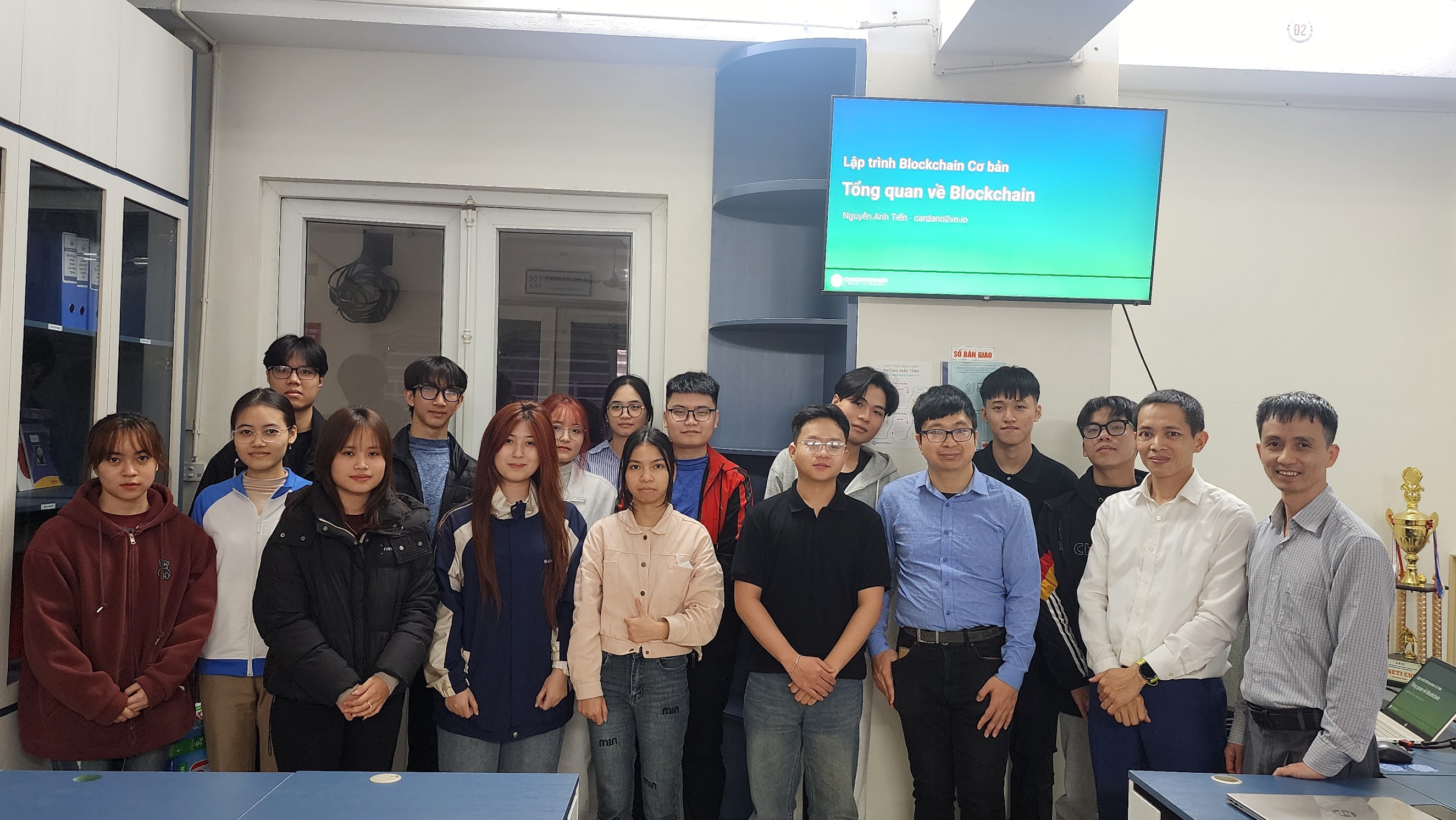
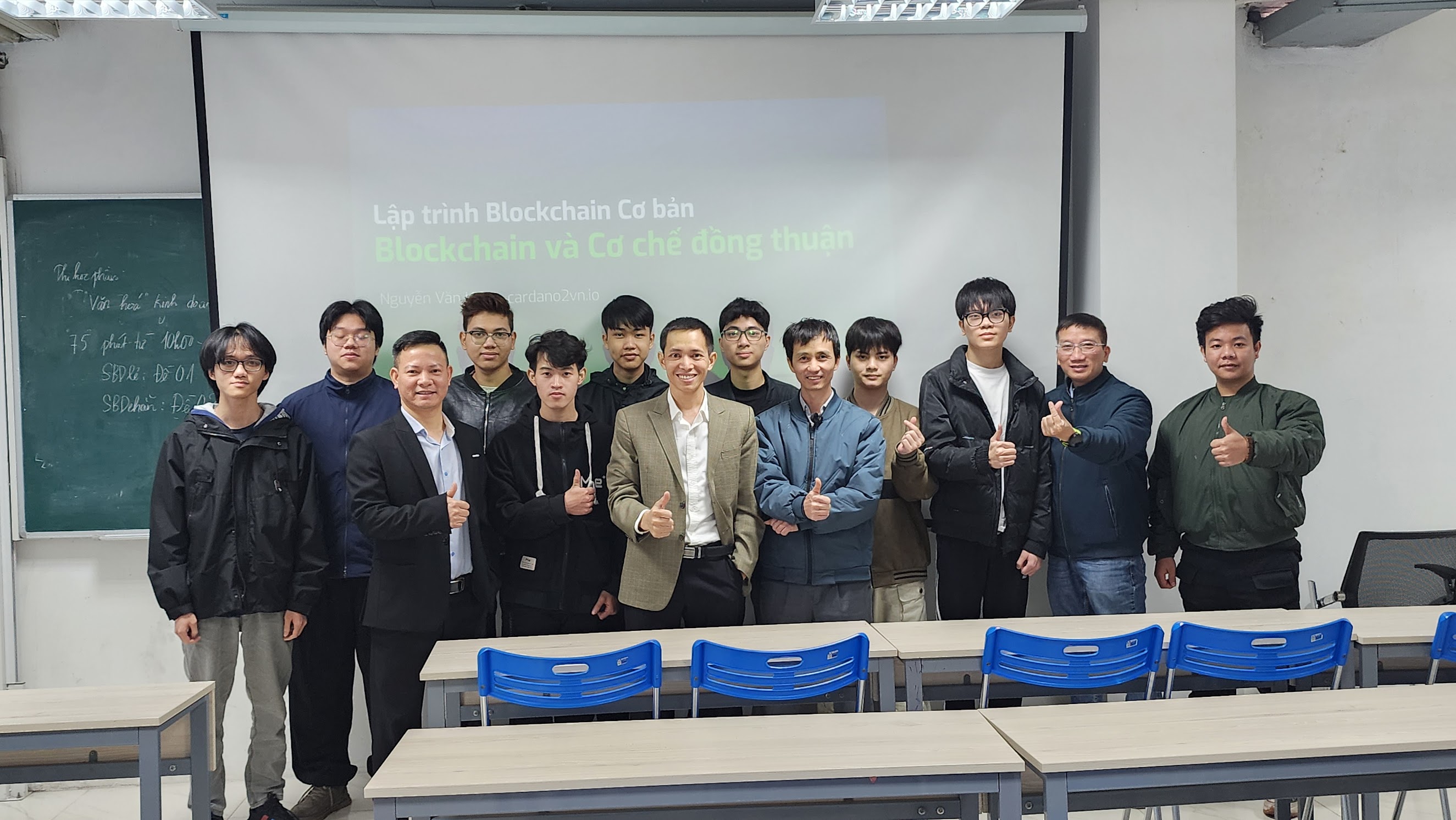
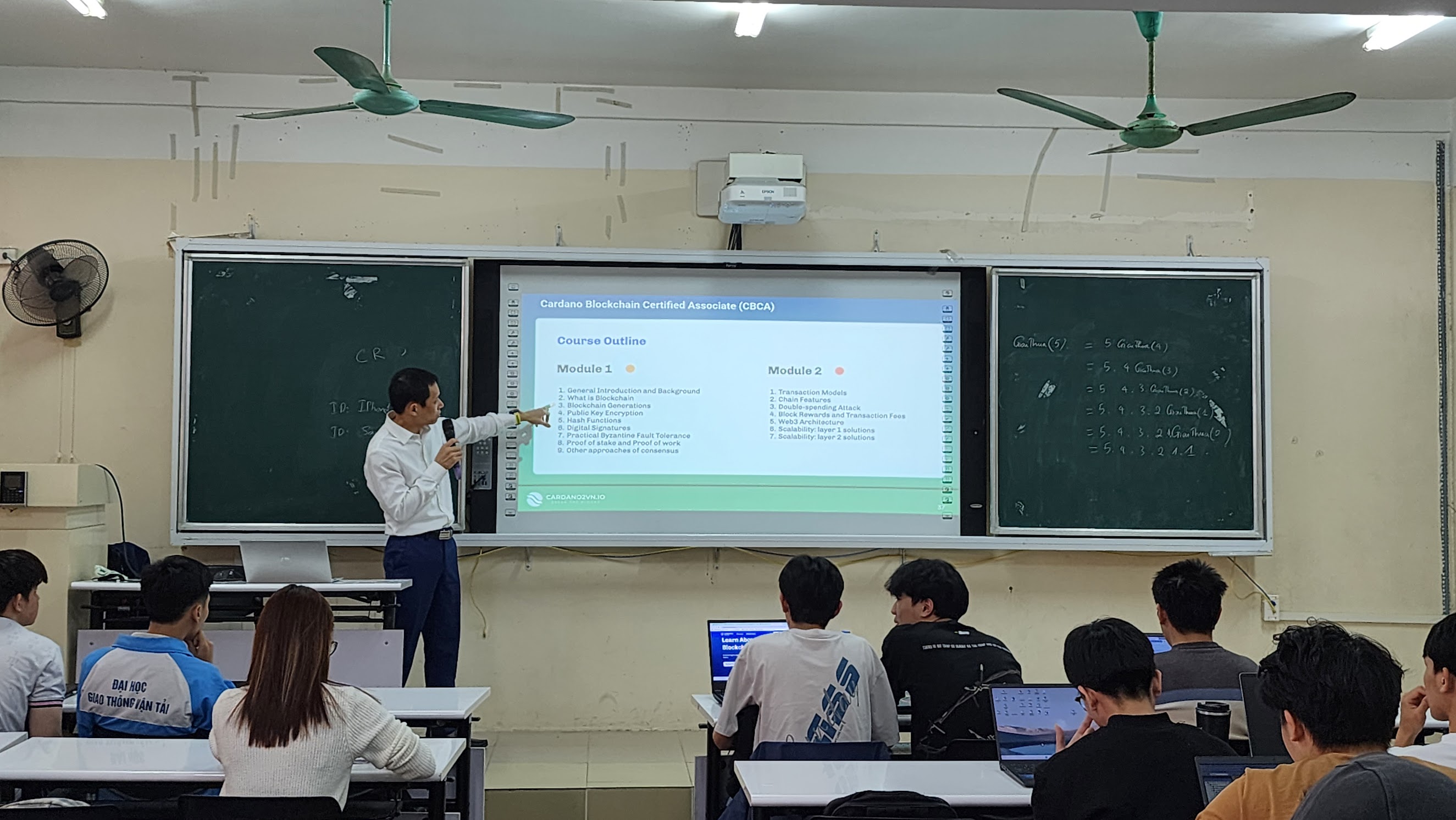
Feasibility Validation
- Our existing university relationships eliminate startup barriers, enabling immediate implementation rather than relationship-building phases.
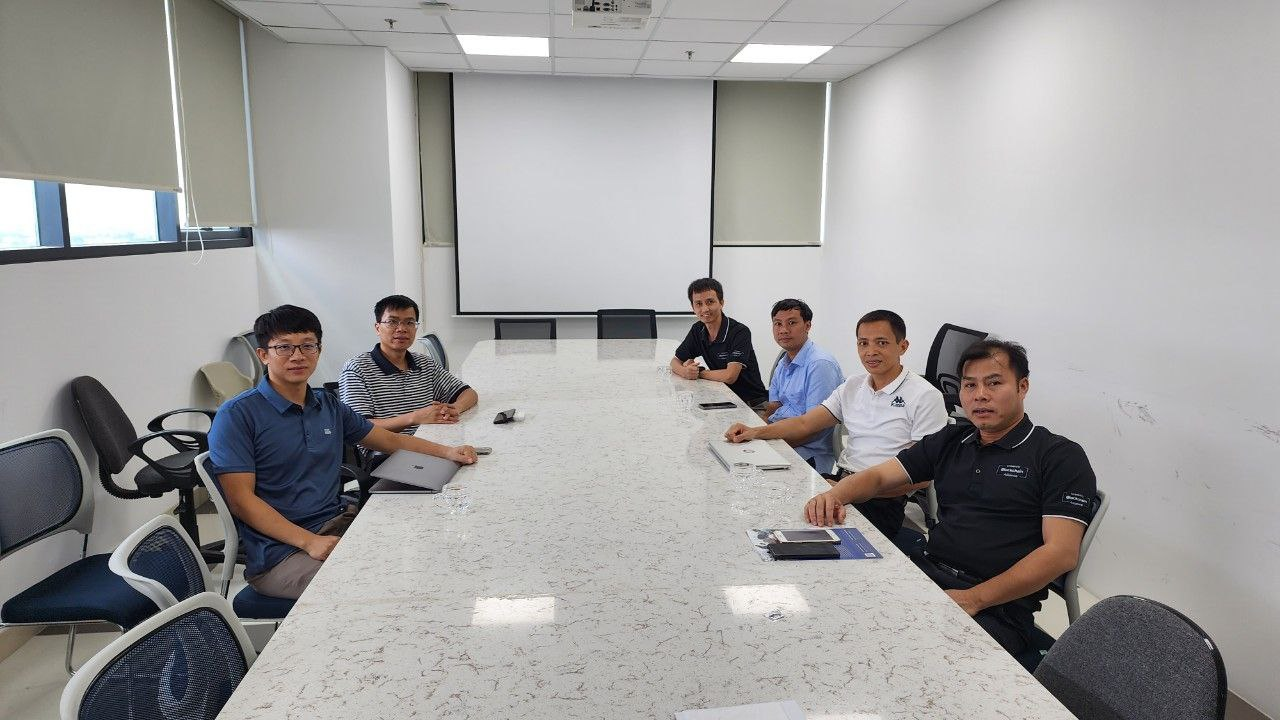
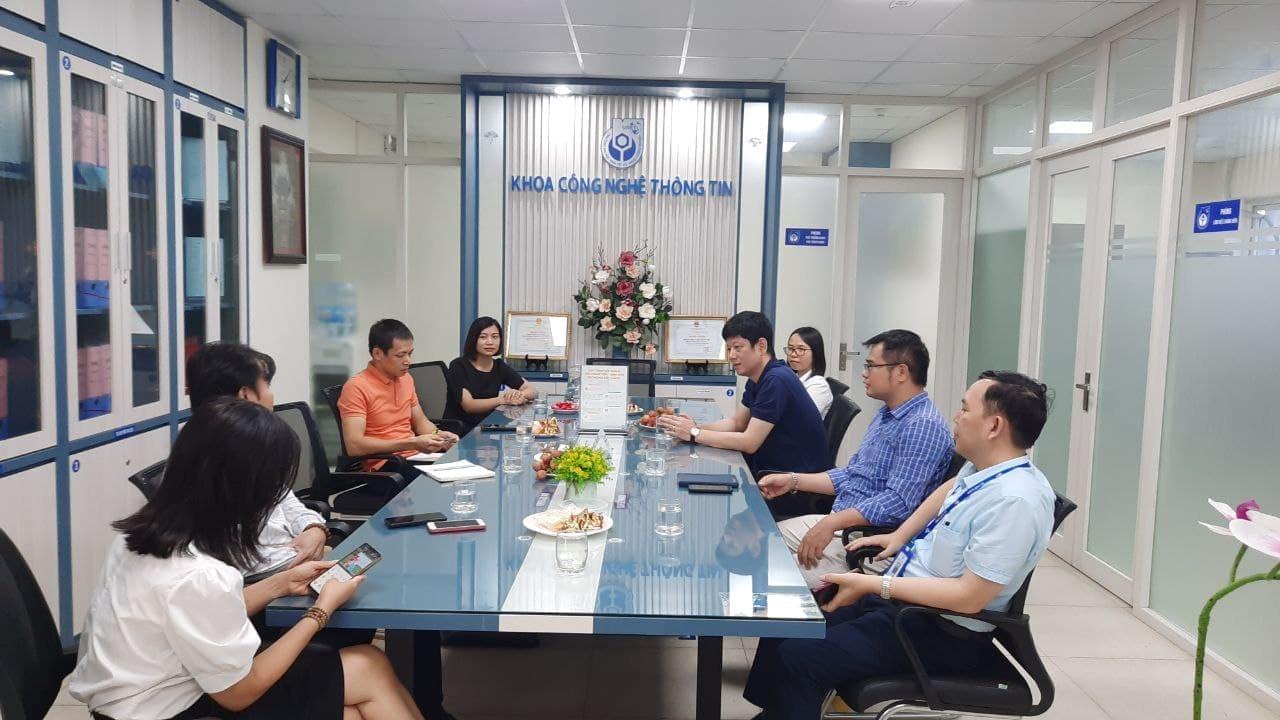
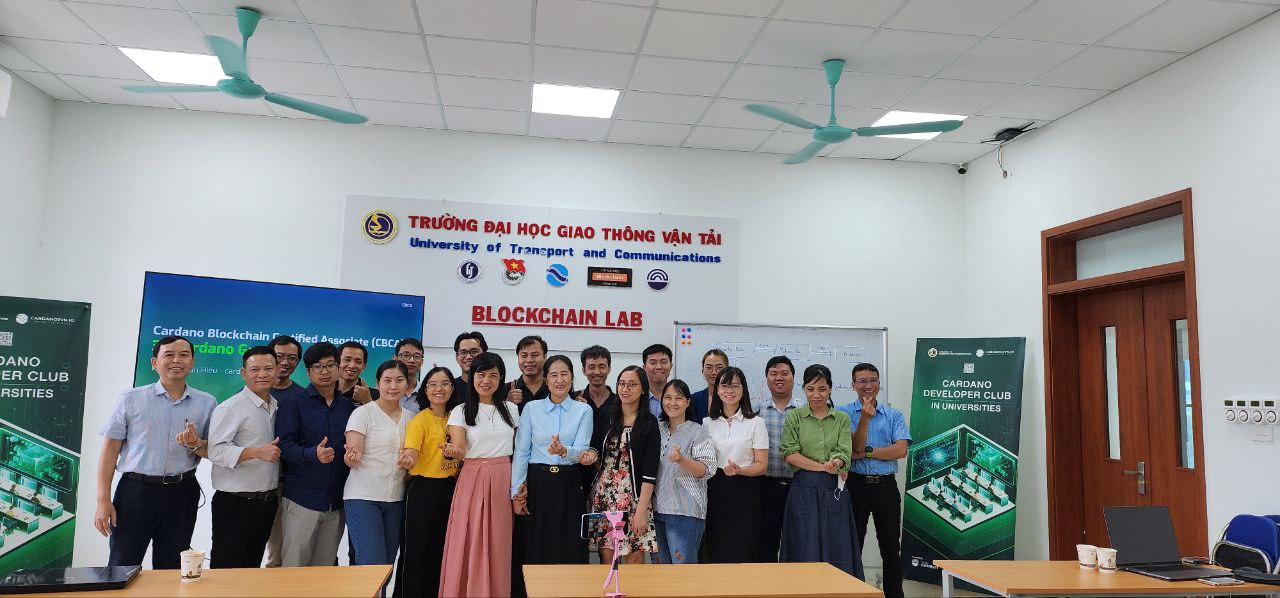
- Student engagement metrics from previous workshops indicate strong interest and participation rates, validating market demand for structured blockchain education.
- Our measured implementation strategy—beginning with 2 universities and 150 students—allows for testing, refinement, and optimization before broader scaling initiatives.
- Integration within university systems provides built-in quality control mechanisms through institutional oversight and academic standards compliance.
- We employ specific, measurable indicators including course completion rates, certification achievements, and research project outcomes to ensure objective performance evaluation.
Accountability Mechanisms
- Catalyst Reporting Framework: All milestones undergo rigorous Community Reviewer evaluation and official Catalyst approval processes, ensuring transparent progress tracking.
- Public Documentation: Complete project results and progress updates are published on our website and GitHub repositories, enabling community monitoring and verification.
- University Oversight: Project quality and delivery standards are supervised by academic institutions, providing additional accountability through established educational governance structures.
[Milestones] Project Milestones
Milestone Title
Partnership Establishment & Curriculum Design
Milestone Outputs
- Established working partnerships with 2 universities for blockchain education integration
- Formed project delivery team including lecturers, marketing specialists, and project managers
- Customized curriculum framework based on Blockchain Fundamentals course content with practical components for non-IT students
- Tailored curriculum framework based on Cardano Blockchain Certified Associate (CBCA) course content with hands-on activities for IT students
- Course syllabus and learning objectives for both adapted programs
- Project timeline and implementation roadmap for university delivery
Acceptance Criteria
- Working partnerships must be confirmed with IT and Economics/Law faculties at 2 distinct universities
- Project team must include minimum 1 lecturer per faculty, 1 Project executive, and 1 project manager
- Curriculum frameworks must incorporate core concepts from reference courses while adding university-appropriate practical elements
- Learning objectives must be measurable, industry-relevant, and include practical skill development outcomes
- Faculty training materials must cover both theoretical content delivery and practical session facilitation methods
- Implementation roadmap must include clear timelines, resource allocation, and milestone dependencies
Evidence of Completion
- Documentation of partnership agreements and collaboration commitments from 2 universities with faculty signatures
- Role assignments for all project delivery personnel
- Published customized curriculum documents on project website or GitHub repository showing clear adaptation from reference courses
- Video recordings or pictures of curriculum presentation meetings with university faculty demonstrating acceptance
- Written confirmation letters from university partners accepting adapted curriculum integration
- Milestone report with photos from partnership meetings, team formation sessions, and curriculum development workshops
Delivery Month
1
Cost
8800
Progress
20 %
Milestone Title
Educational Content Development
Milestone Outputs
- Complete lecture slides and presentation materials for both adapted curricula
- Hands-on laboratory exercises and practical assignments for blockchain development
- Reading materials and reference resources in original English for students
- Assessment tools including quizzes and assignments with detailed rubrics
- Interactive coding tutorials and sample blockchain applications
- Digital resources repository accessible to students and instructors
- Project management documentation including progress reports and stakeholder communications
Acceptance Criteria
- Lecture materials must cover all topics outlined in milestone 1 curriculum frameworks
- Laboratory exercises must provide step-by-step guidance for practical blockchain implementation
- Reading materials must be carefully curated, relevant to Vietnamese university context
- Assessment tools must align with learning objectives and provide measurable skill evaluation criteria
- Coding tutorials must be functional, tested on current Cardano development tools
- Digital repository must be organized, searchable, and accessible through university
- Project management documentation must demonstrate adherence to timeline and budget constraints with regular stakeholder updates
Evidence of Completion
Published learning materials on project website and GitHub repository
Video demonstrations of laboratory exercises and coding tutorials showing full functionality and student testing
Screenshots of digital resource repository structure with user access documentation
Sample completed assignments and assessment results demonstrating material effectiveness
Faculty review documentation confirming material quality and alignment with university standards
Meeting minutes from regular project meetings. share it among team members and expose non-private information to public
Delivery Month
2
Cost
11000
Progress
40 %
Milestone Title
Blockchain Fundamentals Course Implementation for Non-IT Students
Milestone Outputs
(This is tentative content, subject to change after meeting with faculty representatives at milestone 1)
- Session 1: Blockchain Foundations delivered covering introduction to blockchain mechanics, Distributed Ledger Technology (DLT), hashing, public key cryptography, consensus mechanisms, Byzantine Fault Tolerance (BFT), and Bitcoin/Ethereum overview
- Session 2: Blockchain Evolution & Cardano delivered covering soft/hard forks, scalability solutions, blockchain generations, Cardano deep dive, and practical use cases
- Session 3: Practical Demonstration session delivered including hands-on hashing demonstrations, block creation exercises, blockchain explorer navigation, and token/NFT creation on Cardano
- Introduction to Cardano Academy and Blockchain Fundamentals certification pathway with Digital Badges presentation
- Project management documentation including session delivery reports and participant feedback analysis
Acceptance Criteria
- Each session must be delivered to minimum 50 non-IT students across 2 universities with documented attendance
- Session content must align with approved curriculum framework from Milestone 1 and utilize materials from Milestone 2
- Practical demonstrations must be fully functional with all participants successfully completing hands-on exercises
- Students must demonstrate understanding through interactive Q&A sessions and practical exercise completion
- Post-session assessments must achieve minimum 70% average score across all participants
- Project management documentation must track attendance, engagement metrics, and stakeholder feedback
Evidence of Completion
- Photo documentation of classroom sessions, practical demonstrations, and student participation of all three sessions
- Non privacy data of participant registration will be shared
- Student work samples from practical exercises including completed hashing exercises, blockchain explorer screenshots, and token creation confirmations
- Post-session assessment results and analysis showing learning outcome achievement
- Meeting minutes from regular project meetings. share it among team members and expose non-private information to public
Delivery Month
3
Cost
8800
Progress
60 %
Milestone Title
CBCA-Based Advanced Course Implementation for IT Students
Milestone Outputs
(This is tentative content, subject to change after meeting with faculty representatives at milestone 1)
- Four theory lectures optimized from Cardano Blockchain Certified Associate (CBCA) course content delivered to IT students
- Workshop 1: Cardano CLI and Wallet Interaction delivered with hands-on command-line interface training
- Workshop 2: API Integration and Off-chain Framework delivered covering Lucid Evolution/MeshJS implementation
- Workshop 3: Smart Contract Fundamentals delivered with Introduction to Aiken programming language
- Workshop 4: Advanced Smart Contract Development delivered with complex Aiken implementation projects
- Introduction to Cardano Academy and CBCA certification pathway with Digital Badges presentation for IT students
Acceptance Criteria
- Four theory lectures must be delivered to minimum 50 IT students across universities
- Workshop 1 participants must demonstrate proficiency in CLI operations and wallet management through practical exercises
- Workshop 2 participants must successfully integrate with Cardano APIs and implement off-chain solutions using specified frameworks
- Workshop 3 participants must complete basic smart contract creation and deployment using Aiken
- Workshop 4 participants must develop and deploy complex smart contracts demonstrating advanced Aiken programming skills
- CBCA pathway introduction must demonstrate certification benefits and career advancement opportunities
- Technical assessments must achieve minimum 75% average score across all participants with practical code evaluation
- Regular project meetings are held to monitor progress, address challenges, and make adjustments as needed, Meeting minutes are documented and shared with the team
Evidence of Completion
- Photo of all theory lectures and workshop sessions showing technical content delivery and student coding activities
- Attendance records and participant data from IT faculties at both universities with verified student enrollment, Non privacy data of participant registration will be shared
- Photo of Introduction to Cardano Academy and CBCA certification
- Post-session assessment results and analysis showing learning outcome achievement
- Meeting minutes from regular project meetings. share it among team members and expose non-private information to public
Delivery Month
4
Cost
10800
Progress
80 %
Milestone Title
Research Integration & Project Completion
Milestone Outputs
- Integration of blockchain topics into annual Student Scientific Research Activities at partner universities
- Formation of dedicated student research groups focused on blockchain applications and development
- Mentorship program delivered for student research projects with regular guidance sessions
- Project managment,Project Close Out Report and Project Close Out Video
Acceptance Criteria
- Blockchain topics must be officially incorporated into Student Scientific Research Activities at universities
- Minimum 4 student research groups must be formed with at least 20 members
- Mentorship sessions must be conducted regularly with documented progress tracking for each research group
- Project Close Out Report and Project Close Out Video must be published on project website or github repository
- Project is managed throughout its lifecycle, ensuring timely completion of milestones and efficient resource utilization
Evidence of Completion
The following documents will be published on the github repository after removing necessary personal information:
- Official university documentation confirming blockchain integration into Student Scientific Research Activities
- Student research group formation documents including member lists, research topics, and faculty advisor assignments
- Mentorship session meeting minutes.
- Project Close Out Report and Project Close Out Video
- Meeting minutes from regular project meetings.
Delivery Month
6
Cost
10000
Progress
100 %
[Final Pitch] Budget & Costs
Please provide a cost breakdown of the proposed work and resources
Budget detail sheet is availabe at https://docs.google.com/spreadsheets/d/1bGkY2gMhe7g-1WkWXukqoPCmnYcNj-GglWihAjLZ4LY/edit?usp=sharing
Project Overview:
- Total Budget: 49,400 ADA
- Duration: 6 months
- Team: 4 people at 25 ADA/hour base rate
- Total Work Hours: 494 hours
Detailed Milestone Cost Analysis:
Milestone 1: Project Planning & Partnership Establishment
- Cost: 8,800 ADA (17.81% of budget)
- Work Hours: 88 hours
- Duration: 1 month
- Team Size: 4 people
- Key Deliverables: University partnerships, team formation, curriculum frameworks for both Blockchain Fundamentals and CBCA programs, faculty training materials, and implementation roadmap
Milestone 2: Content Development & Learning Material Creation
- Cost: 11,000 ADA (22.27% of budget)
- Work Hours: 110 hours
- Duration: 1 month
- Team Size: 4 people
- Key Deliverables: Complete lecture materials, hands-on exercises, reading materials in English, assessment tools, interactive coding tutorials, digital repository, and project management documentation
Milestone 3: Blockchain Fundamentals Course Implementation
- Cost: 8,800 ADA (17.81% of budget)
- Work Hours: 88 hours
- Duration: 1 month
- Team Size: 4 people
- Key Deliverables: Three educational sessions covering blockchain foundations, evolution & Cardano, practical demonstrations, and Cardano Academy introduction for non-IT students
Milestone 4: CBCA-Based Advanced Course Implementation
- Cost: 10,800 ADA (21.86% of budget)
- Work Hours: 108 hours
- Duration: 1 month
- Team Size: 4 people
- Key Deliverables: Four theory lectures, four technical workshops (CLI, APIs, smart contracts), CBCA certification pathway introduction for IT students
Final Milestone: Research Integration
- Cost: 10,000 ADA (20.24% of budget)
- Work Hours: 100 hours
- Duration: 2 months
- Team Size: 4 people
- Key Deliverables: Integration into Student Scientific Research Activities, student research group formation, mentorship programs, community reporting, and project completion documentation
Resource Allocation by Category:
Direct Educational Delivery (39.67%): 19,600 ADA
- Milestones 3 and 4 focused on actual course delivery and student engagement, includes both foundational and advanced program implementation
Content Development (22.27%): 11,000 ADA
- Curriculum creation, materials development, and assessment design
- Creates sustainable, reusable educational resources
Project Setup & Management (17.81%): 8,800 ADA
- Partnership establishment, team coordination, and initial planning
- Foundation for successful project execution
Research & Community Integration (20.24%): 10,000 ADA
- Long-term sustainability through research programs
- Community engagement and knowledge dissemination
[Final Pitch] Value for Money
How does the cost of the project represent value for the Cardano ecosystem?
Sustainable Investment Returns
The fundamental value proposition lies in our approach's self-perpetuating nature. Unlike discrete training events requiring continuous funding cycles, university curriculum integration creates permanent educational pathways that continue producing Cardano-knowledgeable graduates annually without additional ecosystem investment. This represents a transition from operational expenses to capital investment, generating compound returns over multiple academic generations.
Multi-Dimensional Impact Optimization
Our funding simultaneously addresses several critical ecosystem development requirements: technical talent pipeline creation, informed governance participation expansion, academic research program initiation, and strategic geographic market penetration. This integrated approach maximizes impact efficiency compared to single-objective initiatives that require separate funding streams for each desired outcome.
Cost-Benefit Analysis Framework
Our cost structure benefits from substantial university infrastructure subsidies that dramatically enhance value proposition. Partner universities provide classroom facilities, utilities including electricity and lighting, audio-visual equipment, and institutional marketing support at no cost to the project. These in-kind contributions, typically representing 30-40% of traditional training program expenses, are absorbed by university operations rather than ecosystem funding. This institutional cost-sharing arrangement means our budget focuses exclusively on curriculum development, expert instruction, and student outcomes rather than facility overhead.
Quality-Focused Resource Allocation
Rather than pursuing broad but superficial awareness campaigns, we concentrate resources on deep, systematic education that produces genuinely competent ecosystem participants. University graduates demonstrate structured analytical thinking, collaborative capabilities, and academic credentials that enhance Cardano's professional reputation and attract institutional adoption—outcomes that generate far greater long-term value than equivalent investments in mass marketing approaches.
[Required Acknowledgements] Consent & Confirmation
Terms and Conditions:
Yes
Team
Our core team member are:
1- Nguyen Anh Tien
Role: Project Manager, Product Owner, Blockchain Developer
Bio: the founder of the VILAI stake pool, and a computer science expert working in the Cardano/Crypto space since 2018. Cardano Ambassador, Funded Proposer, member of Plutus, Atala Prism Pioneer Program, a Challenge Team member and Co-host for Eastern
Email: tienna@gmail.com
Telegram: t.me/Tiennguyenanh
2- Nguyen Van Hieu
Role: Blockchain Developer
Bio: Founder of HADA stake pool, member of Plutus Pioneer Program, and Lead Technical Support at many successful startups.
Email: nvhieu1978@gmail.com
Telegram: t.me/nvhieu1978
3- Dr. Mai Manh Trung
Role: Curriculum Development member, Lecturer
Bio: Lecturer (since 2007) and Dean of Faculty of Information Technology (since 2004), University of Economic and Industry, computer science expert.
Email: mmtrung@uneti.edu.vn
4- Dr. Le Thi Anh
Role: Curriculum Development member, Lecturer
Bio: Computer Science Researcher, and Lecturer at Information and Communication Technology, Hanoi University of Industry
Email: leanh@haui.edu.vn