Last updated a year ago
Unlocking Cardano in Kenya: Student Innovation Hackathon
Problem
Kenya is open to blockchain, yet Cardano has limited visibility in universities. Students lack structured, engaging opportunities to learn and build on Cardano.
Solution
We will organize a 3-day student hackathon in Nairobi with workshops, mentorship, and project challenges to introduce Cardano, inspire innovation, and onboard student talent.
Total to date
This is the total amount allocated to Unlocking Cardano in Kenya: Student Innovation Hackathon.
About this idea
[Proposal setup] Proposal title
Please provide your proposal title
Unlocking Cardano in Kenya: Student Innovation Hackathon
[Proposal Summary] Budget Information
Enter the amount of funding you are requesting in ADA
33000
[Proposal Summary] Time
Please specify how many months you expect your project to last
6
[Proposal Summary] Translation Information
Please indicate if your proposal has been auto-translated
No
Original Language
en
[Proposal Summary] Problem Statement
What is the problem you want to solve?
Kenya is open to blockchain, yet Cardano has limited visibility in universities. Students lack structured, engaging opportunities to learn and build on Cardano.
[Proposal Summary] Supporting Documentation
Supporting links
- https://updevchallenge.com/ ,
- https://edustake.updev.cloud/ ,
- https://uptodatedevelopers.com/ ,
- https://devcommunity.io/
[Proposal Summary] Project Dependencies
Does your project have any dependencies on other organizations, technical or otherwise?
No
Describe any dependencies or write 'No dependencies'
No dependencies
[Proposal Summary] Project Open Source
Will your project's outputs be fully open source?
Yes
License and Additional Information
All public-facing outputs of the project, including educational materials, mentorship guidelines, team formation toolkits, and the event organization framework, will be published under an open source license.
[Theme Selection] Theme
Please choose the most relevant theme and tag related to the outcomes of your proposal
Education
[Campaign Category] Category Questions
Who you’re targeting, how you’ll reach them, and why this matters for Cardano.
We are targeting university students in Kenya, specifically those enrolled in technology, business, and innovation programs. These students are digital natives with high potential to become future Cardano builders, ambassadors, and entrepreneurs.
We will reach them through:
University blockchain/tech clubs
Local innovation hubs and developer communities
Targeted social media campaigns and WhatsApp groups
Institutional partnerships with selected universities in Nairobi
Provide a list of key activities of your project?
Open call for applications from Kenyan universities
4-week onboarding & mentorship phase (virtual workshops, team formation, Cardano basics)
Delivery of a 3-day in-person hackathon in Nairobi (Jan 7–9, 2026)
Mentorship, ideation, and prototype pitching during the event
Final pitch session, jury evaluation, and prize ceremony
Post-hackathon support: onboarding to Project Catalyst and Cardano communities
Publishing all content and templates as open educational resources
What are your success metrics?
At least 100 students onboarded with new Cardano wallets
Minimum of 10 project ideas proposed during the hackathon
At least 3 winning teams continuing their ideas post-event
Growth in participation from 5+ Kenyan universities
Publication of open-source event toolkit for replication
Social media reach of 10,000+ impressions during the campaign
At least 2 follow-up collaborations with local partners or communities
[Your Project and Solution] Solution
Please describe your proposed solution and how it addresses the problem
Proposed Solution and How This Solution Addresses the Problem
The proposed solution is to organize a comprehensive and high-impact Cardano Student Hackathon in Nairobi, Kenya — a country that is officially embracing blockchain innovation, yet where Cardano's presence in university ecosystems remains limited. This hackathon will be a 3-day in-person event scheduled for January 7–9, 2026, and will be preceded by a carefully designed 4-week virtual onboarding and mentorship phase. It aims to introduce university students to the fundamentals of Cardano, empower them to identify local challenges, and design blockchain-based solutions aligned with Cardano’s mission of decentralization and social impact.
Context and Problem
Despite Kenya’s dynamic youth population, rapid tech adoption, and increasing governmental openness to blockchain, Cardano is still underrepresented in university-level education, student-led innovation, and early-stage prototyping environments. Students lack accessible entry points to learn about Cardano, interact with its tools, and explore how it can be used to solve real problems in areas like financial inclusion, governance, education, or climate action.
The traditional academic curriculum does not expose students to real-world blockchain use cases or provide opportunities to connect with global ecosystems like Cardano. As a result, there is a disconnect between local talent and global blockchain innovation.
Our Solution
We aim to fill this gap by creating a vibrant, structured, and replicable hackathon model that not only introduces Cardano to students but also allows them to experience it in action. The hackathon will be built around the theme "Innovate for Development with Cardano", encouraging participants to design projects that serve real community needs.
The program will be composed of the following phases:
Application and University Outreach (Nov 2025)
Targeted campaigns across universities and tech hubs in Nairobi to recruit participants from diverse backgrounds — including tech, business, design, and social sciences.
Pre-Hackathon Onboarding and Mentorship (Dec 2025)
Participants will go through a virtual onboarding program covering:
Introduction to blockchain and the Cardano ecosystem
Catalyst funding and community governance
Team formation, ideation strategies, and problem framing
Sessions with local mentors and global Cardano contributors
Live Hackathon (Jan 7–9, 2026)
Day 1: Opening ceremony, workshops, and team project kickoff
Day 2: Intensive hacking and mentorship support
Day 3: Final pitch to expert jury, prize ceremony, and showcase
Post-Hackathon Support
Winning and high-potential teams will be guided on how to:
Continue building their projects via local incubators or accelerators
Apply for funding through Project Catalyst
Integrate deeper with the Cardano developer ecosystem and community
Why This Approach Works
Hackathons are action-driven and collaborative: They foster learning-by-doing and teamwork, especially among youth.
They create a focused environment: In 72 hours, participants can move from zero knowledge to working on functional prototypes.
They are gateways into ecosystems: Many of the world’s top startups began as hackathon ideas. The same is true for new Cardano projects.
This approach doesn’t require students to be developers from the start. By mixing technical and non-technical profiles, it encourages diversity of ideas and inclusive innovation.
Impact and Alignment with Cardano
This solution directly supports Cardano’s long-term vision by:
Onboarding new users and builders through wallet creation, workshops, and hands-on experience
Establishing meaningful relationships with universities and local innovation leaders
Creating region-specific use cases for Cardano from the people who know the problems best — students living them
Strengthening the Cardano Africa ecosystem, by empowering young Africans to build not just on blockchain, but on Cardano specifically
What Makes This Unique
It’s not just a one-off event. It is a pipeline model: outreach → training → ideation → building → pitching → post-event integration.
All training materials, pitch decks, team guides, and judging templates will be published as open source to allow others to replicate the hackathon model across Africa and beyond.
Our focus on student ownership and community-driven innovation positions Cardano as a platform that listens to and grows with the people it serves.
Summary
The Cardano Student Hackathon in Nairobi is more than an event — it is a strategic engagement tool to introduce the next generation of African problem-solvers to Cardano. It answers a real need with a proven method and leaves behind tools, knowledge, and community pathways that extend far beyond the 3-day program.
By investing in this initiative, Project Catalyst will help unlock new talents, new ideas, and new use cases — exactly where they’re needed most.
[Your Project and Solution] Impact
Please define the positive impact your project will have on the wider Cardano community
Impact
The Cardano Student Hackathon in Nairobi will generate long-term, measurable, and replicable impact for both the local ecosystem in Kenya and the global Cardano community. The project serves as a bridge between untapped African student potential and the growing Cardano ecosystem, fostering not only awareness but meaningful contributions.
Value to the Cardano Community
This initiative will:
Onboard 100+ students into the Cardano ecosystem through wallet creation and hands-on use of Cardano tools.
Catalyze 10+ project ideas rooted in real local challenges, creating use cases for Cardano that reflect the needs of underserved regions.
Provide open-source educational assets, team-building frameworks, and hackathon templates that can be reused by other Catalyst-funded organizers worldwide.
Strengthen the African developer pipeline within Cardano, encouraging diverse participation and innovation from the continent.
Connect new builders to Project Catalyst, potentially increasing proposal submissions, community participation, and funded initiatives led by students.
How We Will Measure the Impact
We will use both quantitative and qualitative indicators:
Quantitative Metrics:
Number of new wallets created during onboarding
Number of students trained and teams formed
Number of projects submitted and pitched
Number of post-event proposals submitted to Project Catalyst or incubators
Web and social media reach (engagement, impressions)
Qualitative Indicators:
Student feedback on knowledge gain and perception of Cardano
Mentor and jury evaluations of student performance
Partnerships formed with universities and innovation hubs
Sharing the Results and Outputs
All content and documentation created (onboarding curriculum, event guide, judging criteria, team formation templates, etc.) will be:
Published openly on GitHub under a permissive license (MIT for code, CC BY 4.0 for educational material)
Promoted through Cardano Africa channels, Catalyst Town Halls, and project showcases
Offered to the Cardano community as a plug-and-play resource for replicating student engagement in other regions
We will also prepare:
A video recap and written impact report summarizing the outcomes of the event
A list of student-led project ideas that emerged, shared with the Catalyst community
Follow-up calls with interested community members looking to localize or partner on similar hackathons elsewhere
Long-Term Contribution
This project is not an isolated action but the first edition of a repeatable model. It will help establish a local network of Cardano-friendly institutions and students in East Africa and contribute to Catalyst’s goal of being a global funding engine. Through documentation, community sharing, and direct mentorship, we will ensure that the knowledge and results extend far beyond the initial event.
Ultimately, this project empowers a new generation of Cardano users and builders in a high-potential region, laying the foundation for decentralized growth driven by local leadership and global collaboration.
[Your Project and Solution] Capabilities & Feasibility
What is your capability to deliver your project with high levels of trust and accountability? How do you intend to validate if your approach is feasible?
Experience and Expertise
Our organization, Uptodate Developers,%5D(https://uptodatedevelopers.com/),) has led numerous high-impact initiatives across Africa in blockchain, education, and community empowerment. Key accomplishments include:
- DevCommunity.io: A developer hub with over 2,800 users, offering skill validation, job opportunities, and certifications aligned with Cardano adoption goals.
- UpdevChallenge.com: A pan-African innovation competition, successfully held over 3 editions, engaging 550+ participants in blockchain-based problem-solving.
- edustake.updev.cloud (to be opened): An initiative to drive Cardano adoption through education, anchored by a dedicated stake pool for learning and community engagement.
Our team comprises 18+ experienced developers and educators with extensive expertise in Web3, blockchain development, and event organization.
Active Cardano Community Engagement
We have actively contributed to the Cardano ecosystem for over three years through:
- Co-hosting the Cardano Summit 2021–2023 in DRC%5D(https://drive.google.com/drive/folders/1MGqm7PbpYUulFYmkEqRTWwnjiIhP0mho?usp=sharing))
- Participating in the Cardano Summit 2023 in Dubai%5D(https://x.com/danamphred/status/1725796792439071054?s=20))
- Organizing numerous Cardano meetups and conferences%5D(https://drive.google.com/drive/folders/18hqUdcvSpn7Pt4HMf79D3rD_7Lqf5_Td?usp=sharing))
- Leading open-source development contributions
- Delivering live Web3 development trainings%5D(https://www.youtube.com/watch?v=vEPknJmV6Kg&list=PLuXL2vLIqQQnLw_4FEIcZEWlKiXLw02_-))
Community Support and Growth
During Fund 8, we conducted 16 live coding sessions%5D(https://www.youtube.com/watch?v=vEPknJmV6Kg&list=PLuXL2vLIqQQnLw_4FEIcZEWlKiXLw02_-)) that led to the creation of the Updev Community platform.%5D(https://updevcommunity.com/).) Our extended community includes 15,000+ followers across:
- Twitter%5D(https://twitter.com/DevelopersUp))
- LinkedIn%5D(https://www.linkedin.com/company/uptodate-developers/))
- Facebook%5D(https://www.facebook.com/DevelopersUp/))
- Telegram%5D(https://t.me/uptodatedevelopers))
- Instagram%5D(https://www.instagram.com/updev_officiel/?hl=en))
Transparency and Communication
We share frequent updates and progress reports through video recaps%5D(https://youtu.be/CuDZUNnUNX4?si=xKbvnlchJxi2_4A1)) and community newsletters. Our communication is designed to be accessible, honest, and real-time, building trust with participants and stakeholders alike. Since early 2024, we’ve hosted multiple Cardano meetups%5D(https://forum.cardano.org/t/recap-meetup-13-avril-opportunites-de-developpement-professionnel-sur-cardano-avec-la-plateforme-updev-community-a-linstitut-superieur-dinformatique-et-de-gestion-isig-goma/130498)) across institutions.
Visual Highlights


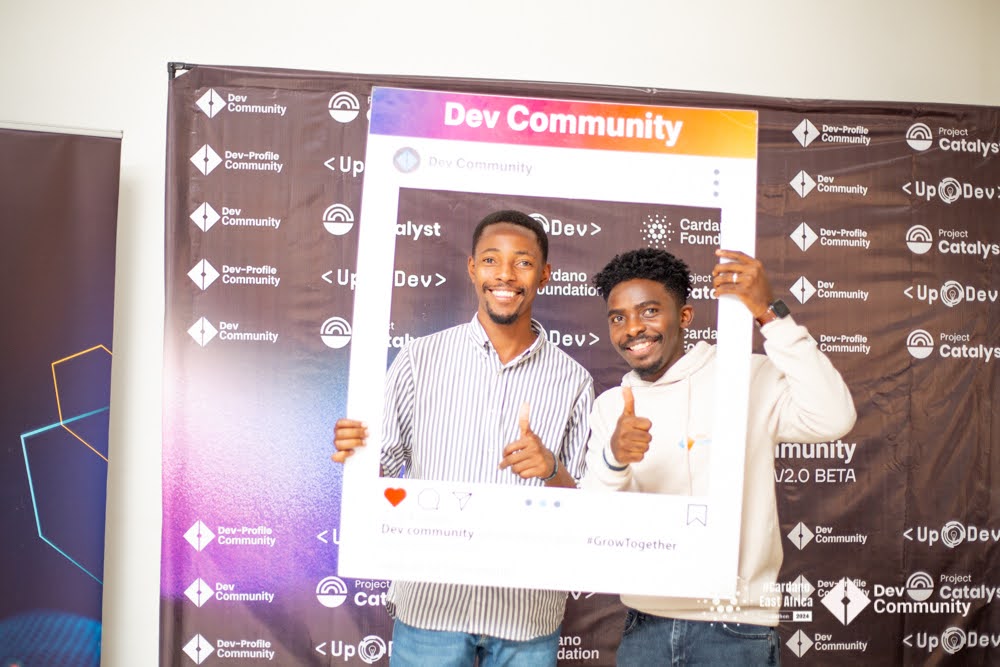
Steps to Demonstrate Trustworthiness
- Transparent Process DocumentationAll criteria and scoring for team/project selection will be made public and accessible.
- Meeting CommitmentsEvery announced milestone and deadline will be adhered to, including result publications and prize distributions.
- Open and Regular CommunicationProgress updates will be shared through social channels, participant emails, and the official DevCommunity.io event dashboard.
- External EvaluationIndependent advisors or community experts will be consulted to validate judging and ensure fairness.
- Ongoing Monitoring and EvaluationA feedback system will be implemented, and lessons learned will be published post-event for community reflection and improvement.
By combining experience, transparency, and an established presence in the Cardano ecosystem, we are fully prepared to deliver Updev Challenge 4 – Cardano Hackathon Kenya with professionalism, accountability, and integrity.
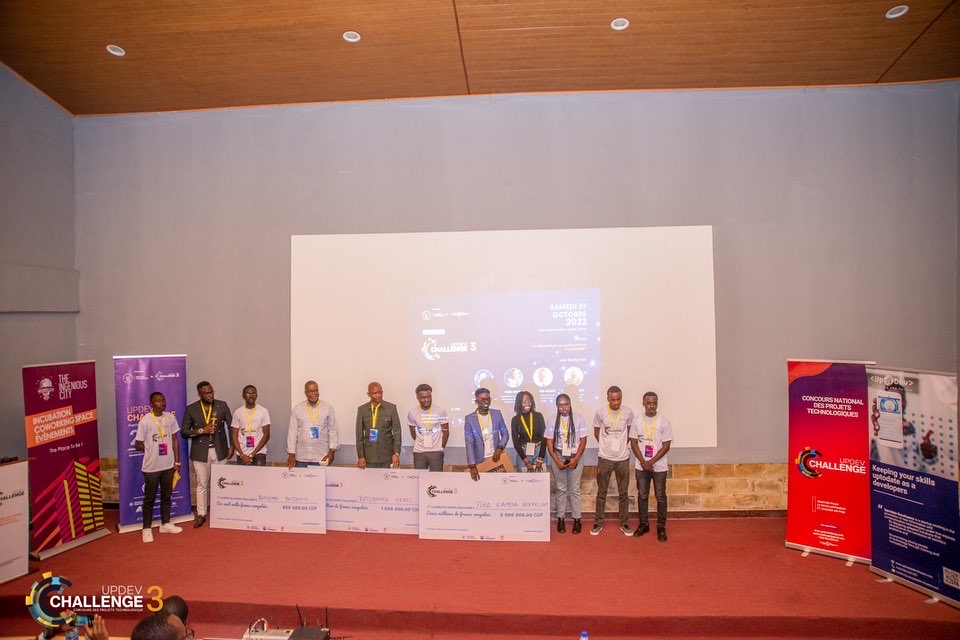
[Milestones] Project Milestones
Milestone Title
Project Preparation and Onboarding
Milestone Outputs
Official launch of the hackathon campaign
Outreach to 5+ Kenyan universities
Selection of 100 participants
Kickoff webinar and virtual onboarding material
Formation of 20+ student or teams
Mentor and jury onboarding
Acceptance Criteria
Outreach and application campaign publicly visible (website + social media)
Published list of selected participants and university affiliations
Training material and onboarding video published on YouTube
Evidence of Completion
Public links to website, announcement posts, and outreach media
PDF summary of outreach campaign and onboarding report
Google Spreadsheet listing selected participants and university affiliations
Link to the recorded kickoff webinar (YouTube or equivalent)
PDF or slide deck of training materials
Delivery Month
1
Cost
7000
Progress
20 %
Milestone Title
Post-Hackathon Support, Publication & Project Close-Out
Milestone Outputs
Onboarding of 100 selected students across 5+ universities
Delivery of virtual training sessions and hackathon preparation webinars
Formation of 20+ interdisciplinary teams
Assignment of mentors and facilitators to teams
Distribution of the Hackathon Toolkit (rules, timeline, judging criteria)
Setup of online coordination channels (Discord, WhatsApp, email, etc.)
Acceptance Criteria
Virtual onboarding sessions delivered and recorded
Students grouped into teams with defined roles (tech, biz, design, etc.)
Hackathon Toolkit shared with all participants
At least 3 mentorship check-ins completed before the event
Team info and mentor assignments published in a shared directory
Evidence of Completion
Public link to recorded onboarding/training sessions (YouTube or equivalent)
Google Spreadsheet listing teams, members, roles, and mentors
PDF version of the Hackathon Toolkit and judging criteria
Screenshots of team channels and communications setup
PDF summary of mentorship sessions and pre-hackathon activities
Delivery Month
4
Cost
10000
Progress
60 %
Milestone Title
Hackathon Delivery & Execution (Live Event)
Milestone Outputs
Execution of the 3-day in-person hackathon in Nairobi (Jan 7–9, 2026)
Delivery of on-site workshops, technical assistance, and ideation sessions
Engagement of local mentors, speakers, and judges
Submission of 10+ student-led projects
Final pitch presentations and prize ceremony
Rewards distributed to top 3 winning teams in ADA
Media and video content produced to showcase the event
Acceptance Criteria
Hackathon successfully hosted with documented participation
Minimum of 10 project submissions received from teams
Jury and judging process completed and winners selected
Event program and schedule shared publicly
At least one workshop or talk delivered by a Cardano ecosystem member
ADA prizes distributed to winners
Evidence of Completion
PDF of the final hackathon program and team list
Public links to video coverage and official photos
Google Spreadsheet listing submitted projects and team members
Links to pitch decks or GitHub repositories from each team
PDF summary of judging results and award winners
Transaction hashes or Cardano Explorer links confirming ADA prize distribution
Public blog post or Medium article summarizing the event
Delivery Month
1
Cost
16000
Progress
100 %
[Final Pitch] Budget & Costs
Please provide a cost breakdown of the proposed work and resources
Budget Breakdown — Total Requested: 33,000 ADA
Project Duration: 6 months
Structure: 3 Milestones
Milestone 1 – Setup and Preparation (1 month) – 7,000 ADA
This milestone covers all initial preparations needed to set the stage for a successful hackathon.
- **Event Organization & Coordination (2,000 ADA)**Covers administrative setup, project management, weekly planning meetings, and coordination with Catalyst & local partners.
- **Hackathon Branding & Communication (1,500 ADA)**Design of promotional materials, social media campaigns, banners, and outreach for community visibility.
- **Participant Onboarding & Selection (1,000 ADA)**Registration form setup, participant outreach, filtering of submissions, and communication.
- **Logistics Preparation (1,500 ADA)**Pre-booking of venue, travel planning, and local support arrangements.
- **Technical Setup (1,000 ADA)**Creation of Discord/Telegram server, tooling for documentation and submission (Notion, GitHub, Airtable).
Milestone 2 – Training and Workshop Preparation (4 months) – 10,000 ADA
This milestone ensures that participants are well-prepared to engage meaningfully during the hackathon.
- **Event Organization & Coordination (2,000 ADA)**Management of training sessions, scheduling, progress tracking, and communication with stakeholders.
- **Workshops and Educational Content (2,500 ADA)**In-depth sessions on Catalyst, Cardano tools, Git workflows, and project building.
- **Trainer and Speaker Fees (1,500 ADA)**Stipends for workshop facilitators, guest speakers, and community educators.
- **Training Materials and Kits (1,000 ADA)**Printing of guides, training booklets, branded t-shirts, notebooks, and handouts.
- **Volunteer Support & Logistics (1,500 ADA)**Local helpers for managing communication, resources, and translation if needed.
- **Technical Tooling & Subscriptions (1,500 ADA)**Access to Zoom Pro, Google Workspace, Notion Pro, GitHub team accounts, and Airtable base configuration.
Milestone 3 – Hackathon Execution and Final Rewards (1 month) – 16,000 ADA
This milestone includes the live event, rewards, and delivery of outcomes to the Cardano community.
- **Event Organization & Logistics (2,500 ADA)**On-the-ground execution planning, team coordination, reporting, and video/photo documentation.
- **Venue Rental (1,500 ADA)**Booking of a physical event space in Nairobi for 3 days.
- **Food & Participant Comfort (2,000 ADA)**Meals, water, coffee/snacks, and on-site management throughout the event.
- **Jury and Evaluation (1,500 ADA)**Jury compensation, scoring system, and judging coordination.
- **On-Chain Rewards for Winners (8,000 ADA)**Transparent ADA rewards to top teams:
- 1st Place: 3,000 ADA
- 2nd Place: 2,000 ADA
- 3rd Place: 1,000 ADA
- 7 Runner-ups: 250 ADA each
- Rewards distributed via verifiable blockchain transactions.
- **Final Report and Communication (500 ADA)**Publishing of results, hackathon outcomes, success metrics, and next steps.
[Final Pitch] Value for Money
How does the cost of the project represent value for the Cardano ecosystem?
This project provides strong value for money by delivering a high-impact Cardano-focused hackathon in East Africa, a region with untapped developer potential and growing blockchain interest. With a total budget of 33,000 ADA distributed across setup, training, and execution, the costs have been optimized to ensure every ADA contributes directly to community engagement, developer growth, and Cardano adoption.
Local Cost Efficiency: The budget allocation takes into account regional cost structures. For instance, event space rental, meals, and logistics are significantly more affordable in Nairobi compared to Western countries. A 3-day in-person hackathon with full hosting (venue, food, staff, coordination) can be delivered at a fraction of the cost that would be required elsewhere — with the same level of quality and outcomes.
Talent Mobilization: The training phase enables developers to understand and build on Cardano tooling. With minimal investment (e.g., 1,500 ADA for tool subscriptions, 2,500 ADA for workshops), we prepare dozens of new contributors who are likely to keep building beyond the hackathon. This type of ROI is exponential, as trained devs can engage with Catalyst, CIP proposals, Plutus contracts, and more.
Lean Team Structure: Each milestone includes organizational and coordination costs capped at around 2,000–2,500 ADA to ensure delivery quality without inflating admin costs. Team members are paid near local average freelance rates, ensuring fair compensation without overspending.
Reward Transparency: Hackathon rewards (8,000 ADA) will be distributed on-chain and verifiable through Cardano explorers, offering proof of delivery and incentive alignment. Only top-performing teams will receive these rewards, based on publicly scored evaluations.
Partnership Leverage: The project benefits from confirmed local partnerships — including Blockchain Centre Nairobi and Wada — that provide infrastructure, community access, and credibility, reducing the need for renting tech equipment or onboarding facilitators from scratch.
Community Outcomes: The project will onboard dozens of developers into the Catalyst ecosystem, initiate 5–8 early-stage Cardano dApps or integrations, and create visibility for the ecosystem in one of the most dynamic tech hubs in Africa.
This cost-effective approach directly aligns with Cardano’s mission of global inclusion and developer onboarding. Every ADA spent is backed by clear deliverables, visible outcomes, and long-term ecosystem growth.
[Required Acknowledgements] Consent & Confirmation
Terms and Conditions:
Yes
Team
1. AVAILABLE TEAM
Uptodate Developers
Uptodate Developers is a startup working to promote new technologies in two main areas:
Designing custom digital solutions that address social challenges
Training young people in ICT, with a focus on understanding user needs to create relevant tech tools.
The team includes permanent developers and freelancers, allowing flexibility depending on the skills required by each project.
Dan Baruka — Project Leader
CEO of Uptodate Developers
Software engineer and blockchain developer based in Kinshasa (DRC)
Co-founder of Uptodate Developers
Passionate about using technology to solve Africa’s key challenges
Languages: French & English
Josephine Ndeze — Team Leader | Chief Operating Officer
COO at Uptodate Developers
Software engineer & blockchain entrepreneur
Mandela Washington Fellow 2022
NEF Ambassador (2019–2021)
Winner of MissGeekAfrica 2019
Languages: French & English
Priscille Bampata — General Coordinator Updev DRC
Community coordinator at Uptodate Developers
Blockchain enthusiast
Languages: French & Swahili
Yannick Nsenga — DevOps | Trainer
Senior blockchain developer (Cardano, Haskell, Plutus)
Expert in application architecture and Web3 full-stack
Skills: Vue.js, Laravel, Node.js
Languages: French, English, Swahili
Kambale (Makasi) Mechack — Web UI/UX Designer | Blockchain Developer
Specializes in frontend development for Cardano Web3 integration
Technologies: React.js, JavaScript, HTML5, Sass
Languages: French & English
Vital Yengayenga — Community Manager | Content Strategy
Skills: Digital marketing, content writing, UX writing, social media strategy
Languages: French & English
2. TEAM TO HIRE
Latouifa Fetafeta — Cameraman & Video Producer
Freelance editor and cameraman at Nyiragongo Ngoma Production
Language: French
Blaise P. Irenge — Photojournalist & Corporate Consultant
Managing Director in the marketing and advertising industry
Skills: Strategic planning, business consulting, photography
Works with Kivu Entrepreneurs
Languages: French & English
3. PARTNERSHIPS TO SIGN
Ingenious City
For project evaluations and coaching
Ingenious City is an incubator and co-working space that brings together key entrepreneurship actors in DRC. It offers professional training, coaching, and startup support.
Languages: French & English
The Blockchain Centre – Nairobi
The Blockchain Centre is a hub for blockchain learning, events, and collaboration — connecting Web3 and Web2 communities in one inclusive space.
Location: Nairobi, Kenya
Languages: English
Wada
Wada is a global resource network focused on unlocking the potential of Africa and its diaspora through Distributed Ledger Technology (DLT), Artificial Intelligence (AI), and automation.
Languages: English & French