Last updated 8 months ago
Enterprise-grade Verifiable Database,300x cheaper, 99%faster
Problem
MAKING CARDANO READY FOR ENTERPRISE & GOVERNMENT ADOPTION. Cardano lacks an audit-grade verifiable database. Enterprises can’t prove off‑chain integrity at volume,compliance,TVL, real‑world adoption.
Solution
zkDatabase (mainnet): ZK‑rollups compress millions of ops into 1 proof, verified in <500 ms, 300× cheaper, enterprise ready. Allow on-chain systems to access an unlimited amount of off-chain data
Total to date
This is the total amount allocated to Enterprise-grade Verifiable Database,300x cheaper, 99%faster.
About this idea
[Proposal setup] Proposal title
Please provide your proposal title
Enterprise-grade Verifiable Database,300x cheaper, 99%faster
[Proposal Summary] Budget Information
Enter the amount of funding you are requesting in ADA
1000000
[Proposal Summary] Time
Please specify how many months you expect your project to last
10
[Proposal Summary] Translation Information
Please indicate if your proposal has been auto-translated
No
Original Language
en
[Proposal Summary] Problem Statement
What is the problem you want to solve?
MAKING CARDANO READY FOR ENTERPRISE & GOVERNMENT ADOPTION. Cardano lacks an audit-grade verifiable database. Enterprises can’t prove off‑chain integrity at volume,compliance,TVL, real‑world adoption.
[Proposal Summary] Supporting Documentation
Supporting links
- https://x.com/OrochiNetwork ,
- https://www.orochi.network/ ,
- https://docs.orochi.network/zkDatabase/introduction ,
- https://supervietnam.com/ ,
- https://skynet.certik.com/projects/orochi-network
[Proposal Summary] Project Dependencies
Does your project have any dependencies on other organizations, technical or otherwise?
Yes
Describe any dependencies or write 'No dependencies'
Orochi Network leads the technical development of zkDatabase, delivering advanced provable data infrastructure. ZKP Labs serves as the dedicated developer community, fostering innovation, collaboration, and promoting zkDatabase adoption across ecosystems, ensuring both technical excellence and strong community-driven growth.
[Proposal Summary] Project Open Source
Will your project's outputs be fully open source?
Yes
License and Additional Information
Open-source for community version
[Theme Selection] Theme
Please choose the most relevant theme and tag related to the outcomes of your proposal
Infrastructure
[Campaign Category] Category Questions
Describe your established collaborations.
- Orochi Network is a Tier‑1 Cryptography R&D company with verifiable data infrastructure and our solution already validated by leading 120+ enterprises and 50+ blockchain, such as Ethereum, Base, Certik, Ledger, Lumia, Bank of Singapore, HSBC. https://orochi.network/ecosystem
- We have MOU with Vietnam Government (Da Nang City) to provide blockchain solutions.
- Our R&D credibility is grounded with deep open‑source work (zkMemory, ECVRF in Rust; co‑authoring EIPs; contributions to Halo2, Nova, Pickles, o1js and released 5 scientist papers)
Describe funding commitments.
- We commit to strict, milestone‑gated use of the 1,000,000 ADA:
- funds are released only after acceptance criteria are met and artifacts are public (code, docs, benchmarks).
- Treasury is multisig‑secured; monthly progress and financial reports with budget‑variance tracking. 2% capped contingency.
- Security audit spend is ring‑fenced; independent audits (e.g., Certik) publish public reports.
- Orochi co‑invests engineering time, infra, and prior IP; core outputs ship under a permissive open‑source licens
Describe your key performance metrics.
- Users: DAU/MAU, new sign‑ups, activation rate (screens: Plausible/PostHog).
- Usage: proofs generated/day, on‑chain verifications/epoch, ops per batch (screens: Grafana jobs/queue depth).
- Traffic & performance: sessions, API req/s, p95 latency, verifier time (Grafana/Prometheus).
- Adoption: live integrations, SDK installs/week (npm), GitHub clones/stars, D30 retention (GitHub Insights/PostHog).
- Reliability & savings: uptime, failed jobs <0.1%, fees saved vs raw storage (Blockfrost/Cardano explorer).
- Monthly Catalyst reports will embed screenshots and public links to these dashboards.
[Your Project and Solution] Solution
Please describe your proposed solution and how it addresses the problem
zkDatabase helps Cardano into an audit-grade, privacy-preserving data platform: every off-chain operation becomes a succinct, low-cost proof that smart contracts and regulators can verify at the scale and UX enterprises expect.
Our solution is a provable database (zkDatabase) purpose-built to fix the hardest blocker to enterprise adoption on Cardano: unverifiable off-chain state. Today, most high-value workflows run off-chain (core banking, KYC/AML, risk, IoT, AI pipelines), but smart contracts can’t independently validate those inputs. Existing data availability stacks store bytes; they don’t prove correctness or integrity, and they support a single commitment scheme with no native zero-knowledge leaving compliance, privacy, and trust gaps that enterprises cannot accept.
The problem we address (enterprise reality, Cardano opportunity)
- Integrity: Oracles and traditional DBs can’t produce cryptographic guarantees of correctness end to end, creating fraud and compliance risk in institutional workflows
- Privacy: Regulated actors must prove facts (e.g., AML/KYC, creditworthiness) without exposing PII—public-chain transparency collides with confidentiality requirements
- Scale/cost: Storing or re-executing everything on-chain is infeasible; enterprises need a way to compress millions of events into small proofs with fast, deterministic verification
- Interop: Heterogeneous IT stacks and multi-chain environments require proof- and chain-agnostic primitives to avoid lock-in and preserve future options
Our solution in one sentence
zkDatabase is a noSQL, proof-agnostic, ZK powered database that: (a) rolls up millions of operations into one succinct proof, verifiable in <500ms; (b) runs proving server-side so dev UX feels like a normal DB; (c) exposes a GUI, SDKs, multi-auth, and RBAC so teams ship fast; and (d) lets Cardano contracts verify off-chain integrity without seeing raw data.
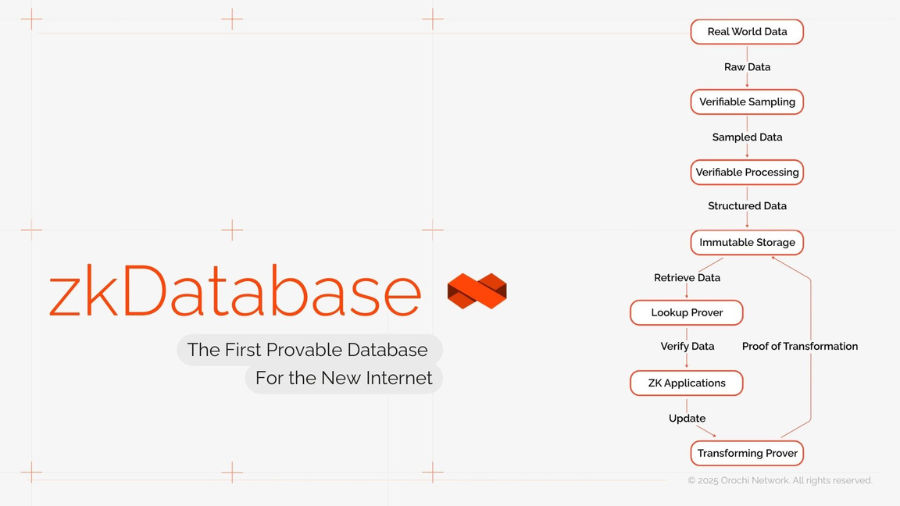
How it solves the problem:
- Verifiable by design: Every insert/update/query is accompanied by a cryptographic proof, turning opaque off-chain state into audit-grade, machine-checkable facts
- Privacy-preserving: Zero-knowledge proofs attest to compliance (e.g., “incomes > X,” “counterparty is KYC’d”) without revealing sensitive data
- Performance at scale: Recursive ZK-data-rollups aggregate millions of operations per batch with a single succinct proof that verifies in ~500ms—drastically reducing verification load and on-chain footprint
- Interoperable and future-proof: Proof-system and blockchain agnosticism with multiple commitment schemes keeps Cardano integrations flexible as cryptography and standards evolve
- Enterprise-ready UX: Server-side proving, GUI console, SDKs, multi-auth (wallet/GitHub/Gmail), and role-based access control match enterprise expectations and shorten time-to-value
Architecture fit for Cardano
- Off-chain compute, on-chain assurance: zkDatabase processes and proves data off-chain, then delivers succinct proofs that Cardano dApps or governance processes can verify when needed—shifting heavy lifting away from the consensus layer while preserving trust
- Proof- and chain-agnostic core: By supporting multiple proof systems and commitment schemes, zkDatabase integrates with Cardano today and adapts to tomorrow’s standards without costly migrations
- Complements existing DA/oracle stacks: Where current DA solutions store data and oracles transport facts, zkDatabase proves correctness and compliance—covering the integrity gap those layers don’t address
Developer and enterprise user journey (Cardano builders)
1. Onboard
- Sign in via wallet, GitHub, or Gmail; pick a plan (supports fiat/crypto payments)
- Create orgs, databases, and collections in the GUI; set RBAC for teams
2. Build
- Use SDKs to write/read data exactly like a familiar noSQL DB
- zkDatabase generates proofs in the background—no dev-facing ZK complexity
3. Prove and verify
- Batch operations are recursively composed into ZK-data-rollups; one succinct proof covers millions of events
- Cardano smart contracts or off-chain auditors verify proofs deterministically, without learning underlying data
4. Operate and audit
- Rotate keys, manage roles, and export attestations for regulators or partners
- Scale throughput without changing app logic as volumes grow
Result: Builders keep their current mental model (DB + SDK + GUI). Cardano and its users gain cryptographic assurances where today they rely on trust.
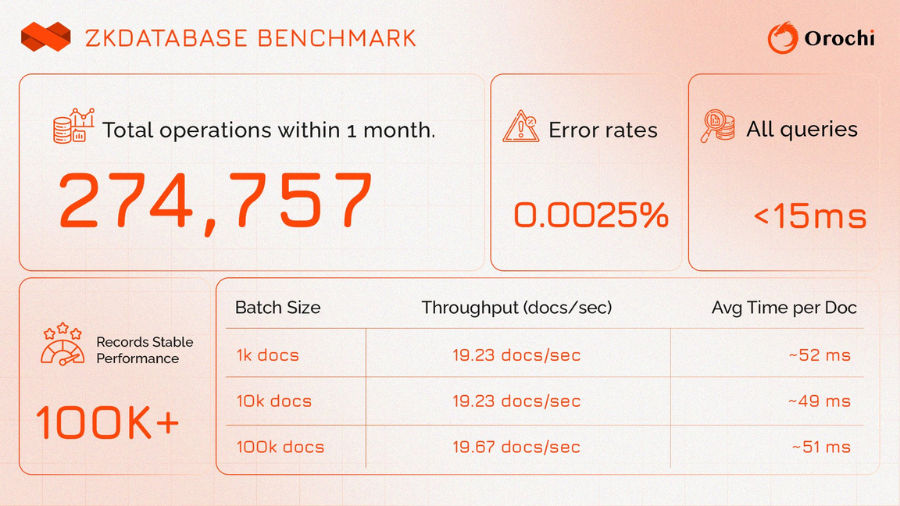
*This Statistic is applied for EVM, we will build another zkDatabase version on Cardano
Institutional finance and enterprise use cases
- Privacy-preserving credit/income proofs: Onboard borrowers and counterparties with ZK attestations instead of raw documents; feed compliant signals to Cardano DeFi without leaking PII
- AML/KYC attestation pipeline: Institutions store and process compliance data off-chain, publish succinct compliance proofs on-chain for settlement or access control
- Proof-of-reserves and solvency: Banks, brokers, or custodians generate periodic proofs over internal ledgers; Cardano contracts verify coverage before enabling actions (mint, borrow, RWA settlement)
- RWA provenance and trade finance: Supply chain events are rolled up with integrity proofs; tokenized assets on Cardano inherit verifiable, regulator-ready audit trails
- AI/analytics attestations: Models produce ZK proofs of policy compliance or KPI thresholds without revealing inputs or IP—unlocking data-driven finance on Cardano
- IoT telemetry aggregation: Millions of device events per hour are proven once; Cardano receipts or settlements validate integrity deterministically
These are precisely the workflows where compliance and privacy are non-negotiable and volumes are high—making succinct proofs, rollups, and a familiar DB UX indispensable.
Why this is indispensable for Cardano builders
- Security-by-default data: Replace “trust the source” with “verify the proof,” raising the baseline across DeFi, RWA, identity, and enterprise integrations
- Faster shipping, less risk: Server-side proving plus GUI/SDKs minimizes cryptography lift and integration time while improving auditability
- Ecosystem value multiplier: Verifiable, privacy-preserving data unlocks regulated capital and mission-critical applications—broadening Cardano’s market and deepening on-chain activity
- Differentiated infra: Competing DA solutions don’t natively prove data integrity and often tie you to one commitment scheme; zkDatabase fills that missing integrity layer with ZK-first design and multi-commitment support
[Your Project and Solution] Impact
Please define the positive impact your project will have on the wider Cardano community
Making Cardano Ready for Enterprise and Government: zkDatabase as the Missing Infrastructure
With example, applying for the current Cardano Enterprise Partnership (SERPRO), I’ll show why zkDatabase can cut storage cost by 1,000×+ and shrink on-chain time by 99.99%+ in a real enterprise-scale Cardano case—turning “impossible on L1” into “minutes and cents.”
SERPRO, the world’s largest state-owned IT company, has partnered with Cardano to accelerate blockchain adoption across Brazil’s public sector. SERPRO manages 30.4 PB of data across clouds.
https://cardanofoundation.org/blog/strategic-partnership-serpro
Cardano’s next growth curve hinges on trustable off-chain data. Today, most enterprise workflows (KYC/AML, risk, ERP, IoT, analytics) sit off-chain, and DA layers don’t prove correctness only storage. zkDatabase fixes that by making every data operation cryptographically provable, private by default, and cheaply verifiable on-chain, so Cardano contracts, auditors, and regulators can trust outcomes without seeing the underlying data.
A realistic first step is not 100% SERPRO’s application can bring on-chain—assume just 3% of SERPRO’s data footprint touches Cardano: 1 PB.
Direct answers for 1 PB on Cardano L1 (fees at ADA = $0.8; near-minimal fee assumptions):
- Gas fee to store 1 PB on L1: ≈ 53.429B ADA ≈ $42.743B
- Time to store 1 PB on L1 (≈250 TPS sustained): ≈ 2,825.7 days (~7.74 years)
Quick fee sketch (near-minimal):
- Max metadata per tx ≈ 16 KB (16,384 bytes)
- Tx fee ≈ a + b × size = 0.155381 ADA + 0.000043946 × 16,384 ≈ 0.875381 ADA/tx
- 1 PB = 10^15 bytes → ≈ 61,035,156,250 tx → ≈ 53.429B ADA in fees
(Note: min-ADA deposits per UTXO not included)
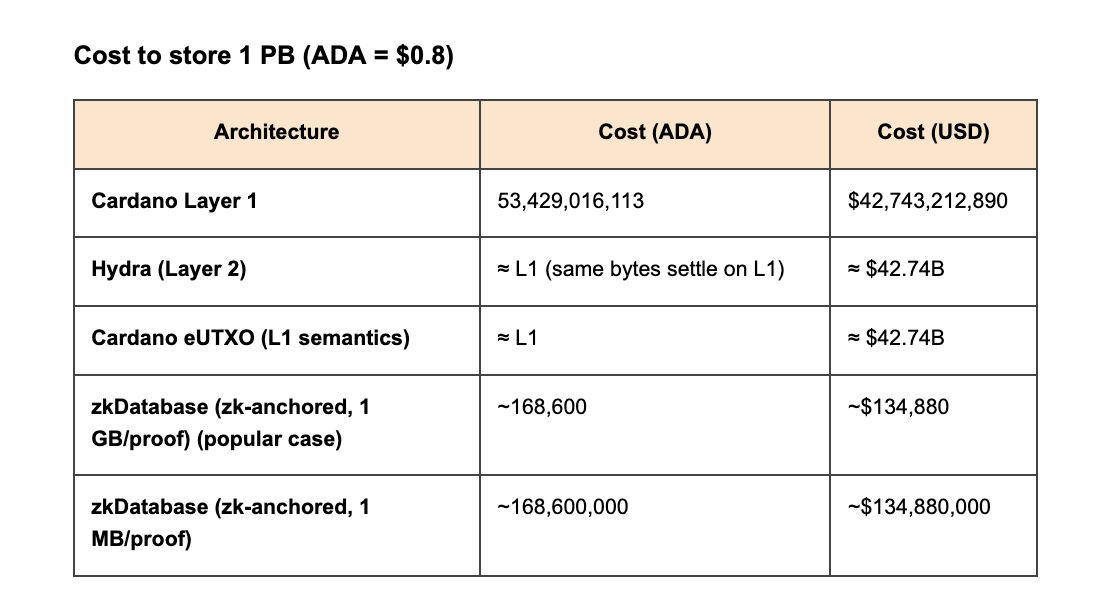
Assumptions for zk anchoring: one small anchor tx per proof carrying a commitment/proof-hash and public inputs; near-minimal fee ≈ 0.1686 ADA/anchor.
1 GB/proof → 1,000,000 anchors → ~168,600 ADA
1 MB/proof → 1,000,000,000 anchors → ~168,600,000 ADA
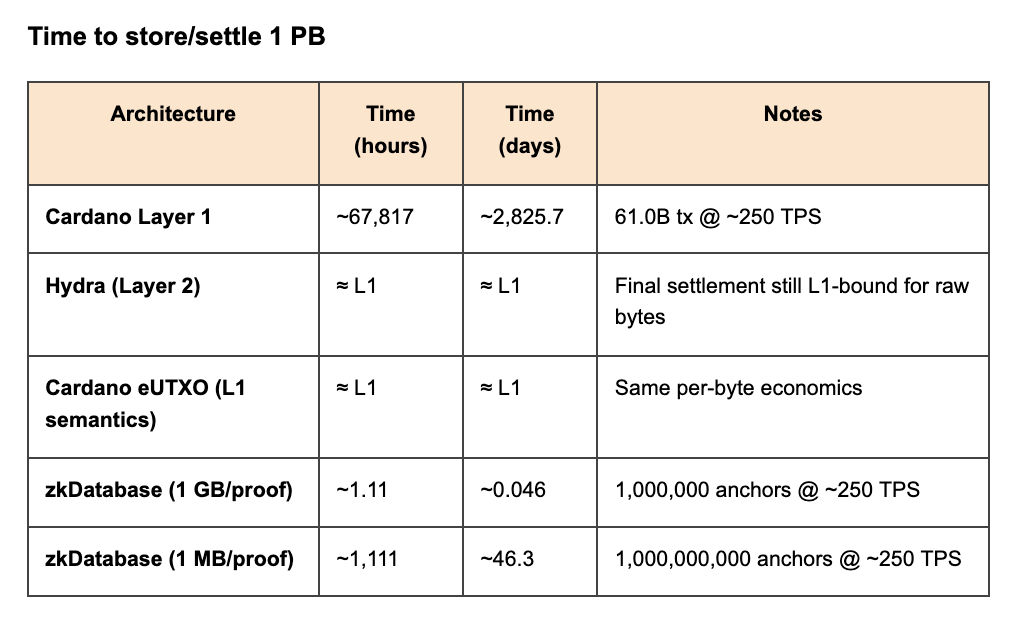
What this means (Hydra vs zkDatabase, at 1 PB)
Cost:
vs Hydra (≈ L1):
- zkDatabase (1 GB/proof) is ~317,000× cheaper ($42.74B → ~$0.135M).
- zkDatabase (1 MB/proof) is ~317× cheaper ($42.74B → ~$134.88M).
Time:
vs Hydra (≈ L1 ~2,825.7 days):
- zkDatabase (1 GB/proof) is
61,000× faster (2,825.7 days → ~0.046 day). - zkDatabase (1 MB/proof) is
61× faster (2,825.7 days → ~46.3 days).
Why zkDatabase is essential for enterprise/government
- Replace bytes with proofs: ZK data-rollups compress millions of operations into succinct proofs; on-chain posts carry only commitments/proof-hashes.
- Audit-grade and private: Verifiability without exposing sensitive records—fit for public-sector compliance.
- Seamless with eUTXO/Hydra: Keep interactive flows in Hydra; anchor outcomes to L1 with zk—best of both worlds.
Disclaimer: Figures are projections based on publicly known fee coefficients, 16 KB/tx metadata, ~250 TPS sustained L1 throughput, and near-minimal tx sizes for anchors. Real-world numbers vary with network conditions, parameters, design choices and architecture applied for Cardano
in short: Hydra improves speed; eUTXO improves safety; zkDatabase fixes economics. Together, they make Cardano truly enterprise- and government-ready.
What builders gain: ship faster, prove more, risk less
- Familiar UX, ZK power: Developers read/write data like a normal NoSQL DB while zkDatabase proves integrity in the background no ZK expertise required. A GUI console, SDKs, server-side proving, multi-auth (wallet/GitHub/Gmail), and role-based access control (RBAC) keep the learning curve flat and delivery fast
- Massive scale, tiny proofs: Recursive ZK-data-rollups compress millions of ops into a single succinct proof that verifies in ~500ms, cutting verification costs and on-chain footprint perfect for high-volume apps and enterprise SLAs
- Interop and future-proofing: Proof-system and blockchain agnosticism plus support for multiple commitment schemes mean Cardano teams can integrate now and evolve cryptography later without replatforming
What the ecosystem gains: indispensable primitives for the next wave of apps
- End-to-end verifiable pipelines: Cardano dApps can verify off-chain computations and state transitions deterministically, removing blind trust in oracles and middleware. Existing DA solutions can store bytes; zkDatabase proves correctness and compliance filling the integrity gap enterprises flag as a blocker
- Compliance without exposure: Zero-knowledge proofs attest to policy adherence (e.g., “KYC done,” “exposure < limit,” “income > threshold”) without leaking PII or IP, essential for institutional finance and regulated industries
- Cost discipline at scale: Off-chain proving plus succinct on-chain verification delivers the throughput enterprises need without congesting L1 or exploding costs exactly the economics that unlock production deployments
- Open-source leverage and alignment: Successful Catalyst proposals consistently commit to open outputs so the community can audit, extend, and adopt. We will align with this pattern open docs, SDKs, and core components to maximize reuse and trust across Cardano
High-impact use cases that Cardano can own
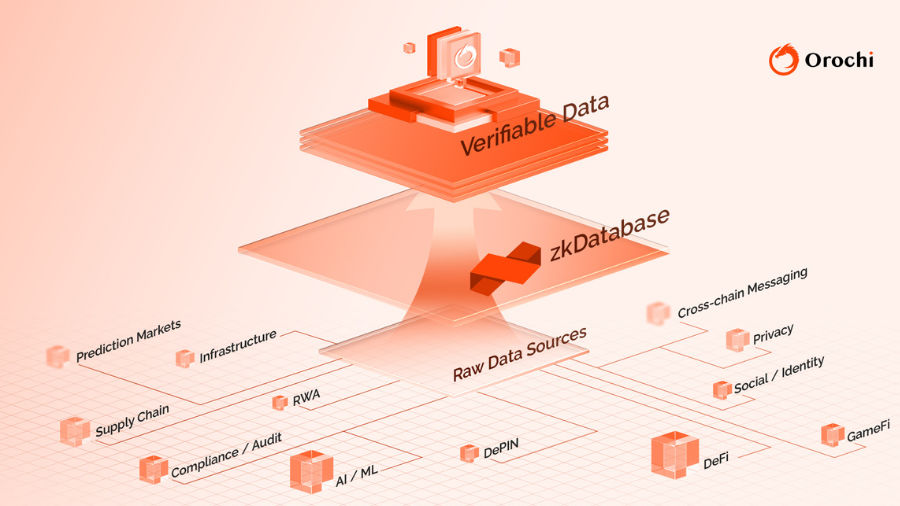
- Institutional DeFi and RWAs: Prove solvency, KYC/AML status, and asset provenance with succinct proofs; Cardano contracts verify before settlement or access privacy preserved, integrity guaranteed
- Supply chain and trade finance: Roll up multi-party events into a single proof of authenticity and compliance; tokenized assets inherit verifiable audit trails on Cardano
- Healthcare and sensitive data: Share proofs of eligibility or outcomes without revealing underlying records; hospitals and insurers interoperate with cryptographic assurances
- IoT and DePIN: Aggregate millions of device events into compact proofs; Cardano validates integrity deterministically for rewards, billing, or automation
These aren’t demos, they're the exact workflows enterprises have budget for, and where Cardano can now meet compliance, privacy, and performance requirements in one shot.
On ADA value: cheaper enterprise fees = Larger Cardano valuation
Lowering per-use cost with zkDatabase is not negative for ADA. Back to SERPRO Example, Without solving petabyte-scale data economics, big enterprises won’t build on Cardano—capping demand. Since the SERPRO partnership was announced, market expectations alone have been associated with a ~15–20% uplift in ADA’s market cap (increase $4 - $8 billions USD) over a few months. If SERPRO deploys zkDatabase on Cardano and realizes 300×–300,000× efficiency gains, utility and credibility rise—inviting 5–10 additional large enterprises. You can imagine how the value of the Cardano ecosystem skyrocketed. That compounding adoption drives more anchoring, staking, and ecosystem activity—supportive for long-term ADA value.
[Your Project and Solution] Capabilities & Feasibility
What is your capability to deliver your project with high levels of trust and accountability? How do you intend to validate if your approach is feasible?
Orochi Network is a Tier‑1 research-and-build team with 30+ researchers and developers: we publish at top cryptography conferences, ship on mainnet, and scale with enterprises. zkDatabase has surpassed 10,000 downloads in months and is already used by 40+ large enterprises. With 120+ Tier‑1 partners, government advisory roles, and GitHub followers exceeding some top‑10 blockchains (e.g., Avalanche, Polygon), we bring proven R&D, production-grade engineering, and an enterprise ecosystem ready to accelerate Cardano.
Orochi Network can deliver zkDatabase for Cardano with high trust and accountability because we’ve already shipped the world’s first provable database with a ZK prover, operate a proof‑ and chain‑agnostic verifiable data stack used across 50+ blockchains, and are led by Chiro (former R&D lead at Cardano Labs). This is reinforced by Tier‑1 cryptography research, independent security audits (Certik), open‑source commitments, and a rigorous, metrics‑driven validation plan aligned to Catalyst best practices and enterprise requirements.
Why the community can trust us to execute
- Tier‑1 research, proven in production
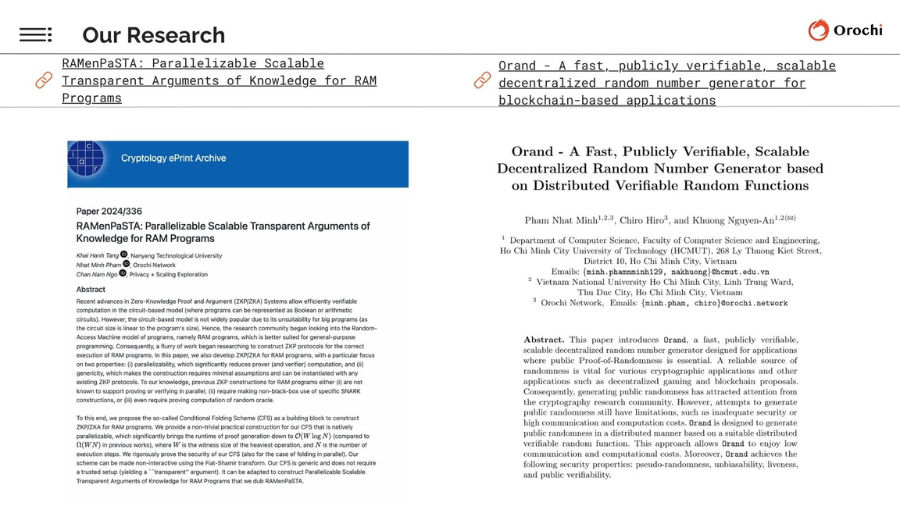
- Scientific papers presented at Tier1 global cryptography conferences; research directly `d chains like Cardano
- Certik Audit Rank AA: 89.05 Score =; Top 3% in CertiK Security Score Leaderboard, KYC Gold Status
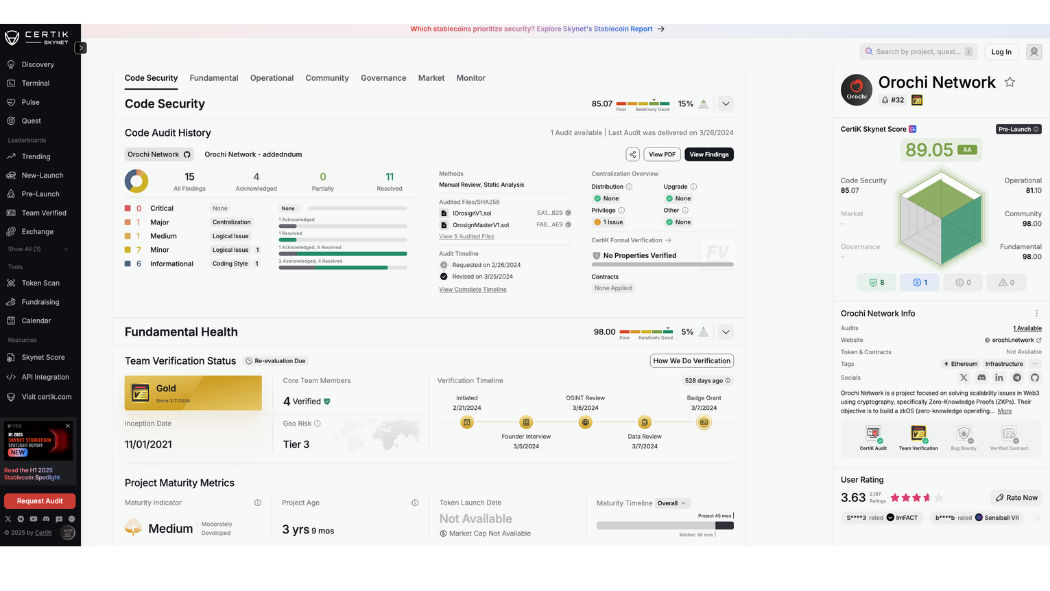
Certik Report: https://skynet.certik.com/projects/orochi-network
Development:
- The world first ECVRF library in Rust [5]
- The world first provable database with ZK prover [6]
- zkMemory an universal module for zkVM [7] funded and audited by the Ethereum Foundation;
Open source:
- Co-author of EIP-6366 and EIP-6617
- Contribute to Halo2 of PSE (EF)
- Contribute to Nova of Microsoft
- Contribute to Pickles, o1js of Mina Protocol
- Contribute to libsecp256k1 of Parity Tech (Web3 Foundation)
GitHub influence: followed by many CTOs/builders— Github’s followr exceeding some top‑10 chains (e.g., Avalanche, Polygon), signaling deep developer trust.
https://github.com/orochi-network
Extensive enterprise ecosystem and government trust
- 120+ partners, predominantly Tier‑1, across infra, L1/L2s, and enterprise verticals.
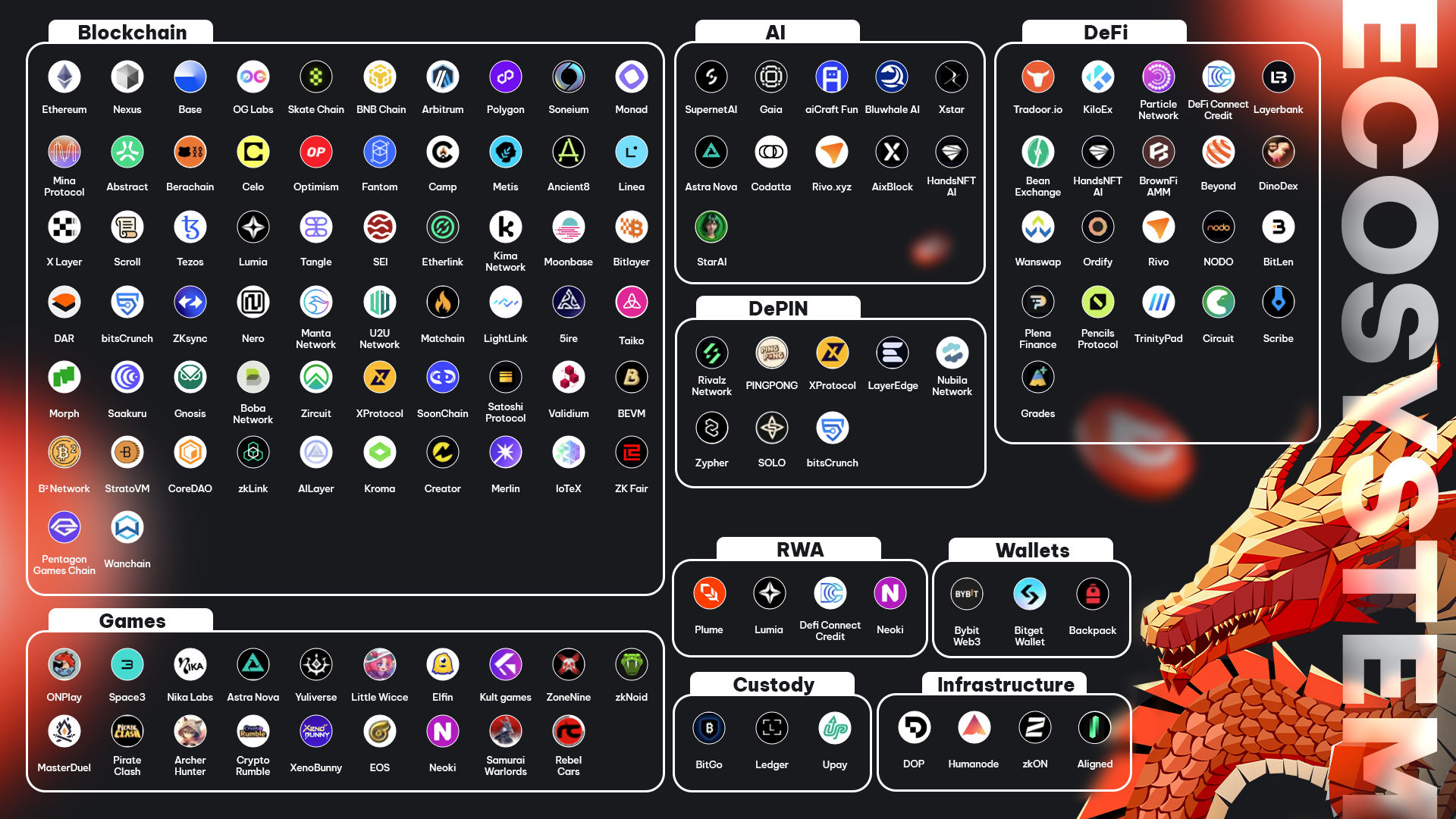
- Advisor to the Da Nang City People’s Committee (Vietnam) on blockchain and security; help traditional enterprises adopt verifiable, privacy‑preserving systems.
- Organizer of Super Vietnam—Vietnam’s top enterprise/institution conference—with 5,000+ builders and founders participating.
Check SUPER VIETNAM: https://x.com/super_vietnam/status/1934261954069340262
Cardano-native credibility:
- Chiro (Founder Orochi Network) was the R&D lead at Cardano Labs and aligning our engineering judgment and delivery discipline with Cardano’s formal, security-first culture
Market validation at scale
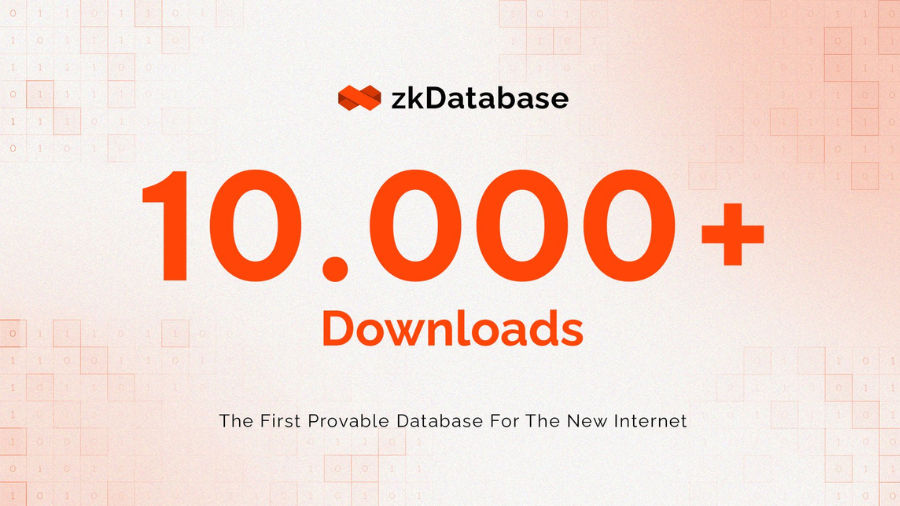
- zkDatabase is already mainnet; 10,000+ downloads in a few months (indicative of builder adoption) and 40+ large enterprises live across sectors.
- Similar solutions delivered to 50+ blockchains, demonstrating portability and operational maturity we now bring to Cardano.
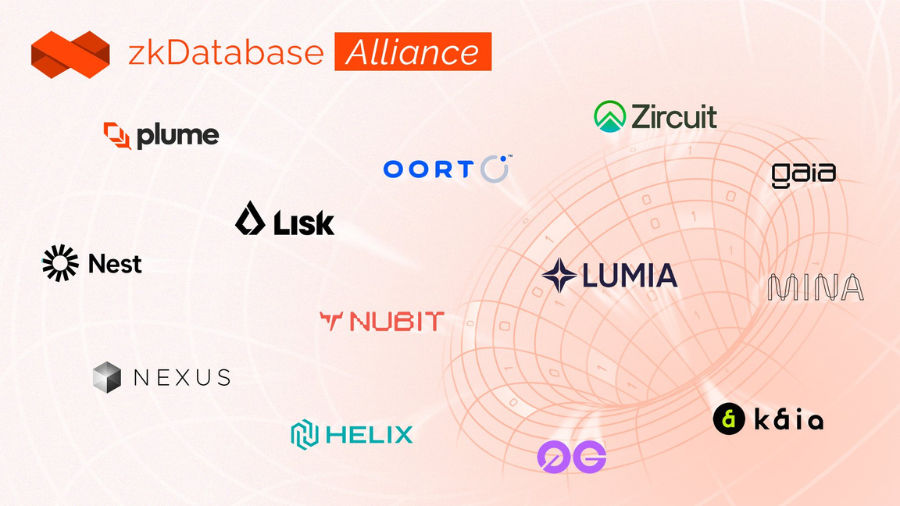
Independent assurance and community partners
- Certik audits harden releases and publish security artifacts;
- ZKP Labs for education and developer outreach;
- Cardano Community Vietnam for localized adoption.
How we will validate feasibility (multi-stage plan with measurable checkpoints)
- Technical port and PoC on Cardano
Objective: prove end-to-end integrity on Cardano testnet with zkDatabase providing proofs for write/read operations and batch rollups.
Deliverables:
- Cardano-ready SDKs and verification contracts; sample dApps (DeFi/RWA) demonstrating on-chain proof verification
- Benchmarks: throughput (ops/sec), proof generation latency, on-chain verification time/fees, and storage footprint
- Rationale: matches our prior deployments and leverages our proof-/chain-agnostic core and multi-commitment design
2. Performance and security hardening
- Stress tests: 1M+ operations per batch; cross-commitment proofs; failover under network variability
- Security: internal red-team + Certik audit with public reports; remediation before mainnet candidate
- Privacy: ZK attestations for compliance checks (e.g., KYC/AML, exposure thresholds) validated against realistic enterprise data flows
3. Pilot integrations with Cardano builders
- Verticals: institutional DeFi/RWA, supply chain, identity/attestations
- Metrics: verification cost per million ops, time-to-integrate for a typical dApp, proof-based SLA adherence.
- Output: public case studies and SDK examples to reduce adoption friction.
4. Open outputs and community enablement
- Open-source core components, docs, tutorials, and reference integrations; monthly progress reports and workshop series with ZKP Labs and Cardano VN
- Alignment with funded-proposal patterns: clear milestones, open repos, pilot feedback loops practices that consistently score well in Catalyst
5. Mainnet readiness and governance
- Release candidates gated by KPIs (latency, cost, audit status); publish audit artifacts and changelogs; establish upgrade cadence and incident-response runbooks.
- Continuous improvement: bug bounty, ongoing audits, and compatibility testing as Cardano evolves
Accountability framework reviewers expect (and we will deliver)
- Transparent milestones and KPIs: public roadmap with stage gates (PoC → audited RC → mainnet), tied to performance and security metrics.
- Independent audits and public artifacts: Certik reports, reproducible benchmarks, and verifiable test harnesses
- Open-source and education: repositories, SDKs, and guides; workshops and hackathons with ZKP Labs; localized outreach with Cardano Community Vietnam to accelerate adoption and gather feedback
- Enterprise-grade operations: RBAC, multi-auth, and server-side proving for familiar UX; repeatable runbooks for deployment and monitoring.
[Milestones] Project Milestones
Milestone Title
Research, Alignment, and Cardano Fit
Milestone Outputs
Scope and objectives:
- Align zkDatabase’s ZK‑data‑rollups and verifiable data pipeline to Cardano’s developer workflows and on‑chain verification pathways. Establish success metrics, governance, and delivery cadence modeled on high‑quality Catalyst proposals while anchoring technical decisions in our VDI blueprint and current zkDatabase implementation
Key tasks:
- Technical gap assessment: map zkDatabase components (NoSQL core, server‑side prover, multi‑commitment interface, SDK/GUI) to Cardano requirements for off‑chain data proving and on‑chain verification
- Proof/commitment strategy: select initial commitment and proof systems to prioritize for Cardano verification, leveraging our proof‑agnostic core (e.g., Halo2/Nova/Pickles/Plonky3 readiness)
- Success metrics and reporting: define KPIs (proof verification time, ops/batch, verification fee envelope, integration time) and publish milestone acceptance criteria template aligned with Catalyst norms
Acceptance Criteria
- CAP v1.0 published with measurable KPIs and risk mitigation; stakeholder sign‑off recorded in repo issues
- Documented selection of initial commitment/proof combo, with rationale tied to Cardano verification feasibility
Evidence of Completion
Outputs
- Cardano Adoption Plan (CAP) v1.0: technical fit, phased scope, risk register, KPIs, governance/reporting cadence
- Proof/commitment selection note for first verifier release
Delivery Month
1
Cost
75000
Progress
10 %
Milestone Title
Requirements and Architecture
Milestone Outputs
Scope and objectives
- Produce implementation‑grade requirements and the Cardano verification architecture for zkDatabase: data model/commitment mapping, verifier contract interface, SDK surface, and CI for reproducible benchmarks.
Key tasks
- Requirements workshops with target integrators (DeFi/RWA/identity) to lock data schemas, access patterns, and proof lifecycle expectations
- Architecture design:
- Verifier contract interface and proof object schema for Cardano verification.
- Batch/rollup strategy and recursion layout to keep on‑chain verification ~500ms per multi‑million op batch (target inherited from zkDatabase)
- Multi‑commitment abstraction boundary to preserve upgradeability
- Tooling plan: CLI/SDK changes for Cardano, test harness, and benchmark suite
Acceptance Criteria
- Architecture and requirements approved; traceability matrix linking requirements → components/testing artifacts published
- Benchmark plan includes verification latency and cost envelopes derived from zkDatabase targets
Evidence of Completion
Output
- Cardano Verification Architecture v1.0 (diagrams/specs), Requirements Spec v1.0, and Tooling Plan.
- Public issues/epics created and prioritized
Delivery Month
2
Cost
225000
Progress
30 %
Milestone Title
Core Development
Milestone Outputs
Scope and objectives
Implement Cardano‑ready zkDatabase: end‑to‑end off‑chain proving (server‑side) → succinct proof → on‑chain verification; plus developer‑friendly GUI/SDK for rapid adoption.
Key tasks
- Prover pipeline integration:
- Wire zkDatabase’s ZK‑data‑rollups into a proof artifact consumable by Cardano verifier; maintain recursion path for large batches
- Harden multi‑commitment boundary for future proof‑system swaps without app refactors
- Verifier contract(s) and SDK:
- Implement on‑chain verifier interface and SDK bindings; expose simple verify(proof, commitment, policy) abstractions.
- Add CLI for proof submission, inspection, and gas/fee estimation.
- GUI and RBAC
Extend management console for Cardano projects: orgs, DBs, collections, roles/permissions—keeping “ordinary DB” UX while generating proofs server‑side
- Documentation and examples:
Reference integrations (e.g., compliance attestation, proof‑of‑reserves, provenance) with end‑to‑end code.
Acceptance Criteria
- Demo: insert/update/query → proof → on‑chain verification completes deterministically; batch verification ≤ target envelope (~500ms) under lab conditions .
- SDK/CLI and GUI features available; example apps run end‑to‑end from fresh clone without manual patching.
- Repos public; issues and CI pipelines green on tagged release
Evidence of Completion
Output:
- Cardano verifier (v0.9), SDK/CLI (v0.9), server‑side prover integration with recursive rollups, GUI extensions, and three reference examples.
- Public test environment refreshed and documented: test‑app.zkdatabase.org with Cardano verification flow walkthrough
Delivery Month
4
Cost
280000
Progress
70 %
Milestone Title
Testing, Security, and Performance Hardening
Milestone Outputs
Scope and objectives
Prove correctness, robustness, and security; publish artifacts. Follow a test strategy consistent with Catalyst expectations for transparent, verifiable delivery
and Orochi’s R&D rigor
Key tasks
- Functional and property testing across:
CRUD + complex query proofs; batch/recursive proofs; error surfaces and replay protection.
- Performance and scale:
Stress batches (≥1M ops), measure prover latency, verifier latency/cost; tune recursion schedule to maintain ~500ms verification target
- Security:
Threat modeling; internal red‑team; dependency review; formal verification scope for critical components where feasible.
Independent audit engagement; fix‑verify cycle with public report.
- Reliability and ops:
Failure injection (network/IO), checkpointing of rollups, recovery semantics.
Acceptance Criteria
- All critical issues from audit resolved; public audit report and changelog released.
- Benchmarks confirm batch verification within target envelopes and predictable fee profile; results reproducible via provided harness.
- Incident runbooks and SLOs published; readiness sign‑off recorded.
Evidence of Completion
Output
Comprehensive test plan and results, benchmark report (latency, throughput, fee envelope), security assessment and independent audit report, reliability playbooks.
Delivery Month
1
Cost
150000
Progress
80 %
Milestone Title
Integration and Optimization
Milestone Outputs
Scope and objectives
Validate ease of integration and real‑world fitness by working with pilot builders across priority verticals, then optimize developer experience and performance.
Key tasks
- Pilot integrations (2–3 teams):
Institutional DeFi/RWA use case (e.g., solvency or provenance proof), identity/compliance attestation, and one data‑intensive vertical.
- DX improvements:
SDK ergonomics, better error messages, templates, and copy‑paste examples from pilots; GUI polish for roles/permissions at scale
- Interop paths:
Harden multi‑commitment interface; document migration path for future proof systems to keep Cardano teams future‑proof
Acceptance Criteria
- Pilots verify proofs on‑chain successfully; integration time and cost meet targets defined in CAP v1.0.
- SDK/GUI v1.0 tagged; developer NPS from pilots meets threshold; public case studies include code and metrics
- No open critical bugs blocking mainnet‑candidate readiness
Evidence of Completion
OutPut:
- Pilot case studies (public), SDK/CLI v1.0, GUI v1.0, and Integration Guide with best practices/playbooks.
- Performance deltas from real workloads and associated optimizations
Delivery Month
1
Cost
100000
Progress
90 %
Milestone Title
Final Milestone: Launch, Marketing, and Enterprise Pilots
Milestone Outputs
Scope and Objectives
- Mainnet go-live with production runbooks, SLOs, and support channels.
- 1–3 enterprise pilots delivering first on-chain proofs with clear KPIs.
- Targeted marketing and partner co-marketing to accelerate awareness.
- Builder enablement: workshops, office hours, templates, and SDK-driven quickstarts.
- Governance: versioning, upgrade/rollback, disclosure, and roadmap.
Key Tasks
- Go-live engineering and ops
- Final testnet checks; deploy mainnet verifier contracts/endpoints.
- Incident/rollback runbooks, SLO/SLA, status page; telemetry and cost dashboards.
- Enterprise pilots (1–3)
- Select partners (RWA/compliance/provenance), define KPIs/scope.
- Integration support (SDK/CLI/GUI) and limited infra credits; publish sanitized case studies.
- Marketing and community
- Launch page, one-pagers, technical briefs, explainer video.
- PR/earned media, partner announcements, 5+ technical blog posts.
- Developer enablement
- Three hands-on workshops (APAC/EMEA/AMER), 4 weeks of office hours.
- Zero-to-proof tutorials, quickstarts, updated reference apps, mini-hackathon.
Acceptance Criteria
- Mainnet: quickstart verifies proofs end-to-end; two reference apps updated; benchmarks meet targets.
- Pilots: 1–3 partners reach first on-chain proofs; KPIs recorded and summarized.
- Adoption: 3 workshops (recordings public), ≥100 registrations
- Support: first-response <48h, resolution within SLAs for 30 days; uptime ≥99.9%.
- Marketing: launch page live; 3+ technical posts; ≥1 partner co-announcement with measurable engagement.
Evidence of Completion
Output:
zkDatabase for Cardano—public testnet release bundle; documentation portal; recorded workshops; governance and support docs.
Delivery Month
1
Cost
170000
Progress
100 %
[Final Pitch] Budget & Costs
Please provide a cost breakdown of the proposed work and resources
Milestone 1 — Research, Alignment & Cardano Fit (Month 1) — 75,000 ADA
- Research & Cardano fit — 208 hours × $120/hour = $25,000 = 50,000 ADA
- Documentation (CAP v1.0, KPIs, risk register) — 256 hours × $30/hour = $7,500 = 15,000 ADA
- Project management — 128 hours × $40/hour = $5,000 = 10,000 ADA
Milestone 2 — Requirements & Architecture (Months 2–3) — 225,000 ADA
- Development/Architecture (verifier interface, proof object schema, recursion plan) — 458 hours × $120/hour = $55,000 = 110,000 ADA
- Integration framework (SDK/CLI plan, test harness, benchmark suite) — 481 hours × $50/hour = $25,000 = 50,000 ADA
- Project management — 256 hours × $40/hour = $10,000 = 20,000 ADA
- Documentation (architecture v1.0, requirements v1.0) — 256 hours × $30/hour = $7,500 = 15,000 ADA
- Legal & compliance (policy and data-handling review) — 100 hours × $150/hour = $15,000 = 30,000 ADA
Milestone 3 — Core Development (Months 3–6) — 280,000 ADA
- ZK/Backend development (server-side proving, recursive ZK-data-rollups, multi-commitment boundary) — 545 hours × $110/hour = $60,000 = 120,000 ADA
- Security audits (tranche 1 for in-progress review and remediation) — 205 hours × $220/hour = $45,000 = 90,000 ADA
- Testing/QA (unit, property, integration; CI; harnesses) — 699 hours × $36/hour = $25,000 = 50,000 ADA
- Project management — 256 hours × $40/hour = $10,000 = 20,000 ADA
Milestone 4 — Testing, Security & Performance Hardening (Month 7) — 150,000 ADA
- Integration development (data paths, error surfaces, replay protection) — 577 hours × $50/hour = $30,000 = 60,000 ADA
- Performance optimization (stress ≥1M ops/batch, ~sub‑second verification) — 188 hours × $120/hour = $22,500 = 45,000 ADA
- Partner integration support (pilot builders, vertical samples) — 256 hours × $60/hour = $15,000 = 30,000 ADA
- Project management — 192 hours × $40/hour = $7,500 = 15,000 ADA
Milestone 5 — Integration & Optimization (Month 8) — 100,000 ADA
- Final security audit (verifier, proof serialization, critical libs) — 136 hours × $220/hour = $30,000 = 60,000 ADA
- Documentation & training (integration guides, workshops, playbooks) — 350 hours × $36/hour = $12,500 = 25,000 ADA
- Project management — 192 hours × $40/hour = $7,500 = 15,000 ADA
Final Milestone — Marketing, Launch & Enterprise Pilot (Month 9) — 170,000 ADA
- Launch support (testnet deployments, incident runbooks, SLO/SLA definition) — 205 hours × $50/hour = $10,000 = 20,000 ADA
- Community handover (support channels, issue triage, roadmap) — 288 hours × $25/hour = $7,500 = 15,000 ADA
- Final documentation (release notes, benchmark reports, change logs) — 171 hours × $30/hour = $5,000 = 10,000 ADA
- Contingency (incidentals, infra spikes; on‑call buffer) — 154 hours × $50/hour = $7,500 = 15,000 ADA
- Marketing for launch (social, PR, community activation) — 333 hours × $45/hour = $15,000 = 30,000 ADA
- Developer relations & community enablement — 256 hours × $40/hour = $10,000 = 20,000 ADA
- 1–3 Enterprise pilot and support — 125 hours × $120/hour = $15,000 = 30,000 ADA
- Backup fund 3% — cross‑functional reserve — 231 hours × $65/hour = $15,000 = 30,000 ADA
Total Budget (ADA) = 1,000,000
[Final Pitch] Value for Money
How does the cost of the project represent value for the Cardano ecosystem?
Imagine the post-grant headline on Cointelegraph and Reuters: “Cardano’s open ZK data layer slashes costs 300–3000x; large enterprises onboard.” This can be true if you vote “YES” for zkDatabase on Cardano. Backed by 10,000+ downloads and 40+ enterprise users, this grant buys L2-class capability for 7–23x less than comparable infra. Cardano gets enterprise-grade, audit-ready data infrastructure.
zkDatabase cuts effective data storage/verification costs by hundreds of times via ZK-data-rollups, saving the ecosystem billions if broadly adopted, while unlocking billion-dollar enterprise markets impact on par with funding a foundational Layer-2, at a fraction of the cost.
Cardano’s next growth curve requires an audit-grade, privacy-preserving data layer that proves off-chain integrity without bloating L1. zkDatabase delivers exactly that: it batches millions of operations into a single succinct proof verifiable in ~500ms, so dApps store/verify proofs instead of raw data compressing costs and enabling institutional-scale use cases across finance, healthcare, supply chain, and IoT.
How zkDatabase reduces costs by “hundreds of times”
- Traditional on-chain storage is expensive (e.g., storing 1 KB on leading chains can reach double-digit USD at peak), making data-heavy apps prohibitive
- zkDatabase performs computation and data handling off-chain and posts only compact proofs, reducing the on-chain footprint and verification workload by 100–250x in typical scenarios, with proof verification around ~500ms for multi-million op batches
- Because zkDatabase is open source, every Cardano dApp can adopt it without licensing fees, compounding ecosystem-wide savings over time
- Ecosystem effect: if major Cardano dApps adopt zkDatabase’s open tooling, the network can avoid millions of dollars in cumulative storage and verification costs over time, while freeing blockspace for more economic activity
Potential value creation
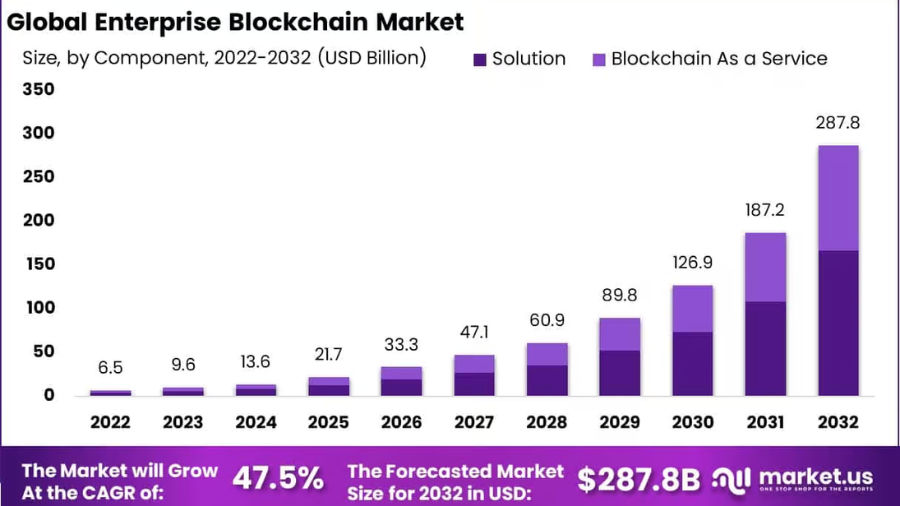
- 1% capture of the enterprise blockchain market by 2031 - 2032 ($200 - 250B): ~$2–3B of spend potentially addressable by Cardano builders offering verifiable, privacy-preserving workflows
- Ecosystem utility: More secure dApps, enterprise-ready onboarding, and cross-sector use cases (RWA, DeFi, identity, IoT, AI) increasing ADA’s utility as the settlement and verification asset
- TVL and fee growth: Verifiable pipelines and audit-grade proofs are prerequisites for regulated capital accelerating sustainable TVL and transaction flows into Cardano
**Market competitiveness: **
- L2s demonstrate the value of foundational infra: Arbitrum leads with ~$17–19B TVL; total Ethereum L2 TVL sits around ~$43B showing how scalability and verification layers capture outsized ecosystem value
- The proposed 1,000,000 ADA budget for zkDatabase is exceptionally competitive compared to similar infrastructure projects: building a Layer 2 typically costs $5–10M (
15.0x more expensive), developing a bridge costs $3 -5M (7.0x more expensive), and creating an institutional-grade DeFi platform costs $8 - 15M (~23.0x more expensive).
Achieving this with 1M ADA demonstrates the outstanding value of the solution, made possible through efficient resource allocation, leveraging partner contributions, reusing proven technologies, and the team’s deep expertise.
Cost and efficiency comparison:
- Average L2: $5–10M (≈15.0x more expensive; ~90% savings)
- Typical bridge: $3–5M (≈7.0x more expensive; ~85% savings)
- Institutional-grade DeFi: $8 - 15M (≈23.0x more expensive; ~95% savings)
Summary table:
- zkDatabase (1M ADA): ~$0.5M (baseline)
- L2 (average): ~$7.5M → 15.0x
- Bridge (average): ~$4.0M → 7.0x
- DeFi (average): ~$11.5M → 23.0x
Why we can deliver with 1M ADA:
- Efficient resource allocatio
- Leveraging partner contributions
- Reusing/enhancing Orochi’s existing technology
- Experienced ZK and security infrastructure team
In short, zkDatabase is 7.0x - 23.0x more cost-efficient than equivalent infrastructure, saving 85%–95% in expenses.
Ecosystem growth potential
- Growth drivers: Open-source components, developer-friendly GUI/SDKs, proof-agnostic design, and role-based access control reduce time-to-integration and expand use cases across regulated industries
- New categories: Institutional DeFi, RWA provenance and settlement, compliance-first identity/attestations, AI/analytics with provable policies, and IoT aggregations with integrity guarantees
- Long-term sustainability: By aligning with enterprise requirements (privacy, auditability, deterministic verification), zkDatabase channels durable, high-value activity into Cardano expanding TVL, fees, and builder engagement over time

Why Vote “YES” for zkDatabase on Cardano:
- Partner & Enterprise Category Fund 14 fit: Tier‑1 R&D team with huge investment in scientist papers; mainnet‑proven zkDatabase. 10k+ downloads in months and 40+ live enterprises. 120+ Tier‑1 partners; government blockchain advisor (Da Nang); organizer of Super Vietnam (5k builders). GitHub following surpasses some top‑10 chains.
- Ecosystem impact: 300–3000× cost reduction via ZK‑data‑rollups; <500 ms verification; frees blockspace and boosts throughput/fees. Unlocks compliant RWA, institutional DeFi, healthcare, supply chain, IoT, and AI—without exposing sensitive data.
- Ability to execute: Cardano‑native leadership (ex‑R&D lead). EF‑granted zkMemory; first Rust ECVRF; co‑author EIP‑6366/6617; contributions to Halo2, Nova, Pickles, o1js. Certik‑audited releases. Similar stacks delivered across 50+ chains.
- Value for Money: L2‑class capability at 7–23× lower cost than typical L2/bridge/DeFi builds (85–95% savings). Mainnet today, 1–3 enterprise pilots next; open‑source compounding savings across dApps.
We need your power: Rate 5/5 and vote YES to MAKE CARDANO READY FOR ENTERPRISE &; GOVERNMENT - faster, cheaper, trustworthy,
[Required Acknowledgements] Consent & Confirmation
Terms and Conditions:
Yes
Team
Project will be handled by Orochi Network, which funded by 2 co-founder Chiro and Mary, after over 3 years development we are proud to expand the team size to 30 members, includes 22 engineers, 5 cryptographers, and 3 headcount at C level
- Chiro - CTO/Founder
Linkedin: https://www.linkedin.com/in/chiro8x/
Github: https://github.com/chiro-hiro
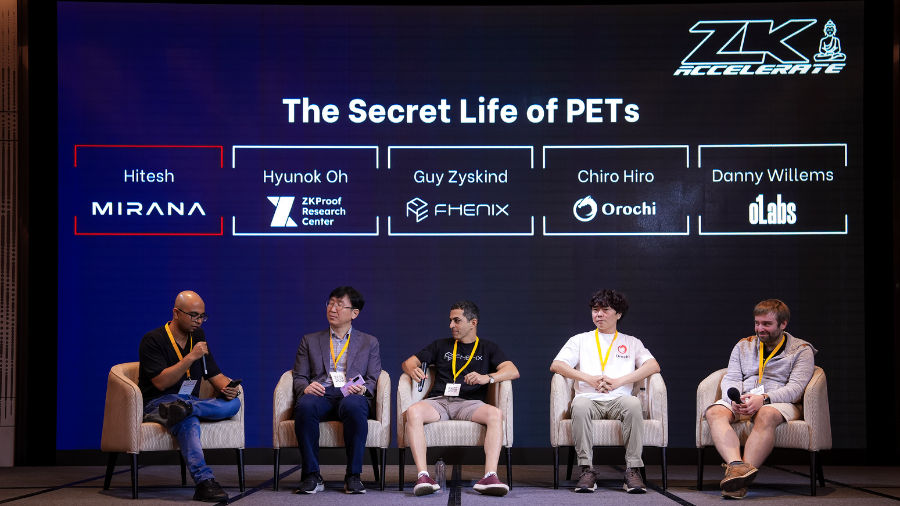
- 17+ years of applied cryptography/security, 10+ years R&D in distributed computing and blockchain technology. Former R&D lead in Cardano Lab;
- Co-Author of Orand Distributed ECVRF;
- Author of Succinct Hybrid aBFT Consensus;
- Author of the first universal memory prover in ZKP - zkMemory Granted by Ethereum Foundation;
- Author of the first provable database granted by Mina Protocol;
- Co-author of RAMenPaSTA - Conditional Folding Scheme this scientific paper will provide a formal definition for Folding Scheme
- Chiro improved the ability to do folding in parallel.
zkSTARK, zkSNARK, o1js, Groth16, Nova and Halo2, actually we contributed to Nova and Halo2.
https://github.com/microsoft/Nova/pull/163
- Contribution to Nova
https://github.com/privacy-scaling-explorations/halo2/pull/211
- Contribution to Halo2
- Contribution to PSE’s nova
https://github.com/privacy-scaling-explorations/Nova/pulls?q=is%3Apr+author%3Achiro-hiro+is%3Aclosed
- Contribution to o1js of O(1) Labs
https://github.com/o1-labs/o1js/pulls?q=is%3Apr+author%3Achiro-hiro
- Author of 2 EIP that significant improved the security of Smart contract
- ERC 6366: https://eips.ethereum.org/EIPS/eip-6366
- ERC 6617: https://eips.ethereum.org/EIPS/eip-6617
2. Mary Tran - CEO
Strategy in product, Bizdev and Marketing
Linkedin: https://www.linkedin.com/in/mary-tra-n-156a6810a/
Twitter: https://x.com/Markieudiem
Mary joined blockchain space since 2015, she been through as marketing and event lead at Cardano Lab aka Infinity Blockchain Labs since 2015 – end of 2018
BINANCE end of 2017 - end of 2019 she was country marketing manager handles new users acquisition target, key stakeholders such as PR, KOLs, VIP traders also in charge of company’s brand position among many well known competitors back then such as OKX, Poloniex, Huobi.
OKX 02/2021 – 8/2021: she was a regional manager, handled user acquisition, re-organized the local team back then were very discredited in the area include: Vietnam, Indonesia, Thailand. Expanded local payment gateway, fiat on-off- ramp solution, P2P trading volume.
3. Vi Vi - Head of Developer & Enterprise Relations
Vivi – currently as Regional BD manager of Orochi, handle country’s Enterprise relationship, and handle ZKP Labs – where we aim to build high end developer community for Orochi.
2022 – early 2024: former Head of Global Community Marketing in VINFAST – a Vietnam-based multinational automotive company, the largest private conglomerates in the country, she was the one setup the entire buyer community for VinFast while involved in the work of making VinFast public, the stock was being listed on NASDAQ in 2023.
Previously, Vivi has 5+ years with crypto market.
Trading team leader in Snap Innovation, she was VIP 9 at Binance back then. She’s the only female trader held FTMO cert in the country.
She found VIC blockchain news – the top 2 crypto news in the country.
Chief Editor of Bein Crypto in SEA – top 5 biggest crypto media outlet in the world.
Developers team 25 ppl included
04 Cryptography/ZK Researcher:
01 Solution Architect (Blockchain/Enterprise)
02 Senior ZK/Backend
03 Senior Backend
03 Senior Frontend
02 DevOps/SRE
01 UI/UX Designer
01 QA/Test
02 Technical Writer
01 Project Manager
01 Legal/Compliance
02 Marketing/PR
02 Business Developement
01 Community Manager