Last updated 2 months ago
Project Catalyst Transparency via AI Metrics Scorecard
Problem
Scattered info makes tracking Catalyst projects hard, causing low accountability and high voter abstention undermining trust
Solution
We will launch our existing prototype, the AI Metrics Scorecard, using AI (vector embeddings, zero-shot classification) to score Uniqueness, Activity, and UN SDGs. This ensures voter transparency
About this idea
[Proposal setup] Proposal title
Please provide your proposal title
Project Catalyst Transparency via AI Metrics Scorecard
[Proposal Summary] Budget Information
Enter the amount of funding you are requesting in ADA
32000
[Proposal Summary] Time
Please specify how many months you expect your project to last
7
[Proposal Summary] Translation Information
Please indicate if your proposal has been auto-translated
No
Original Language
en
[Proposal Summary] Problem Statement
What is the problem you want to solve?
Scattered info makes tracking Catalyst projects hard, causing low accountability and high voter abstention undermining trust
[Proposal Summary] Supporting Documentation
Supporting links
- https://docs.cardanoprojects.com/ ,
- https://cardanoprojects.com/ ,
- https://github.com/Workharu/cardano-projects-ui ,
- https://github.com/Workharu/cardano-projects-docs
[Proposal Summary] Project Dependencies
Does your project have any dependencies on other organizations, technical or otherwise?
Yes
Describe any dependencies or write 'No dependencies'
Project Catalyst Data, On-Chain Data, Social Network Data like reddit, linkedin, x and google.
[Proposal Summary] Project Open Source
Will your project's outputs be fully open source?
Yes
Please provide details on the intellectual property (IP) status of your project outputs, including whether they will be released as open source or retained under another licence.
Apache License 2.0
[Theme Selection] Theme
Please choose the most relevant theme and tag related to the outcomes of your proposal
Governance
[Campaign Category] Category Questions
Describe what makes your idea innovative compared to what has been previously launched in the market (whether by you or others).
The innovation of our platform, "Project Catalyst Transparency via AI Metrics," is defined by its use of advanced technology to solve a governance problem where traditional metrics fail:
- AI for Objective Scoring: We are the first to apply AI techniques like vector embeddings and zero-shot classification directly to Catalyst governance analytics. This provides a scalable, objective layer of scoring that replaces fragmented information and subjective review.
- Holistic Accountability: We use a multi-metric rating system to score projects based on three unique criteria: Uniqueness (solving a new problem), continuous Activity Levels (preventing projects from being deemed "inactive"), and verifiable Social Impact (UN SDGs).
- Prototype to Launch: Unlike starting from a concept, we are launching an existing prototype, "on-going in dev environment" at https://cardanoprojects.com, which already collected data on every Cardano project from Fund 2 to Fund 13.
This approach ensures transparency and accountability, which is not addressed by previous funding efforts
Describe what your prototype or MVP will demonstrate, and where it can be accessed.
The prototype or Minimum Viable Product (MVP) for your project, "Project Catalyst Transparency via AI Metrics," is currently an on-going development environment that is publicly accessible.
It features a basic UI design for the home page.
It includes a uniqueness metric for distinguishing between other projects.
It has added a basic project detail page.
It has already categorized all projects to its campaigns
The full MVP, once successfully built with the requested funding, will significantly expand on this prototype to demonstrate a robust, objective analysis platform
- Unified Tracking Platform: It will be a platform offering unified tracking across all Cardano projects—including tokens, DeFi, NFTs, social impact, and governance—consolidated in one dashboard.
- AI-Powered Metrics: It will feature a multi-metric rating system utilizing AI techniques like vector embeddings and zero-shot classification to simplify project comparison and scoring.
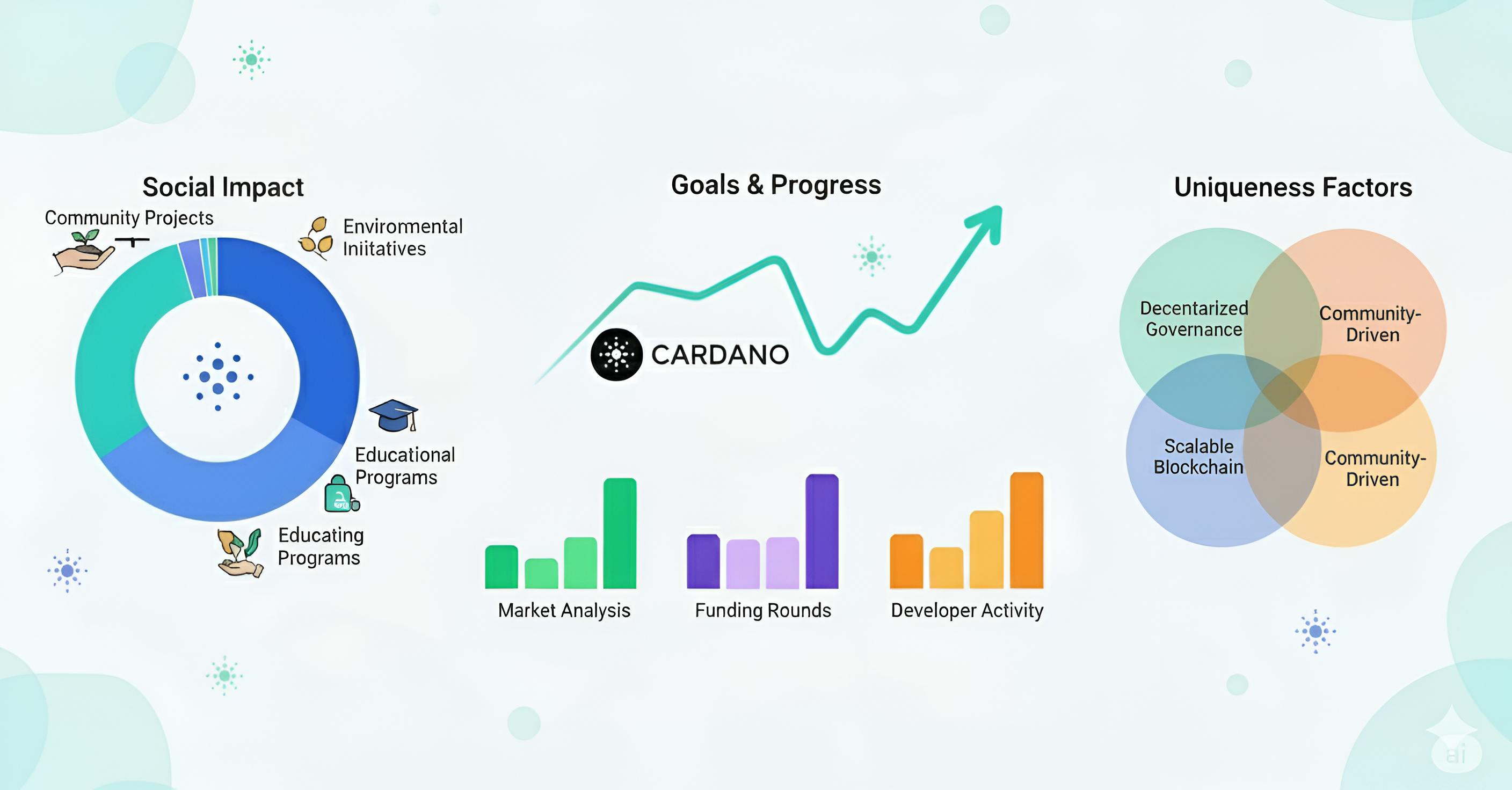
- Accountability Scorecard: The platform will track and display metrics to give clear insights into project progress and contribution, specifically covering
Describe realistic measures of success, ideally with on-chain metrics.
The success of this project will be measured by its ability to deliver tangible, data-driven value to the Cardano community. This is validated through both the successful delivery of the platform and its impact on ecosystem liquidity and activity, demonstrated via on-chain data.
Metric System Functionality: Successful delivery requires the accurate calculation and continuous tracking of your unique, multi-metric rating system:
- Uniqueness: Successfully calculating and displaying what makes a project unique (e.g., is it solving a new problem?).
- Activity Levels: Successfully tracking if a project is moving forward or has gone inactive. This requires the Extended Activity Metric Engine to be updated to scrape and process data from multiple sources like X, Reddit, and search engines.
- Social Impact (UN SDGs): Successfully developing the UN SDG Category Metric to identify and tag projects aligning with the United Nations Sustainable Development Goals (e.g., quality education, clean energy).
API Usage: Success involves external developers and third-party tools utilizing the API Endpoints that expose the calculated metrics for each project. This ensures the platform's data is reusable across the ecosystem, fulfilling the goal of providing a better way to judge and follow projects
[Your Project and Solution] Solution
Please describe your proposed solution and how it addresses the problem
The proposed solution is to create a system that uses a combination of metrics to better understand, compare, and track projects continuously.
1. Building the Metric Scorecard (The "What")
The platform will track Catalyst projects using various metrics to give clear insights into their progress and overall contribution. The solution moves beyond checking popularity or funding by using a multi-metric rating system and leveraging advanced technology.
The key metrics include:
- Uniqueness: Evaluating "What makes the project unique" and whether it is "solving a new problem".
- Activity Levels: Continuous tracking to determine how active the project is, checking if developers are "still working on it", if the community is involved, and confirming if the project is "moving forward" or has "gone inactive".
- Social Impact (UN SDGs): Checking if a project fits into any of the United Nations Sustainable Development Goals (SDGs), such as quality education or clean energy, to demonstrate real-world impact.
2. Leveraging AI for Scalability (The "How")
To simplify project comparison and categorization across diverse projects (tokens, DeFi, NFTs, social impact, and governance), the platform leverages AI techniques like vector embeddings and zero-shot classification. This ensures that comparisons are fair and data-driven.
This approach directly addresses the crisis of clarity and accountability:
- Unifying Scattered Data: The platform serves as a single dashboard, taking scattered information across multiple platforms and consolidating it into "clear, easy-to-understand metrics".
- Increasing Accountability: By continuously tracking Activity Levels, the platform ensures teams "stay active and accountable". This resolves the issue of being unable to determine if a project has "gone inactive".
- Empowering Voters: Providing clear metrics on uniqueness and social impact helps voters "make smarter decisions" and feel "more confident" about where to allocate community funds. This ultimately aims to "build more trust and confidence in Project Catalyst".
- Highlighting Value: By linking projects to global goals (UN SDGs), the solution helps funders and voters support projects that contribute to a "better world".
[Your Project and Solution] Impact
Please define the positive impact your project will have on the wider Cardano community
The positive impact of this project, on the wider Cardano community is centered on increasing trust, improving governance quality, and driving accountability across the ecosystem. This platform transforms the opaque process of project evaluation into a transparent, data-driven system, thereby strengthening the foundation of the entire Catalyst treasury mechanism
- Increases Trust & Fairness: Replaces scattered info with clear, easy-to-understand metrics, helping to build more trust in the funding process
- Empowers Voters: Helps voters make smarter decisions by providing objective metrics on uniqueness, activity, and impact.
- Drives Accountability: Tracks Activity Levels continuously to ensure teams stay active and accountable, helping identify projects that have gone inactive.
- Highlights Social Impact: Shows how projects align with UN Sustainable Development Goals (SDGs), guiding support towards initiatives that contribute to a better world.
- Accelerates Adoption: Strengthens the funding process, which in turn attracts more talent and innovation to Cardano.
- Supports Proposers: Gives project creators a powerful tool to showcase their project's progress with real data to attract more votes.
- Open-Source Public Good: The outputs are fully open source under the Apache License 2.0, making the tool reusable for the entire developer community.
[Your Project and Solution] Capabilities & Feasibility
What is your capability to deliver your project with high levels of trust and accountability? How do you intend to validate if your approach is feasible?
As the team delivering this project we are uniquely positioned to deliver this solution with high levels of trust because our feasibility has been validated by our existing work, and our team brings a decade of experience directly applicable to this technical challenge.
- Technical Experience and Deep Domain Knowledge: Our team’s foundation is built on deep technical skill. We have more than a decade of experience in backend and cloud engineering. This ensures we can build the scalable backend services and ETL pipelines required for the complex Metric Calculation Engine.
- Proven Catalyst Track Record: Our team has direct experience delivering on Cardano, having personally worked on several projects with Empowa, including the Cardano Summit 2024 NFT project. This gives us critical insight into Catalyst's requirements and processes, which translates directly into reliable milestone delivery.
- Open Source Accountability: To establish maximum trust with the community, our project outputs will be fully open source under the Apache License 2.0. This permissive license ensures the community can continuously scrutinize and audit our code, guaranteeing long-term accountability
Feasibility and Validation Plan
We do not intend to validate feasibility; we have largely already proven it through our preliminary work. Our approach mitigates the primary project risk (data collection and analysis) before the requested funding is even received:
- Existing Prototype and Data Collection (The Jump Start): To ensure a jump start, we have already created a basic UI and collected data on every Cardano project from Fund 2 to Fund 13. This extensive preliminary work available at our development environment, https://cardanoprojects.com has given us key insights and a solid foundation. This validates that the core task of massive data ingestion and structuring is feasible.
- Validation of Technical Approach (AI Metrics): Our feasibility plan relies on the successful integration of advanced, but proven, technical methods outlined in our milestones:
- Metric Calculation Engine: We will validate the accuracy of the engine (Milestone 1) by ensuring it can accurately compute each metric according to its defined formula, such as correctly aggregating data to compute the Social Impact Score.
- Data Source Integration: Feasibility of the complex data ingestion will be validated by successfully connecting to and scraping data from multiple new sources (like X, Reddit, and on-chain libraries) and demonstrating that the system can handle the increased volume of data without significant performance degradation.
- AI Classification Feasibility: The most innovative metric, the UN SDG Category Metric (Milestone 3), will be validated when the new algorithm must correctly identify and tag projects with the relevant UN SDGs based on their descriptions and goals
[Milestones] Project Milestones
Milestone Title
Metric Calculation Engine (Initial phase)
Milestone Outputs
- Metric Calculation Engine: Backend ETL pipeline to calculate the initial defined metrics: Social Impact Score, Uniqueness, and Activity scores.
- API Endpoints for Metrics: Publicly accessible API endpoints to expose core metric findings to developers.
Acceptance Criteria
- Accuracy: The engine must accurately compute each initial metric according to its defined formula (e.g., Social Impact Score aggregate data correctly).
- Open Source Commitment: Code Repository link provided, showing the new backend services and API endpoints.
Evidence of Completion
- Code Repository: A link to the code repository showing new backend services and API endpoints.
- Live Demo/Test Environment: A live, accessible application showcasing the new metrics using backend API documentation.
Delivery Month
2
Cost
9000
Progress
30 %
Milestone Title
UI & UX Integration
Milestone Outputs
- Metric-Enhanced Project Dashboards: UI enhanced with dashboards displaying calculated metrics (Uniqueness, Activity, etc.).
- Search & Filtering Capabilities: Functionality updated to allow users to filter projects based on the new metrics.
Acceptance Criteria
- Visual Fidelity & Clarity: UI components must be visually consistent, responsive, and easy for a non-technical user to understand.
- Performance: UI must render new metric data quickly without noticeable delays.
Evidence of Completion
- Live Demo/Test Environment: A live version demonstrating the fully integrated UI with all new metric visualizations and filtering capabilities.
- UX/UI Mockups: Initial design mockups or wireframes for the new dashboard components.
Delivery Month
3
Cost
8000
Progress
50 %
Milestone Title
Data Source Expansion & Metric Refinement
Milestone Outputs
- UN SDG Category Metric (AI Core): Development of the metric using AI to identify and categorize projects aligning with United Nations Sustainable Development Goals (UN SDGs).
- Optimized Activity Metric Engine: Refinement of the Activity Metric Engine (reduced scope due to budget) to integrate core data from one high-value external source (e.g., X or Reddit).
- Updated Data Schema & API to handle new UN SDG classifications.
Acceptance Criteria
- UN SDG Classification: The new metric must correctly identify and tag projects with the relevant UN SDGs based on their description.
- Data Transparency: A clear, documented methodology for data integration must be available
Evidence of Completion
- Technical Documentation: Detailed document explaining the methodology for the new UN SDG classification logic and updated formulas.
- Live Demo/Test Environment: A live version showcasing the updated metrics and a new UI component displaying the UN SDG goals.
Delivery Month
6
Cost
9000
Progress
70 %
Milestone Title
Finalization, Optimization & Public Launch
Milestone Outputs
- System-Wide Performance & Scalability: Optimization of all backend services and the calculation engine.
- Comprehensive Quality Assurance (QA): Final, end-to-end testing to ensure the product is bug-free.
- Public-Facing Documentation & Open Source Release: Creation of user guides and the final release of all source code under the Apache License 2.0.
Acceptance Criteria
- Launch Readiness: The final, stable version of the application must be deployed to a production environment, ready for public access.
- Functional Accuracy: A final QA report must show that all features are functioning correctly with no critical bugs.
- User Documentation: All public documentation must be complete and accurate.
Evidence of Completion
Live, Publicly Accessible Product: The final, polished application deployed on a production server. Deployment Checklist & Launch Plan.
Delivery Month
7
Cost
6000
Progress
100 %
[Final Pitch] Budget & Costs
Please provide a cost breakdown of the proposed work and resources
We are adhering to the strategic commitment of a ₳32,000 total budget over 7 months. This focused allocation ensures the successful delivery of the "Project Catalyst Transparency via AI Metrics" platform, specifically targeting the technological innovation necessary to gain community trust.
The project relies on the core expertise of our team: Narayan G. Maharjan (Data & AI Engineer), Aakash Prajapati (Backend Developer), Sachin Bhusal (Full Stack Engineer), and Suyash Shrestha (AI Engineer). Their roles are specifically weighted to the technical demands of each milestone.
Here is the cost breakdown of the proposed work and resources by milestone:
Milestone 1: Metric Calculation Engine (Delivery Month 2)
Cost: ₳9,000 (30% Progress)
- Core Team Labor (∼₳7,500): The bulk of this budget funds the foundational engineering work required to build the core data ingestion and processing pipelines. This primarily utilizes Aakash Prajapati (Backend Developer) and Narayan G. Maharjan (Data & AI Engineer) to architect and implement the initial data flow and the API endpoints.
- Infrastructure & Tools (∼₳1,500): This covers the essential setup costs for cloud hosting, database initialization, and necessary API access fees required to scrape initial project data.
- Focus: This milestone establishes the "brains" of the platform, enabling the calculation of the initial Social Impact, Uniqueness, and Activity scores.
Milestone 2: UI & UX Integration (Delivery Month 3)
Cost: ₳8,000 (50% Progress)
- Core Team Labor (∼₳7,000): This resource is allocated primarily to Sachin Bhusal (Full Stack Engineer) for building the metric-enhanced dashboards and visualizations. Aakash Prajapati (Backend Developer) provides integration support to ensure the UI can seamlessly fetch data from the newly built API endpoints.
- Functionality: This budget ensures the development of front-end components and the integration of the search and filtering functionalities that allow users to discover projects based on the new metric scores.
- Administration: A portion covers general project management and administrative fees for this rapid development phase.
Milestone 3: Data Source Expansion & Metric Refinement (Delivery Month 6)
Cost: ₳9,000 (70% Progress)
- Specialized Labor (∼₳8,000): This is the most complex phase, focusing on developing the innovative, AI-driven metrics. The budget primarily funds Narayan G. Maharjan (Data & AI Engineer) and Suyash Shrestha (AI Engineer) to develop the sophisticated UN SDG Category Metric using AI techniques like vector embeddings and zero-shot classification. This also includes refining the Activity Metric Engine to integrate complex external data sources (X, Reddit).
- Infrastructure: A portion covers expanded cloud hosting and potential API fees required for the increased data volume and the computational demands of the AI classification engine.
- Focus: This allocation is crucial for delivering the proprietary data analysis that differentiates our platform and directly addresses the problem of fragmented information.
Milestone 4: Finalization, Optimization & Public Launch (Delivery Month 7)
Cost: ₳6,000 (100% Progress)
- Core Team Labor (QA/Optimization ∼₳4,500): This final push allocates resources to Sachin Bhusal and Aakash Prajapati (and potentially Ayushma Maharjan, QA) for system-wide performance optimization, final QA testing, and deployment preparation.
- Documentation & Open Source: The budget ensures the creation of all public-facing documentation, user guides, and the final release of all source code under the Apache License 2.0.
- Contingency & Closeout: The remaining amount covers essential administrative closeout, reporting, and minor contingency for deployment issues, reflecting the highly lean and optimized nature of this ₳32,000 budget.
[Final Pitch] Value for Money
How does the cost of the project represent value for the Cardano ecosystem?
The cost of the project, represents significant value for the Cardano ecosystem by directly solving a critical governance problem lack of transparency and doing so efficiently through open-source infrastructure and advanced technology.
I. Governance and Accountability Value
- Builds Trust and Confidence: The platform replaces scattered information with clear, easy-to-understand metrics, helping to build more trust in the funding process.
- Empowers Voters: It helps voters make smarter decisions by providing objective data on project quality, such as uniqueness and continuous activity levels.
- Enforces Accountability: Continuous tracking ensures funded teams stay active and accountable, helping the community identify projects that have gone inactive.
- Highlights Real-World Impact: The platform develops the UN SDG Category Metric to highlight projects that are really aiming to do some good beyond just tech.
II. Ecosystem Efficiency and Technical Multiplication
- Open Source Public Good: All project outputs will be fully open source under the Apache License 2.0, allowing developers ecosystem-wide to reuse the tools and APIs.
- Cost-Efficient Jump Start: The team has already created a basic UI and collected data on projects from Fund 2 to Fund 13, significantly reducing setup costs and maximizing the value of the funding.
- Supports Proposers: It provides proposers with a powerful tool to showcase their project's progress with real data to attract more votes.
- Attracts Innovation: By strengthening the funding process, the platform ultimately attracts more talent and innovation to Cardano.
[Self-Assessment] Self-Assessment Checklist
I confirm that evidence of prior research, whitepaper, design, or proof-of-concept is provided.
Yes
I confirm that the proposal includes ecosystem research and uses the findings to either (a) justify its uniqueness over existing solutions or (b) demonstrate the value of its novel approach.
Yes
I confirm that the proposal demonstrates technical capability via verifiable in-house talent or a confirmed development partner (GitHub, LinkedIn, portfolio, etc.)
Yes
I confirm that the proposer and all team members are in good standing with prior Catalyst projects.
Yes
I confirm that the proposal clearly defines the problem and the value of the on-chain utility.
Yes
I confirm that the primary goal of the proposal is a working prototype deployed on at least a Cardano testnet.
Yes
I confirm that the proposal outlines a credible and clear technical plan and architecture.
Yes
I confirm that the budget and timeline (≤ 12 months) are realistic for the proposed work.
Yes
I confirm that the proposal includes a community engagement and feedback plan to amplify prototype adoption with the Cardano ecosystem.
Yes
I confirm that the budget is for future development only; excludes retroactive funding, incentives, giveaways, re-granting, or sub-treasuries.
Yes
[Required Acknowledgements] Consent & Confirmation
I Agree
Yes
Team
Team from Workharu
Narayan G. Maharjan
- Role: Data & AI Engineer
- LinkedIn: https://www.linkedin.com/in/narayang/
Aakash Prajapati
- Role: Backend Developer
Sachin Bhusal
- Role: Full Stack Engineer
- LinkedIn: https://www.linkedin.com/in/sachin-bhusal-42b548198/
Suyash Shrestha
- Role: AI Engineer
- LinkedIn: https://www.linkedin.com/in/sthsuyash/