Last updated 9 months ago
Merit Based Decentralized Repuation Engine
Problem
Voters face decision fatigue, and reviews lack trustworthiness due to low-effort input, making it hard to assess proposal quality or reviewer credibility across all other ecosystem services.
Solution
A decentralized, merit-based reputation engine that evaluates user effort and engagement to enhance trust, accountability, and review all by evaluating all users activity reliability in cardano.
Total to date
This is the total amount allocated to Merit Based Decentralized Repuation Engine.
About this idea
[Proposal setup] Proposal title
Please provide your proposal title
Merit Based Decentralized Repuation Engine
[Proposal Summary] Budget Information
Enter the amount of funding you are requesting in ADA
100000
[Proposal Summary] Time
Please specify how many months you expect your project to last
6
[Proposal Summary] Translation Information
Please indicate if your proposal has been auto-translated
No
Original Language
en
[Proposal Summary] Problem Statement
What is the problem you want to solve?
Voters face decision fatigue, and reviews lack trustworthiness due to low-effort input, making it hard to assess proposal quality or reviewer credibility across all other ecosystem services.
[Proposal Summary] Supporting Documentation
Supporting links
- https://mindplex.ai/ ,
- https://fastercapital.com/content/Decentralized-reputation-and-trust-systems-Building-Trust-in-the-Digital-Age--Exploring-Decentralized-Reputation-Systems.html ,
- https://learn.coreto.io/coreto-drs-decentralized-reputation-system/
[Proposal Summary] Project Dependencies
Does your project have any dependencies on other organizations, technical or otherwise?
No
Describe any dependencies or write 'No dependencies'
No dependencies, we built it internally
[Proposal Summary] Project Open Source
Will your project's outputs be fully open source?
Yes
License and Additional Information
The project’s software components (e.g., tools, libraries and codes) will be released under the MIT License and GNU GPL-3.0 . This allows others to freely use, modify, distribute, and sublicense the code, provided the original license and copyright notice are included.
[Theme Selection] Theme
Please choose the most relevant theme and tag related to the outcomes of your proposal.
Governance
[Campaign Category] Category Questions
Describe what makes your idea innovative compared to what has been previously funded (whether by you or others).
Unlike traditional reputation systems that rely on simple voting or subjective reviews, our engine introduces merit-based scoring using verifiable behavioral metrics like time-spent reading and engagement depth. While others focus on static ratings, we create dynamic, tamper-proof reputation that rewards genuine effort over quantity. Our hybrid on-chain/off-chain architecture ensures immutability while maintaining scalability - a unique combination not seen in previous Catalyst-funded projects.
Describe what your prototype or MVP will demonstrate, and where it can be accessed.
Our MVP will demonstrate a working reputation engine with: (1) RESTful API calculating merit-based scores from user behavioral data, (2) Smart contract on Cardano testnet storing immutable reputation records, (3) Interactive dashboard showing real-time reputation analytics, (4) Integration module for Catalyst/IdeaScale-like platforms. Accessible via: GitHub repository (open-source code), live API documentation (Swagger), testnet smart contract explorer, and demo dashboard URL with sample data visualization.
Describe realistic measures of success, ideally with on-chain metrics.
On-chain metrics: Number of addresses with reputation scores stored on testnet, transaction volume of reputation updates, smart contract interaction frequency. Platform metrics: API call volume (target: 1000+/month), integration adoption rate, average user engagement time improvement (target: 40% increase). Quality indicators: Correlation between high-reputation reviewers and successful proposal outcomes, reduction in low-effort reviews (measured by time-spent analytics), community satisfaction scores via surveys (target: 70+ NPS).
[Your Project and Solution] Solution
Please describe your proposed solution and how it addresses the problem
Decentralized Reputation System
With the rise of online marketplaces, social networks, web3 social platforms, DeFi service providers, and so on, individuals and businesses are constantly being evaluated based on their reputation or trustworthiness.
However, traditional reputation systems can be easily manipulated and are often not transparent or tamper-proof. To address these issues, a new type of reputation system is needed: a Merit Based Decentralized Reputation System.
Decentralized Architecture
- On-chain + Off-chain storage:
- On-chain: Immutable, verifiable reputation records and can also be accessed on Cardano testnet with smart contract
- Off-chain: Scalable reputation analytics and interaction logs.
Merit-Based Reputation Scoring
- The reputation system is not equal for every review or vote.
- Merit is earned based on the actual effort the user puts into engagement.
- Example metric: time spent reading a proposal before reviewing or voting.
- A reviewer who skims and scores quickly gets less weight than one who reads deeply and engages meaningfully.
Core Components
Behavioral Tracking
- Time-on-page, scroll depth, click engagement (off-chain).
- Verified timestamps of when reviews are submitted.
Reputation Scoring Algorithm
Considers:
- Time spent
- Review depth
- Voting consistency
- Peer validation of reviews (optional layer)
Decentralized Storage
Use Cardano testnet smart contracts for on-chain data.
Store supporting data off-chain in scalable DB.
Integration Point
- Can be integrated with catalyst & Beyond.
- Can serve as a plugin or module for other ecosystems needing reputation systems.
The Reputation Engine Model will revolutionize the way users interact with cardano projects and across all cardano ecosystems. By analyzing historical data and user activity, the model will assign trust scores to participants based on their past contributions, reviews, and behavior within the platforms and also for the new users.
Key Features:
- Trust Score Calculation: Utilizing learning algorithms, the model will calculate trust scores for users, considering factors such as proposal success rates, reviewer feedback, and community engagements and more.
- Predictive Analytics(optional): Leveraging historical data, the model will employ predictive analytics to forecast the likelihood of proposal success, identifying high-potential projects and mitigating risks associated with low-quality submissions.
- Real-time Monitoring: The Reputation Engine will continuously monitor user activity, updating trust scores dynamically to reflect changes in behavior and performance all the time.
- Transparency and Accountability: By providing transparent metrics and insights into user reputation, the model will promote accountability and integrity within the Cardano community, fostering a culture of trust and collaboration.
Key Takeaways:
- The DRS is a Merit Based decentralized reputation system that uses blockchain technology to provide a secure, transparent, and tamper-proof record of reputation data.
- It has multiple use cases and can be used across various Web2 & Web3 industries and platforms.
- The DRS allows users to build and track their reputation across multiple platforms, giving them a single reputation score that reflects their trustworthiness and credentials.
- The benefits of using the DRS include improved accuracy, enhanced privacy, better security, and increased transparency.
- It can also help projects and platforms become more trustworthy, create a safer environment for their users, and lead to a more robust and vibrant online community.
Solution
blockchain technology – transparent, accurate, immutable!
To address these challenges, our proposed solution involves a comprehensive research approaches:
A decentralized reputation system, which uses blockchain technology, would make sure that everyone has a unique digital identity and that reputation data is accurate and reliable. This way, we can trust the reviews and scores, and the whole ecosystem can thrive using the reputation system.
A decentralized reputation system that is enabled by blockchain technology can help to address these issues by providing a transparent and tamper-proof record of reputation data. This can ensure that all users have unique digital identities and that reputation data is accurate and reliable. By using a decentralized system, it becomes much harder for bad actors to manipulate the system and deceive users.
Additionally, a decentralized reputation system also allows for more privacy, as users can have more control over their personal data and who can access it, unlike centralized systems where data is owned and controlled by a single entity.

The first and foremost is Research:
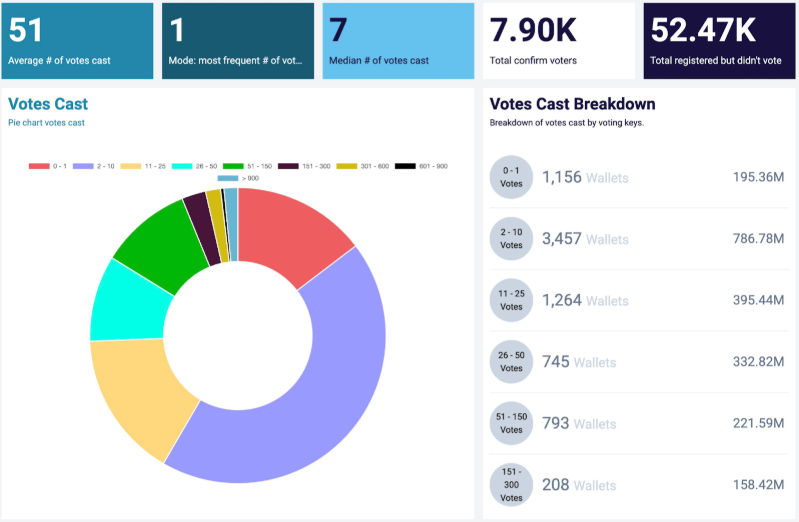
Utilizing data from previous funding rounds up to Fund 13, we will conduct a thorough analysis. Leveraging Catalyst Testnet, cardano catalyst Platform, Milestone Reporting, and Community Reviewing data, we aim to:
Establish correlations between reviews, voting decisions, and proposal outcomes.
Develop a knowledge graph and perform a graph/network analysis to identify quality reviewers and voters.
The current and latest initial dataset of latest last funds can be found ‘https://docs.google.com/spreadsheets/d/1R-wytihG4fKR_E1hvSh8CWbYajo8dLcOezogxJ_7OSU/edit#gid=0’ and also
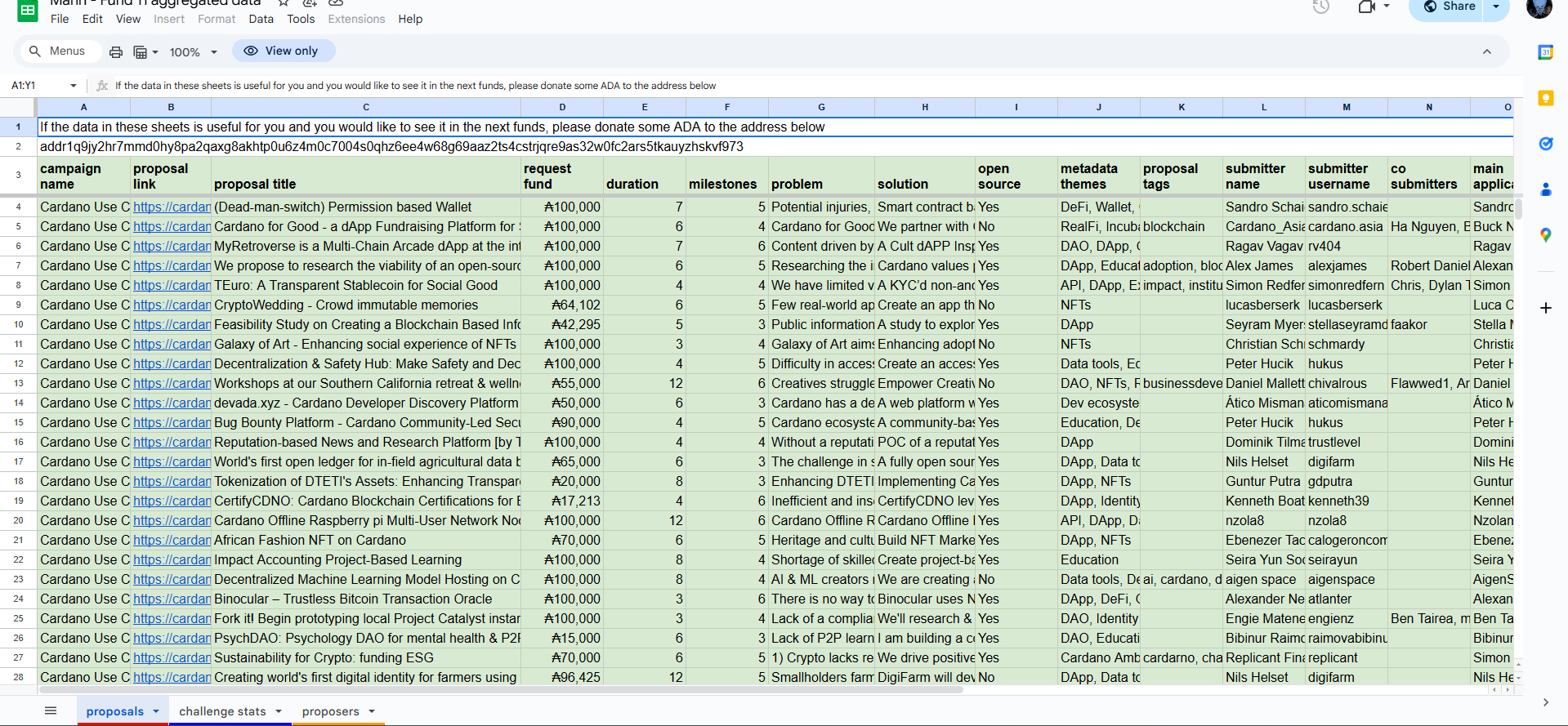
on the platform looks like this:
Upon successful implementation of the Proof of Concept, we will engage the Cardano community to gather feedback and refine the reputation system further. Community engagement is vital to ensure the system's alignment with the needs and preferences of Catalyst stakeholders.
Importance of Reputation Engine
- Building Trust and Credibility
- Ensuring Quality Control
- Facilitating Informed Decision-Making
- Promoting Community Engagement
- Mitigating Risks and Disputes
- Fostering Feedback Loops
More on The Benefits of Decentralized Reputation Systems can be found Here on Linkedin, Coreto Decentralization
Therefore implementing a reputation system is not just a feature enhancement; it's a strategic investment in building a robust, trustworthy, and sustainable community ecosystem that indicates “DECENTRALIZATION SYSTEM FOR A DECENTRALIZED PLATFORM”.
Measuring trust score implementation
- What is Trust?
“Trust is the firm belief in the reliability, truth, or ability of someone or something.”
Being a belief, it’s inherently subjective. We put our trust in others for different reasons:
they make a compelling argumentothers hold them in high regard they have a history of speaking the truth
we have a previously established relationship with them and so on.
Finding the perfect balance and improving the trust score indicator
What this means is that it doesn’t matter if we have 100 or 100,000 people interacting with our content. What matters is how their interaction changes, how they view our content, if they continue to consider it useful and whether they continue to view us as a trusted source of content or not.
So our DRS Use the main core activity of users called Time-Spent
- What Does Time Spent Mean in the Reputation System?
In this reputation system, Time spent refers to how long a user actively engages with a proposal. It’s a key indicator used to assess whether a user’s action—such as reviewing or voting—is genuine or just superficial. More time spent reading and interacting with a proposal suggests a higher level of effort, making their contribution more credible and impactful in the reputation scoring.
- The Reputation Collection Service (RCS)
As the first component of the DRS, it handles collecting Trust and Performance data by linking to relevant actions, events, and data feeds from the platforms that integrated the system.
The role of the RCS is crucial as it provides the data that is used to calculate the reputation scores. The accuracy and reliability of the data directly impact the credibility of the reputation score. It also has to be flexible enough that it can be linked to any relevant KPIs inside the said platforms.
The RCS is and will be designed as a set of developer tools and APIs that allow for:
- defining clear rules for converting actions, events, and data from inside a system into Trust and Performance points
- validating and enforcing these rules
- structuring the resulting data in the correct format
- submitting the validated and structured Trust and Performance data to the rest of the Decentralized Reputation System
The first tools we built were meant to serve our own SingularityNet and Mindplex Platform and are actively being used as part of our own integration of the DRS. This has helped us to experiment and adjust, and identify the best ways to also make them available for other platforms as well.
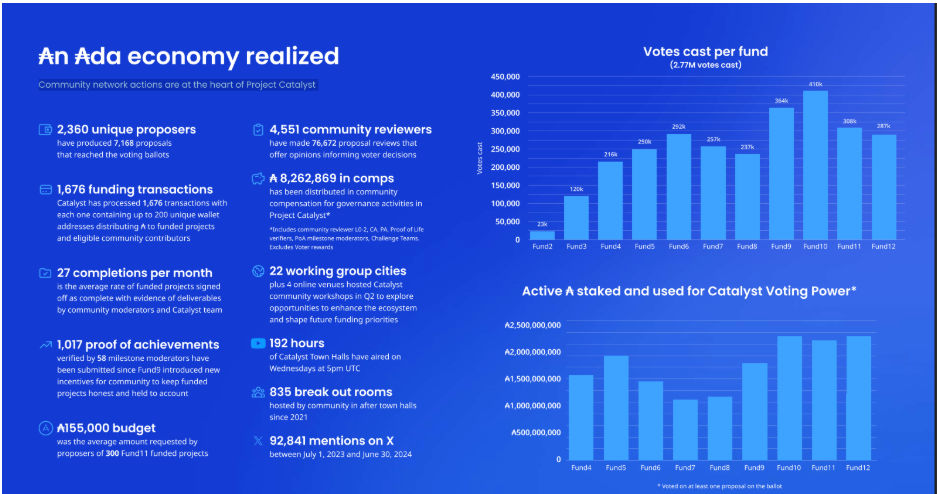
And General Project catalyst Research and Reports can be Found Here: https://projectcatalyst.io/reports/horizons.pdf
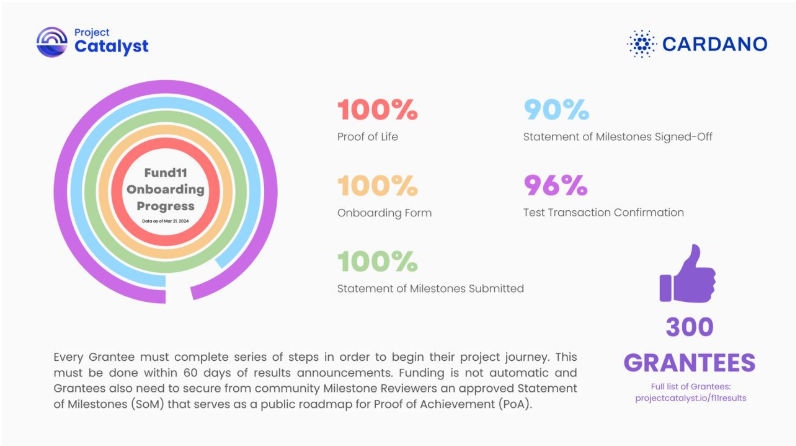
Evaluations of Fund 11 Cardano Catalyst Announcement show found - https://twitter.com/danny_cryptofay/status/1770800625829179634/photo/1
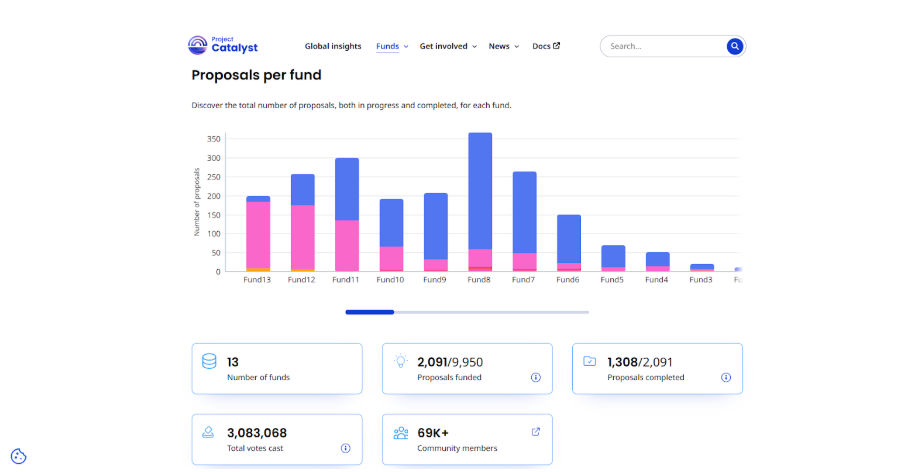
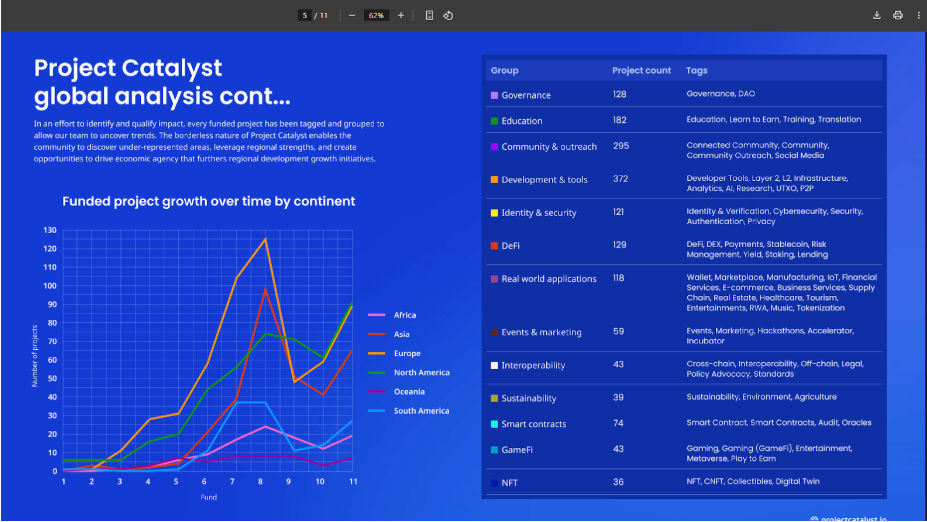
Community network actions are at the heart of Project Catalyst
[Your Project and Solution] Impact
Please define the positive impact your project will have on the wider Cardano community
The implementation of the Merit-Based Decentralized Reputation Engine will have a far-reaching impact on the Cardano ecosystem and beyond:
Key Benefits
Improved Proposal Quality
- By incentivizing trustworthy behavior and discouraging spam or manipulation, the engine will elevate the quality of proposals submitted to the cardano ecosystem, increasing the likelihood of funding for impactful projects.
Enhanced Community Trust
- Transparent, data-driven trust scores based on verifiable user behavior will strengthen trust in Catalyst, encouraging more thoughtful participation from reviewers and voters.
Efficient Resource Allocation
- Better reputation signals help funders and community members make more accurate and confident decisions, reducing bias and improving the quality of funded projects.
Sustainable Ecosystem Growth
- A trusted, reliable reputation infrastructure will attract new participants, developers, and investors to the Cardano ecosystem.
On-Chain + Off-Chain Architecture
- The system stores reputation scores on-chain, making them immutable, auditable, and publicly accessible on the Cardano testnet. Additional data (e.g., behavioral metrics, analytics) is managed off-chain for flexibility and scalability.
Cross-Platform Reputation Service (SaaS/API)
- Beyond Project Catalyst, the engine is built to serve as a reputation-as-a-service (RaaS) — offering an API that can be integrated into any platform (e.g., DAOs, forums, grant systems) that needs transparent and merit-based user reputation.
Higher Reviewer Accountability
- Low-effort reviewers receive lower scores, discouraging review farming and rewarding authentic contribution.
Data-Driven Governance & Research
- Open access to behavioral metrics and reputation trends enables better governance design, voter behavior analysis, and funding process optimization.
Qualitative & Quantitative Measurements for Impact
Qualitative Measurement
Proposal Quality Improvement
- Community feedback on clarity and impact of proposals improves.
- Noticeable shift in the tone and depth of reviews.
Community Trust Enhancement
- Increased perception of fairness and reliability in reviews.
- Surveyed satisfaction among both voters and proposers.
Reviewer Behavior Change
- Reputation feedback loop drives honest, thoughtful reviewing.
- Bad actors gradually lose influence.
Governance Transparency
- Catalyst fund managers and dReps can use on-chain metrics to inform decisions.
Third-Party Ecosystem Value
- Adoption by DAOs or external Cardano dApps shows viability as a general-purpose tool.
Quantitative Measurement
On-Chain Metrics (via Cardano Testnet)
- of addresses with on-chain reputation scores.
- of verifiable interactions (votes, reviews, etc.).
Platform Integration Rate
- Number of external projects or platforms adopting the API.
- Reputation engine API calls per month (usage metric).
Engagement & Trust Metrics
- Avg. time spent per proposal/review.
- Growth in active and high-reputation users.
- Proposal funding success correlated with reviewer merit.
Expanding Beyond Catalyst
While the initial integration is designed for Project Catalyst, the architecture is modular and open — enabling adoption across:
- Decentralized funding platforms
- Governance systems in DAOs
- Online marketplaces or discussion forums
- Academic peer-review and reputation networks
This project builds a foundation for decentralized trust at scale — starting with Cardano, but usable far beyond them.
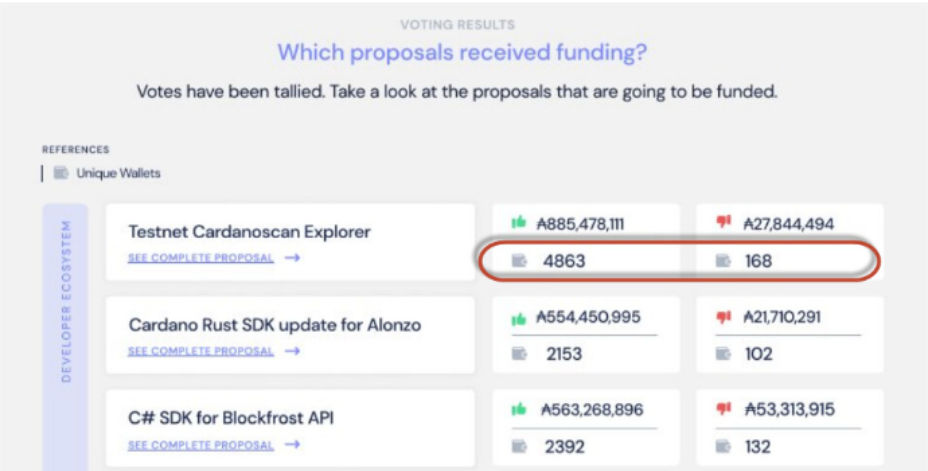
The publication of the number of positive and negative vote casts received by each proposal was disabled since Fund5. Link is here from Catalyst forum (https://forum.cardano.org/t/project-catalyst-fund-10-reflections-what-works-what-doesnt/122186/10))
Imagein what it will do in case of the whole voting, and funding of the project catalyst system, this is a snap of just only voting researches of the last funds
[Your Project and Solution] Capabilities & Feasibility
What is your capability to deliver your project with high levels of trust and accountability? How do you intend to validate if your approach is feasible?
Our capability to deliver this project with high levels of trust and accountability stems from our team's extensive experience in software development, education, and community engagement. With a proven track record of delivering successful projects and initiatives within the blockchain space, we possess the expertise and dedication required to execute this proposal effectively.
Our previous experience with blockchain integration Cardano projects funded by Catalyst in the previous funding round, including:
- Universal DevTools for Real-time Tracking for 45%+ of Global Websites Support (https://milestones.projectcatalyst.io/projects/1100282)
- Enhancing developer ecosystem with open source tooling (https://projectcatalyst.io/funds/11/cardano-open-developers/enhancing-cardano-developer-ecosystem-with-open-source-tooling)
- Cardano for 100,000+ students (https://projectcatalyst.io/funds/11/cardano-open-ecosystem/cardano-for-100000-students)
- CardanoChain Poultry Trace dApp (https://projectcatalyst.io/funds/12/cardano-use-cases-concept/cardanochain-poultry-trace-dapp-transparent-supply-for-safe-quality-products)
highlights our commitment and proven ability to deliver impactful projects.
Our team is proud to be partnered with MLOps Community (https://mlops.community/) a global organization at the forefront of machine learning, DevOps, and cutting-edge technology. With branches in various countries and partnerships with industry leaders like AWS, NVIDIA, Databricks and more, we have demonstrated our capacity to deliver successful events and initiatives, showcasing our commitment to innovation and community engagement.

Also we are an Official Partner With Microsoft Startup Founder Hub, We receive more than 45 AI related Microsoft products with a mix of technical benefits and business resources.
We’re trusted by Microsoft!

Previous Success Recap:
- Past Experience: Our team has successfully developed Blockchain and AI based Merit-Reputation Engine for SingularityNet(http://Singularitynet.io) of Mindplex.ai (http://Mindplex.ai)
- Educational Explorer App: 100,000+ downloads on Google Play (https://play.google.com/store/apps/details?id=com.herma.apps.textbooks)
- Developer and User Feedback: 85% positive response rate from 50+ developer interviews
- Developer Tools: 60,000+ active monthly users across our mobile app tooling suite
- Community Recognition: 5+ successful Project Catalyst funding rounds totaling $300K+
- Technical Expertise: 8+ years blockchain development experience
- Open Source Contributions: 50+ GitHub repositories with 2,000+ stars
- Developer and User Feedback: 85% positive response rate
- Collaboration: Our project has joined Microsoft for Startups Founders Hub. We receive more than 45 AI related Microsoft products.
- Expertise in Educational Content: Experienced educators and subject matter experts ensure high-quality resources.
- Transparent Financial Management: Clear budgeting, expense tracking, and reporting processes
- Trustworthy Partnerships: Collaborations with Educational Institutions and Experts
- User Feedback Integration: Actively collecting and addressing user feedback for continuous improvement
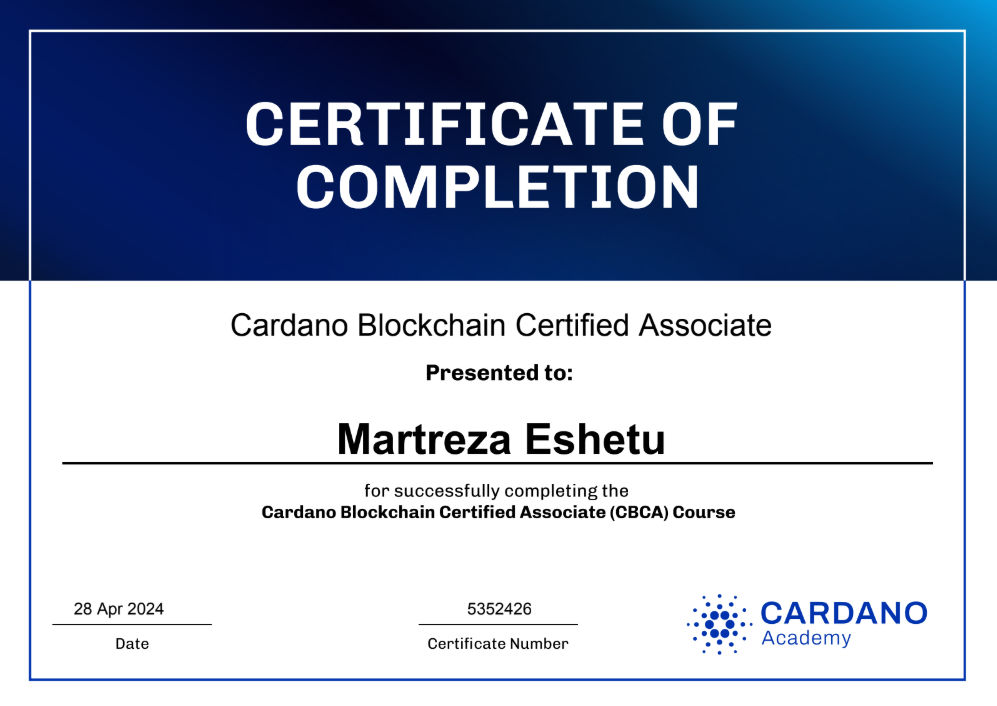
- Well educated Leader: The project is owned and lead by BSc, MSc, BA and Cardano Blockchain Certified Associate (CBCA)
We are Simply Highly Experienced programmers in haskell, plutus, solidity, AI, ML and subject matter experts ensure high-quality resources.
- Transparent Financial Management: Clear budgeting, expense tracking, and reporting processes
- User Feedback Integration: Actively collecting and addressing user feedback for continuous improvement
- Capability and Feasibility Validation: Utilizing past success metrics, implementing pilot programs, and committing personal time for project development.
Marketing and Promotion Plan:
- Social Media Campaigns: Engage with our target audience through strategic social media campaigns on platforms like Twitter, LinkedIn, and Facebook. Regular updates, engaging content, and targeted advertisements will be used to reach potential users.
- Influencer Partnerships: Collaborate with healthcare influencers, bloggers, and professionals to amplify our message and reach a broader audience. These partnerships will help build credibility and trust in the HealthPilot platform.
- Content Marketing: Create valuable and informative content, including blog posts, articles, infographics, and videos, to educate users about the benefits of HealthPilot. Content will be optimized for search engines to increase visibility and attract organic traffic.
- Email Marketing: Launch email marketing campaigns to communicate with our user base, share updates, and promote new features. Personalized emails will be sent to provide users with relevant information and encourage continued engagement.
- Community Engagement: Actively engage with our community through online forums, discussion groups, and community events. Hosting webinars, AMA (Ask Me Anything) sessions, and Q&A sessions will foster a sense of belonging and encourage user participation.
[Milestones] Project Milestones
Milestone Title
Research Foundation & System Architecture
Milestone Outputs
Complete comprehensive research and system design phase establishing the foundation for our merit-based reputation engine. This includes analyzing existing decentralized reputation systems, conducting stakeholder interviews within the Cardano community, and designing the technical architecture. We will structure historical Catalyst data from Funds 1-13 for analysis, create detailed API specifications, and develop the core algorithm for merit-based scoring using time-spent and engagement metrics. Deliverables include technical documentation, system architecture diagrams, database schemas, API specifications, and community feedback analysis. The research will inform our behavioral tracking methodology and establish baseline metrics for reputation calculation algorithms.
Acceptance Criteria
Research report analyzing minimum 5 existing reputation systems with comparative analysis completed. Community feedback collected from minimum 15 stakeholders including proposers, reviewers, and voters through structured interviews and surveys. Technical architecture document created showing on-chain/off-chain data flow, smart contract specifications, and API endpoints. Database schema designed for storing behavioral metrics, reputation scores, and user interactions. Core reputation algorithm documented with mathematical formulas for merit-based scoring. All documentation reviewed and approved by minimum 2 technical advisors. Historical Catalyst data from previous funds structured and analyzed for patterns in reviewer behavior and proposal outcomes.
Evidence of Completion
Public GitHub repository created with comprehensive README and project documentation. Research report published as PDF (minimum 15 pages) on Google Drive with community access. Technical architecture diagrams created in Figma and exported as PNG/PDF formats. Database schema documentation with entity-relationship diagrams. API specification document using OpenAPI/Swagger format. Community feedback summary report with anonymized insights and recommendations. Video presentation (10-15 minutes) explaining the research findings and proposed solution architecture available on YouTube or similar platform.
Delivery Month
1
Cost
15000
Progress
20 %
Milestone Title
Backend Development & API Creation
Milestone Outputs
Develop robust backend infrastructure using Django Python framework with PostgreSQL database for storing reputation data and user interactions. Create comprehensive RESTful API with endpoints for reputation calculation, user behavior tracking, and data retrieval. Implement core business logic for merit-based scoring algorithm including time-spent analysis, engagement depth measurement, and reputation weight calculations. Set up Docker containerization for consistent deployment environments and implement CI/CD pipeline using GitHub Actions for automated testing and deployment. Create Swagger documentation for all API endpoints with request/response examples. Establish secure authentication and authorization mechanisms for API access. Database migrations and seed data for testing purposes will be implemented.
Acceptance Criteria
Django backend application fully functional with minimum 15 API endpoints including user management, reputation calculation, behavioral tracking, and analytics. PostgreSQL database implemented with optimized queries and proper indexing for performance. Docker configuration files created enabling one-command deployment across different environments. CI/CD pipeline established with automated testing achieving minimum 80% code coverage. Swagger API documentation accessible via web interface with interactive testing capabilities. Authentication system implemented supporting API key management and rate limiting. Performance benchmarks achieved: API response times under 200ms for standard queries, database queries optimized for concurrent users. All code follows PEP 8 standards and includes comprehensive docstrings.
Evidence of Completion
Live backend API deployed on AWS/cloud infrastructure with public endpoint for testing. Interactive Swagger documentation accessible via web URL showing all available endpoints. GitHub repository updated with complete backend codebase, Docker files, and CI/CD configuration. Database schema visualization and migration files committed to repository. Postman collection file with sample API requests and automated tests. Performance testing report showing API response times and concurrent user handling capabilities. Unit test results showing minimum 80% coverage with detailed testing report. Video demonstration (15-20 minutes) showcasing API functionality and key features.
Delivery Month
2
Cost
25000
Progress
40 %
Milestone Title
Smart Contract Development & Testnet Deployment
Milestone Outputs
Design and implement smart contracts for Cardano testnet using Plutus/Haskell to store immutable reputation scores and key behavioral metrics on-chain. Create smart contract functions for reputation score updates, historical data retrieval, and verification of off-chain calculations. Develop integration layer connecting Django backend with Cardano testnet through appropriate APIs and SDKs. Implement data synchronization mechanisms ensuring consistency between on-chain and off-chain systems. Create comprehensive test suite for smart contract functionality including edge cases and error handling. Deploy contracts to Cardano testnet with proper verification and documentation. Establish monitoring and alerting systems for smart contract interactions and performance tracking.
Acceptance Criteria
Smart contracts successfully deployed on Cardano testnet with verified source code and documentation. Minimum 5 core functions implemented: store reputation score, update user metrics, retrieve historical data, verify off-chain calculations, and handle error scenarios. Integration layer successfully connecting Django backend with testnet contracts through reliable API calls. Data synchronization tested showing consistency between on-chain stored scores and off-chain calculations with maximum 1% deviation. Smart contract audit completed identifying and resolving security vulnerabilities. Gas/fee optimization implemented ensuring cost-effective transactions. Comprehensive test coverage of minimum 90% for all smart contract functions with successful execution of 100+ test transactions on testnet.
Evidence of Completion
Cardano testnet transaction hashes and smart contract addresses publicly accessible through blockchain explorer. Smart contract source code committed to GitHub repository with comprehensive documentation and deployment instructions. Integration testing report showing successful data synchronization between backend and blockchain. Testnet transaction examples demonstrating all key smart contract functions with verifiable results. Smart contract audit report (internal or external) documenting security analysis and recommendations. Performance metrics documentation showing transaction costs and execution times. Video walkthrough (20-25 minutes) demonstrating smart contract deployment, integration, and key functionality on testnet.
Delivery Month
4
Cost
30000
Progress
70 %
Milestone Title
Frontend Development & User Interface
Milestone Outputs
Develop comprehensive web-based user interface using modern frontend technologies (React/Vue.js) providing intuitive dashboards for viewing reputation scores, behavioral analytics, and system insights. Create responsive design supporting desktop and mobile devices with accessibility compliance (WCAG 2.1). Implement real-time data visualization using charts and graphs showing reputation trends, user engagement metrics, and system performance indicators. Develop user management interfaces allowing profile creation, API key management, and preference settings. Create admin panel for system monitoring, user management, and analytics overview. Integrate frontend with backend API ensuring secure data transmission and efficient loading. Implement comprehensive error handling and user feedback mechanisms throughout the interface.
Acceptance Criteria
Fully functional web application deployed with responsive design working on desktop, tablet, and mobile devices. User authentication and registration system integrated with backend API supporting secure login/logout functionality. Minimum 8 core pages implemented: dashboard, profile management, reputation analytics, behavioral insights, API documentation, admin panel, settings, and help/support. Real-time charts and graphs displaying reputation data, user engagement metrics, and system statistics with interactive filtering and date range selection. Frontend performance optimized with loading times under 3 seconds for standard pages and proper caching mechanisms. Cross-browser compatibility tested on Chrome, Firefox, Safari, and Edge with consistent functionality. User experience testing completed with minimum 5 beta testers providing feedback and recommendations.
Evidence of Completion
Live web application accessible via public URL with complete functionality demonstration. GitHub repository updated with frontend source code, build configurations, and deployment documentation. User interface mockups and final designs created in Figma with complete design system documentation. Cross-browser testing report showing compatibility across major web browsers. Performance audit report using tools like Lighthouse showing optimization scores and recommendations. Beta testing feedback summary with user experience insights and implemented improvements. Mobile responsiveness demonstration showing functionality across different device sizes. Video tour (15-20 minutes) of complete user interface showcasing all key features and user workflows.
Delivery Month
5
Cost
20000
Progress
80 %
Milestone Title
Integration, Testing, Promotion & Production Deployment
Milestone Outputs
Complete end-to-end system integration connecting frontend, backend, smart contracts, and external APIs into fully operational reputation engine. Conduct comprehensive testing including unit tests, integration tests, performance testing, and user acceptance testing. Implement production deployment with proper security configurations, monitoring systems, and backup procedures. Create detailed documentation including user guides, API documentation, deployment instructions, and maintenance procedures. Establish community feedback collection mechanisms and support channels. Prepare final project report with detailed analysis of achievements, lessons learned, and future development roadmap. Implement analytics and monitoring systems for tracking system usage, performance metrics, and user engagement patterns. Promotion in different social media for the community will be done.
Acceptance Criteria
Complete system integration tested and operational with all components (frontend, backend, smart contracts) working seamlessly together. Production deployment completed on reliable cloud infrastructure with proper security configurations, SSL certificates, and automated backups. Comprehensive documentation package including user manual, API documentation, deployment guide, and troubleshooting instructions. System performance validated supporting minimum 100 concurrent users with response times under 500ms. Security audit completed with penetration testing and vulnerability assessment. Community beta testing program executed with minimum 20 active testers providing feedback over 2-week period. Analytics dashboard operational showing real-time system metrics, user engagement, and performance indicators. Final project report completed documenting achievements, metrics, lessons learned, and future enhancement recommendations. Promotion for the cardano ecosystem and prepare reports
Evidence of Completion
Production system accessible via public URL with full functionality and stable performance. Complete documentation package published on GitHub and project website including video tutorials. Security audit report documenting assessment results and implemented security measures. Performance testing report showing load testing results and system capacity metrics. Community beta testing summary with participant feedback and system improvements implemented. Analytics dashboard screenshots showing system usage metrics, user engagement data, and performance indicators. Final project report (minimum 25 pages) with comprehensive analysis, achievements, and future roadmap. Project presentation video (30-35 minutes) demonstrating complete system functionality and showcasing key achievements and community impact.
Delivery Month
6
Cost
10000
Progress
100 %
[Final Pitch] Budget & Costs
Please provide a cost breakdown of the proposed work and resources
A detailed budget breakdown encompassing expenses related to development, testing, deployment, and ongoing maintenance of the Reputation Engine. We are committed to transparent financial management and accountability throughout the project lifecycle.
Development Costs:
- Blockchain Smart Contract and API Developer Salary (full-time Senior developer): 9,000 ADA/month x 5 months = 45,000 ADA
- Backend Developer = 15,000 ADA
- Wireframe and design Improvements = 3000 ADA
- Cardano-Software-Developer-Average Salary (https://www.glassdoor.com/Salary/Cardano-Software-Developer-Rotterdam-Salaries-EJI_IE743978.0,7_KO8,26_IL.27,36_IC3049255.htm))
Infrastructure Costs:
- AWS Server Hosting 10,000 ADA (AWS offers a pay-as-you-go approach)
- Domain Registration: 1,000 ADA
Testing and Quality Assurance:
- Testing Tools and Frameworks: 5,000 ADA
- Enhancement and bug fixation = 6000 ADA
Documentation and Reporting:
- Technical Writing and Documentation and Reporting: 5,000 ADA
Miscellaneous Expenses:
- Marketing and Promotion: 5,000 ADA
Risk Mitigation Reserve:
- Contingency Fund: 5,000 ADA (5% of total budget)
- Reserved for addressing unforeseen challenges or additional needs during project execution
Total Budget: 100,000 ADA
[Final Pitch] Value for Money
How does the cost of the project represent value for the Cardano ecosystem?
The proposed budget represents a high-value investment in the long-term integrity and effectiveness of the Cardano ecosystem.
By building a Merit-Based Decentralized Reputation Engine, this project enhances trust, accountability, and transparency — three pillars essential for any decentralized governance system. It directly supports platforms like catalyst and beyond, while also offering a reusable API model that can serve DAOs, grant systems, and governance dApps across the Cardano ecosystem.
Why This Is Strong Value for Money:
Efficient Resource Allocation
- By improving the credibility of reviews and votes, this system ensures that Catalyst funds go to genuinely high-quality proposals, reducing waste and manipulation.
Reusable Across Ecosystems
- The system is designed as a modular SaaS/API, meaning it can be adopted by other Cardano-based projects with minimal friction — maximizing its reach and ROI.
Data-Driven and Auditable
- The engine’s transparent metrics, on-chain storage, and open analytics allow for continuous improvement, auditing, and community trust.
Clear Reporting and Progress Tracking
- Regular reporting, milestone updates, and final documentation will provide the community with a transparent view of fund utilization and project success.
Budget Transparency
- All expenses are justified by milestone outputs — balancing costs across R&D, smart contract dev, backend, testing, and engagement.
Stakeholder Attraction
- A transparent and accountable reputation layer enhances the appeal of Cardano to developers, funders, and ecosystem partners, leading to greater platform adoption.
Long-Term Ecosystem Value
- The initial investment creates a reputation infrastructure that grows stronger with use — offering cumulative, compounding value over time.
Together, this project is not just a tool — it’s a foundation for integrity and growth in Cardano’s governance, funding, and community engagement systems. The value far outweighs the cost.
[Required Acknowledgements] Consent & Confirmation
Terms and Conditions:
Yes
Team
1. Martreza Eshetu(BSs/MSs): Project Manager | Technical Lead | Blockchain Strategist
- Role: Oversees the project's execution, manages resources, and ensures timely delivery.
- Cardano Blockchain Certified Associate (CBCA) - https://drive.google.com/file/d/1ShCZnU7mTh4F-yK1UgcYCIA43Psmdr0W/view?usp=sharing
 2. Roza Kassa - Fullstack developer | Node.js | React | svelte | Next.js | sveltekit | Postgres | Typescript | Docker | UI/UX
- Linkedin : https://www.linkedin.com/in/roza-kassa-593b55243/
- Github: https://github.com/rozakassa22
- Role: Responsible for web development, focusing on Web-development, UI/UX design and implementation. Yared brings expertise in creating an intuitive and engaging user interface.
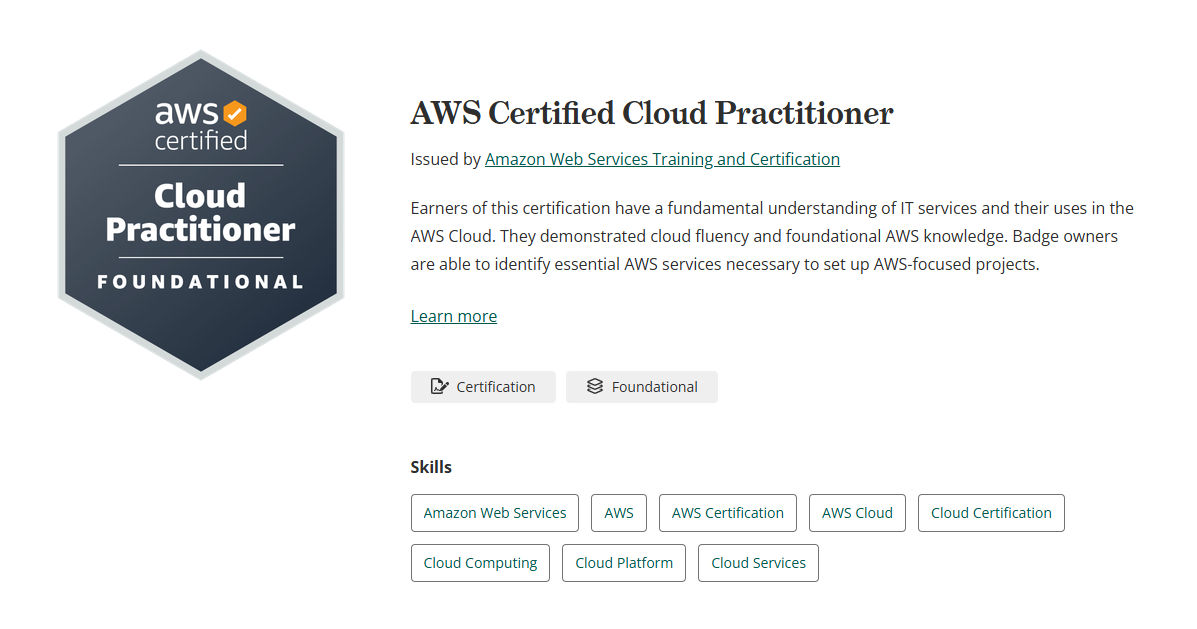
3. Gerawork Aynekulu - Experianced Blockchain Developer | Senior Backend Developer | AWS certified
- Linkedin : https://www.linkedin.com/in/gerawork-aynekulu-a533b467/
- Github : https://github.com/ggera
- Handles the backend development and integration of the platform.
- Proficient in server-side programming languages.
- Manages technical and non technical aspects of the project.
- Experience in database management and API integration.
- Cardano Blockchain Certified Associate: Credential_ID_64821e3c9f1938efcf06fba3
4. Abel Ayalew - Full Stack Developer | Backend Developer (Django, Node.js, Python, PostgreSQL, MongoDB) | Google Developer Lead
- Linkedin - https://www.linkedin.com/in/abel-ayalew/
- Github - https://github.com/nabroleonx
- Profile - https://abel-ayalew.vercel.app/
5. Ruth Teferra - Marketing Executive at SingularityNET | Business Developer | HR | Building Bridges in AI Ecosystems
- Our team experienced professional adept at content creation, copywriting, and promotion. Ruth will manage HR tasks while leveraging digital marketing strategies to enhance project visibility and engagement.
- Linkedin - http://linkedin.com/in/ruth-teferra-64827021a/
6. Amanuel Mersha - AI/ML Engineer & Researcher | Head of AI at TestSavantAI | An ML researcher and engineer specializing in deep learning, with a focus on vision and NLP applications, as showcased research and professional experience
- Linkedin - https://www.linkedin.com/in/leobitz/
7. Partners and Groups with existing educational and experienced experts
- MLOps Community: https://mlops.community/
Team Engagement: All listed team members have been engaged and have confirmed their roles and commitment to the project timelines.